


Pakistan’s Nadia, Aqsa reflect on FIFA Series highs, heartbreak and the road ahead

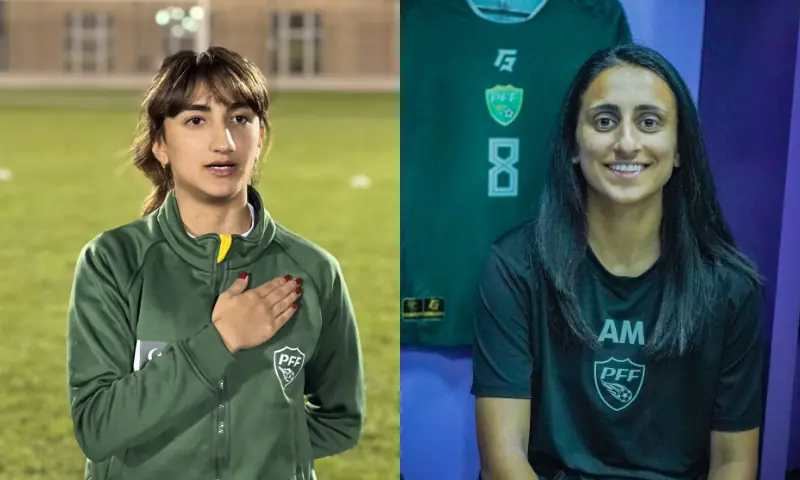

KARACHI: The team bus was whistling and laughing after an 8-0 demolition. Four days later, the same players sat in a silent dressing room, a 1-0 loss to Mauritania playing on loop in their heads.
Pakistan’s first-ever FIFA Series campaign contained both extremes — a record-breaking win, a narrow defeat that stung more than any other, and a fighting 2-0 loss to hosts Ivory Coast.
For forwards Nadia Khan and Aqsa Mushtaq — two of the squad’s vital attacking voices — the tournament laid bare not just the team’s potential, but also the structural gaps that keep Pakistan from climbing higher.
“It was such a proud feeling for me, scoring and becoming the leading scorer for Pakistan,” Nadia told Dawn, reflecting on the moment she became the country’s all-time top scorer. “I felt proud for what I’ve done for my country. Going back to that moment, I was just so excited and wanted to celebrate with the team.”

That celebration came after an 8-0 dismantling of the Turks and Caicos Islands — a victory that surpassed Pakistan’s previous best (7-0 against the Maldives, 2022) and sent the squad into a frenzy. But football, as Aqsa put it, has a way of humbling you.

“The Mauritania loss hurt a lot more than the Ivory Coast one,” Aqsa told Dawn. “Because they were an unranked team and we had a good chance to beat them; and also because we created many chances and it was really hard to deal with the loss. [Whereas] Mauritania took their chance and scored. Sometimes that’s football and you have to deal with it, but I think it hurt a lot.”
Pakistan had six or seven clear chances that day. None went in. Mauritania had one real attack. They scored.
Aqsa rejected the idea that the problem was tactical or mental.
“I don’t think it’s a tactical issue or a mental one,” the 27-year-old insisted. “It’s sometimes just not your day. We just move on, we improve as a team, try to improve our finishing in training. Hopefully next time we can prove that we actually are good in front of goal because we have a lot of talent.”
Her own goal against Turks and Caicos — a pearler of a strike — was one of the best of her career.
“Just because it meant so much to me. I wasn’t able to score in the last event [Asia Cup qualifier] and I was eager to get this goal and prove that I am here and can really help the team.”
Nadia offered a different perspective on the Mauritania loss. She pushed back gently against her coach’s suggestion that overconfidence played a role.
“I believe that going into that game, and I believe the players will back me as well, we didn’t think we were overconfident,” the 25-year-old Nadia said.
“We went in obviously thinking we are confident, and we believe in our own abilities — but not overconfident as if to say we are arrogant or we think we are something that we are not. I go into every single game believing in myself, believing in my team-mates to get the best in each game.”
In the dressing room at halftime, trailing 1-0, she didn’t scream or despair. She pumped up each player.
“I like to build confidence,” she said. “Pumping each player up, that in itself is a big thing. Backing each player up, not letting them feel down, believing that we can go out and do it again. I bring out positive and inspirational little quotes so that they are ready for the next 45 minutes because anything can happen.”
That equaliser never came. But the lesson, both the players said, is that the team’s ceiling is higher than this tournament’s third-place finish suggests.
“The experience of this whole event has been amazing,” Nadia, who plays for English club Blackburn Rovers, said. “The quality of players we had — I think these are the best players we have ever had. We can do so much and go so much further. I can’t wait to show that in other tournaments.”
Yet both the players pointed to the same fundamental obstacle: not enough games. Aqsa was blunt.
“One thing I want to change about Pakistan women’s football right now is the amount of games and windows we have,” the England-born player said.
“It’s been a whole year since we last played Indonesia. It’s so important to play in every FIFA window if we can, every couple of months. Other teams have many FIFA windows to improve their abilities. We only have 10 days together. We will get there, but playing more regularly will surely help.”
Nadia expanded the argument. She distinguished between diaspora players — who have clubs and regular training abroad — and local players who lack those resources.
“To build football abilities, we have to continuously be playing, not just by ourselves but as a team, so that we can link together and know how each of us plays,” she underlined. “But the opportunities we get through football in Pakistan are very little. [Therefore] we have to seize every opportunity we have.”
Her solution: regular camps for local players, even without tournaments.
“Mini camps for the local girls especially, so they can play regularly — even if they are only one or two weeks long every couple of months, coached by professionals within Pakistan. There are a lot of professional players in Pakistan capable of coaching. It’s crucial that the local girls train at a higher level.”
Asked to name the squad’s most underrated player, Nadia didn’t hesitate.
“Zehmena Malik,” she said. “Underrated in terms of she likes to keep to herself, lowkey, not too big on social media. But she is an amazing player and an amazing person. She has immense knowledge of different aspects of the game. She should be in the limelight more.”
Aqsa, meanwhile, is already thinking about the next event for which her personal target is connection.
“We don’t get enough FIFA windows or international friendlies, so it’s hard to always connect with the team,” the attacking midfielder said. “But every camp we get better. From the last camp to this one, we have definitely improved. If we get more games and start improving how we play on the field, we will be an amazing team. I really believe it.”
The bus will stop whistling eventually. The losses will fade. But if Pakistan’s women are to turn moments into momentum, Nadia and Aqsa agree on one thing: they need to play – not just in tournaments, not just when the world is watching but regularly, relentlessly, together.
“Overall, we had a really good contest [in Ivory Coast],” Aqsa said. “We just need to go with a good mindset and be positive for whenever we play next.”
Published in Dawn, April 19th, 2026

