




PUBLISHED
April 19, 2026
KARACHI:
Iran has pulled off a stunning military feat. It has defied — and survived — the combined military might of the United States and Israel in their coordinated operations, “Epic Fury” and “Lion’s Roar.” In numerical and technological terms, the balance was heavily skewed as Washington and Tel Aviv moved swiftly, establishing air superiority early.

Precision strikes hit deep inside Iran. Key military and civilian leaders were quickly eliminated, critical infrastructure was decimated, and the regime shaken at its core. Yet Iran did not capitulate. Instead, it absorbed the devastating blows — and kept fighting, showing unyielding resilience. A state under sanctions for decades didn’t waver. Still standing.

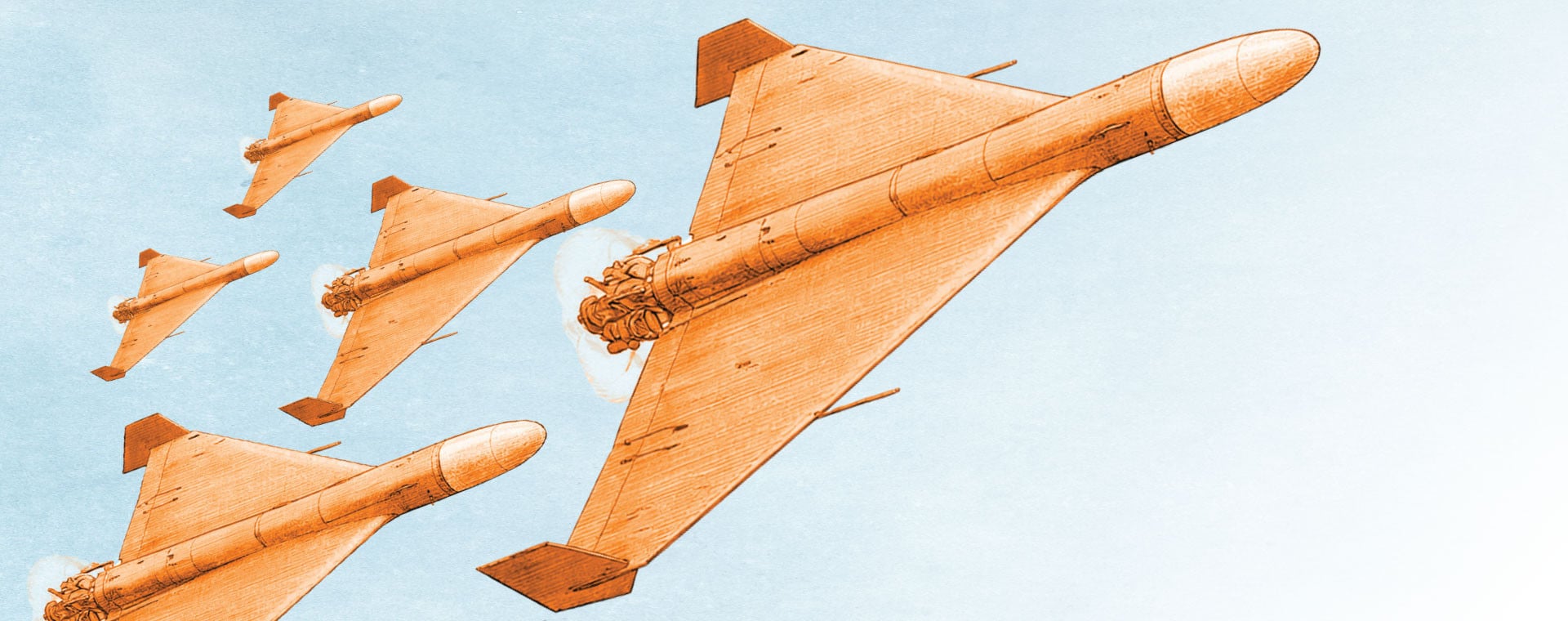
Not just absorbing the blows, Tehran responded with its own wave of retaliation as part of its “Operation True Promise 4”, hitting an arc of US military bases dotted across the Persian Gulf and reaching as far as Israel, its primary adversary. Unable to match the US and Israel in advanced conventional air power, Iran leaned on a different instrument of warfare: drones.
BUZZ OF FEAR
The ubiquitous presence of these cheap, expendable but lethal UAVs added a new layer to the war. Their low, relentless hum in the sky became more than a tactical signature. It turned into an unsettling reminder of vulnerability across US-aligned Gulf states, reshaping how air defence is now perceived in modern warfare.
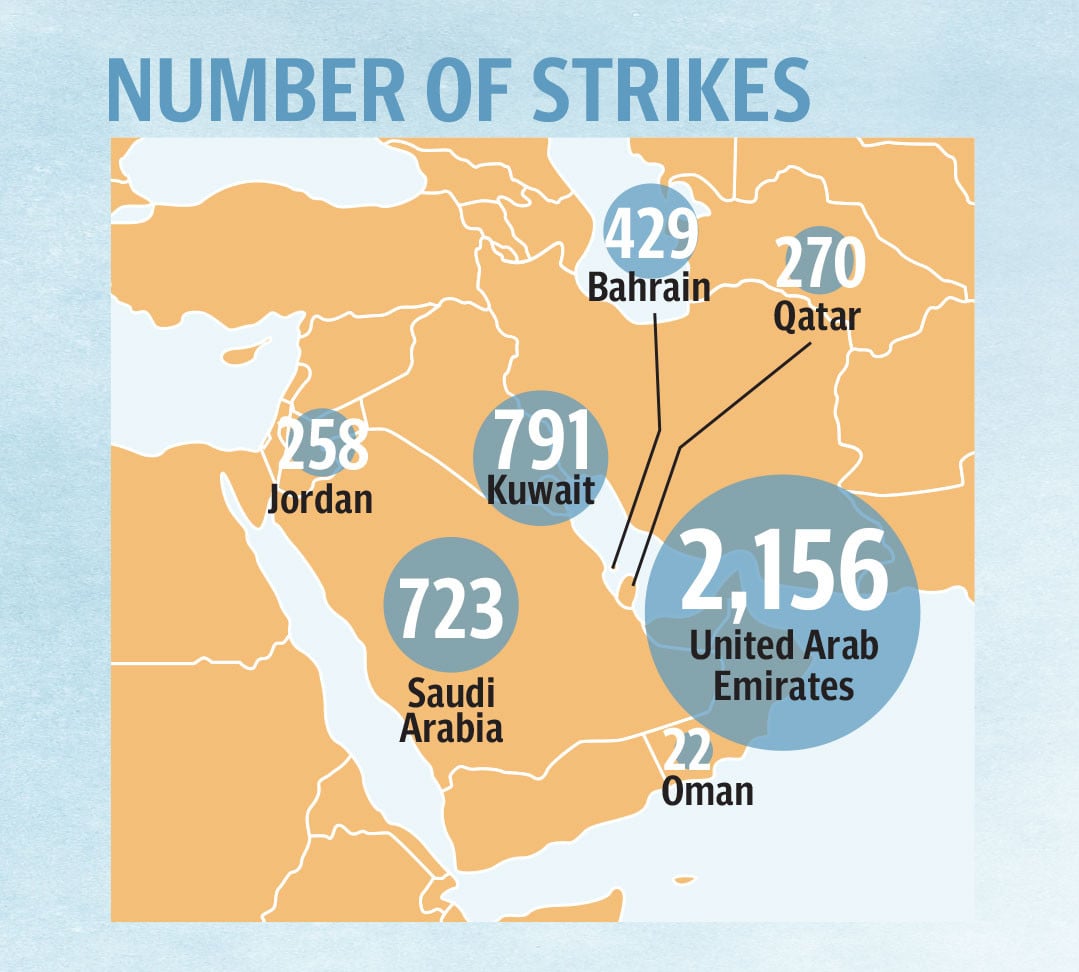
The Iranian strategy worked. At least 13 US military bases and infrastructure sites in Qatar, Bahrain, Kuwait, Saudi Arabia, the UAE, and Jordan were hit. Several facilities were left “all but uninhabitable,” as swarms after swarms of drones degraded critical systems, including air defences, radar networks, communications, and aircraft, undermining operational effectiveness.
Early estimates put the damage at around $800 million within the first two weeks alone, though the real losses could run into billions. Relentless waves of drones, paired with ballistic missiles, forced the United States to disperse personnel and move troops to hotels and other civilian facilities.
By the Pentagon’s own admission, 13 US service members were killed and 381 injured before a Pakistan-brokered truce was announced on April 8. While the Iranian retaliation didn’t achieve a strategic knockout, it successfully disrupted logistics, strained operations, and exposed vulnerabilities in even heavily fortified US military bases.
MYTH BUSTING UAVs
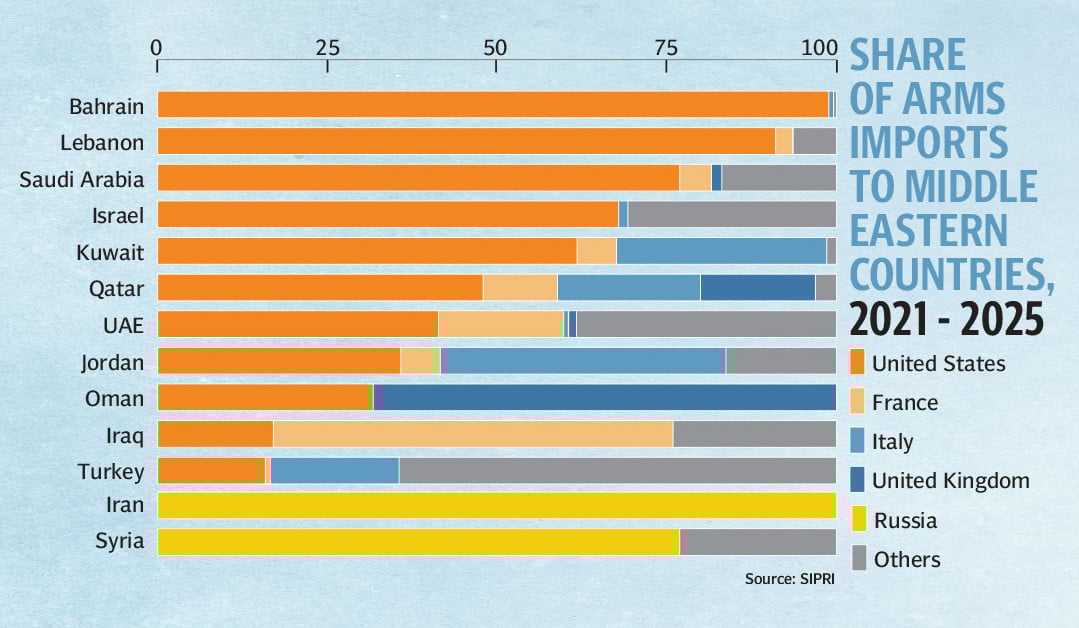
The losses in personnel and materiel may not have been decisive. But Tehran’s strategy struck a deeper blow. It chipped away at the myth of American invincibility. More importantly, it sent a clear signal to Gulf states: US bases are not a protective shield — they are liabilities
Gulf states condemned these strikes as a violation of sovereignty. Iran, however, insisted otherwise, claiming it was only targeting the US military installations being used as launchpads for strikes on its territory.
During key phases of the 40-day war, President Donald Trump repeatedly claimed in press briefings and on Truth Social that US-Israeli strikes had “completely destroyed” Iran’s underground missile and drone cities, “eliminated” its navy, “neutralised” its air force, and “obliterated” its air defence systems.
But US intelligence told a different story, a more uncomfortable one. By April, assessments suggested, Iran’s capability remained largely intact. Nearly half its missile launchers were still operational. Thousands of ballistic missiles were still buried deep underground. Around 40-50% of its drone arsenal was still operational. Not gone. Just degraded.
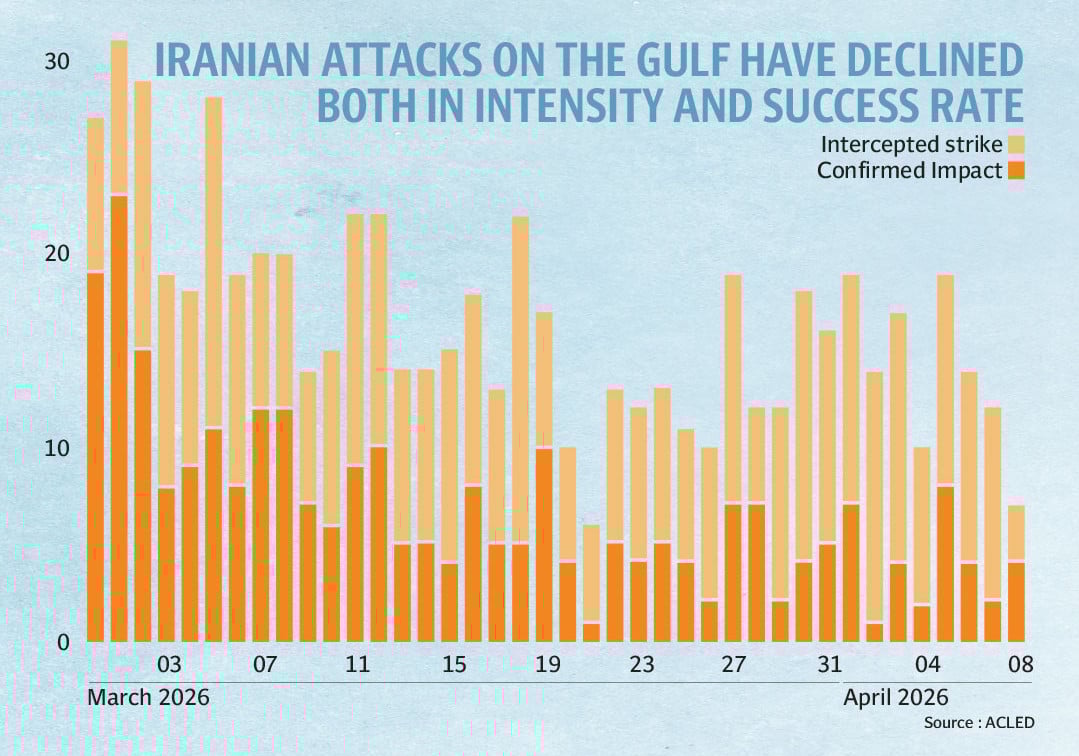
Iran’s Islamic Revolutionary Guard Corps (IRGC) claims it still possess huge stockpiles. Enough, it claims, to sustain a “high-intensity” war for up to two years. Before the “Epic Fury”, Iran reportedly stocked up over 10,000 ballistic missiles and more than 100,000 drones. Production lines, the IRGC insists, never fully stopped. Even under heavy bombardment, they kept replenishing.
But claims cut both ways. Tehran may be exaggerating its strength. Washington may also be overstating its success. The truth likely sits somewhere in between. What is clear is this: Iran kept firing, drones kept coming, and missiles kept launching. And that alone signals one reality — the stockpiles are not empty.
Trump expected a quick victory. But his strategy — if he had one – didn’t work. He lost the war, politically, diplomatically, strategically — and even militarily as his defence secretary had to purge the Pentagon in the thick of war, firing several generals.
DRONES LEAD THE FIGHT
In modern conflicts, drones don’t just support — they decide. In the 2020 Nagorno-Karabakh conflict, UAVs became the backbone of the new battlefield Armenia couldn’t counter. Turkish Bayraktar TB2s and Israeli IAI Harops helped Azerbaijan secure a swift battlefield victory.
Armenian military’s tanks burned, artillery fell silent, and air defences collapsed – all within just over a month. Azeri President Ilham Aliyev claimed in Oct 2020 that UAVs alone wiped out $1 billion worth of Armenian military hardware in days. The result was clear: shattered morale, broken lines, and a fast Azeri advance on the ground.
While the Nagorno-Karabakh war marked the first time drones emerged as a strategic weapon system, the Russia-Ukraine conflict took it a leap further — into a full-scale, drone-centric relentless war.
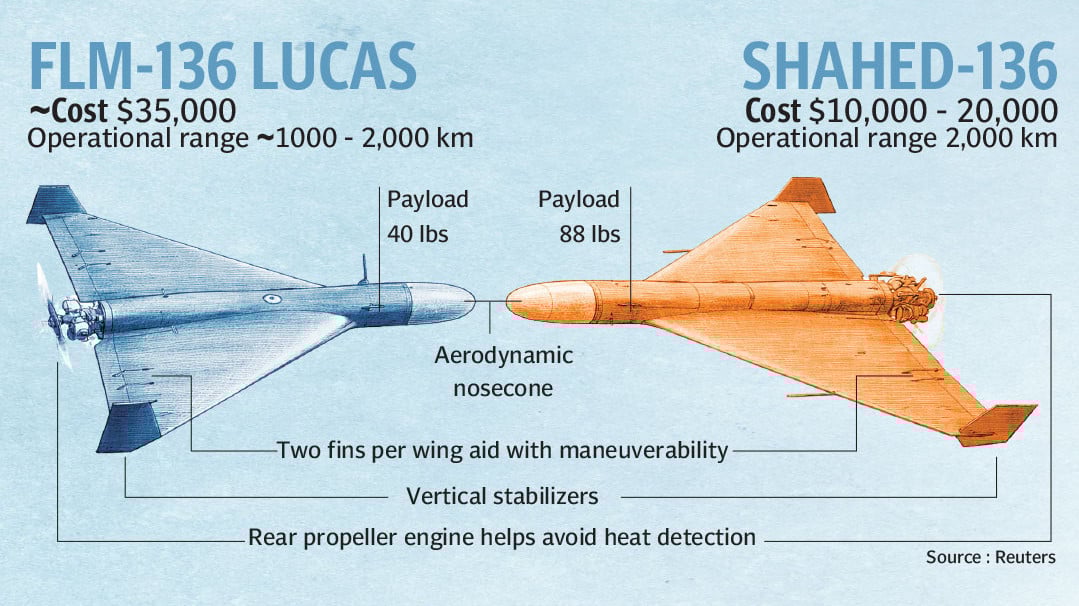
Iran’s Shahed-136 gave Russia breathing space at a time when its forces were struggling to maintain momentum. Cheap drone swarms replaced scarce missiles. Cities were struck. Power grids knocked out. Air defences strained — high-cost interceptors chasing low-cost threats. It didn’t bring victory, but it bought time, and sustained pressure.
Ukraine adapted quickly, building counter-drone systems and deploying its own fleets. The battlefield has now changed radically. Drones scout, drones strike, and drones hunt. Both sides operate UAVs at industrial scale, redefining combat as drone vs drone warfare.
IRAN’S INVENTORY
Today, Iran’s drone arsenal is reshaping modern warfare, challenging even the most advanced militaries. Over the past decade, Iran has quietly built one of the world’s most expansive UAV arsenals.
From surveillance platforms like Ababil-3, Yasir, and Fotros to loitering munitions (suicide drones) like Shahed-136, Shahed-131, Arash-2, and Raad-85. And from combat drones, like Mohajer-6, Shahed-129, Shahed-149 Gaza, and Karrar, to stealth platforms, such as Shahed-171 Simorgh, Shahed-191, and Saegheh, Iran has built a diverse, layered, and battle-ready UAV arsenal.
A full-spectrum drone force — built for surveillance, saturation, and strike.
Iran’s drones are not just weapons. They are a strategy, built on volume, pressure, and persistence — cheap enough to lose, simple enough to mass-produce, and deadly enough to matter. And that’s why it worked: Not because they were advanced, but because they were unstoppable at scale.
Tehran has long demanded that its Gulf neighbours stop hosting US military bases. But the latest conflict has sharpened a deeper question: do these bases protect, or provoke? Missiles and drones have shown these bases can quickly turn into targets. For some in the region, a new realisation may be emerging: what once looked like a security shield can also become a strategic liability.
“What Bin Laden was not able to do – to force American bases out of Saudi Arabia and the Gulf, drones will probably be able to do,” says Professor Ashoke Swain, Indian-Swedish academic and political scientist. “The false idea of safety and security under the American base has been completely devastated by a few thousand dollars’ worth of drones used by Iran,” he adds.
ASYMMETRIC COST WARFARE
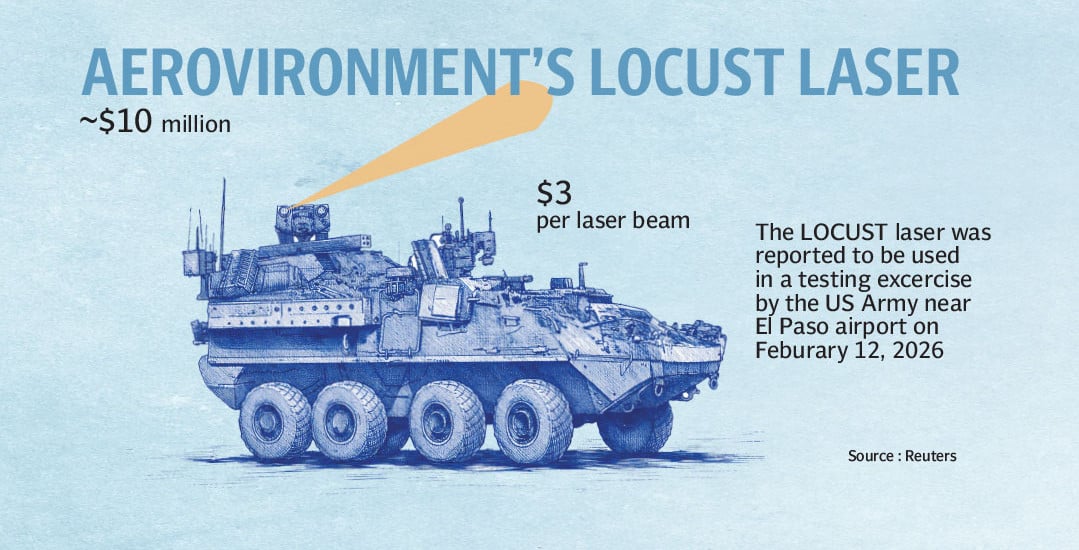
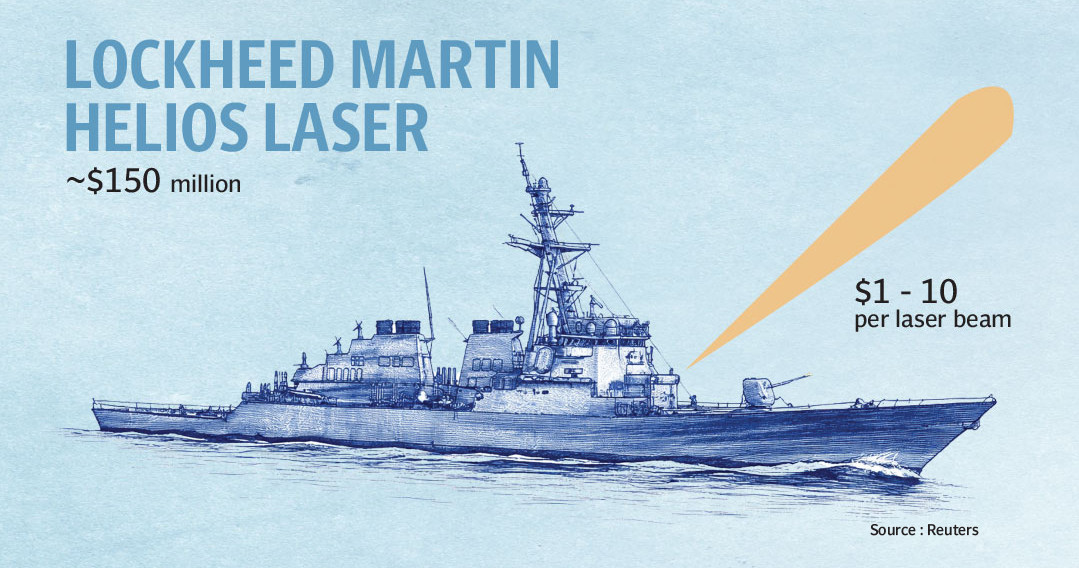
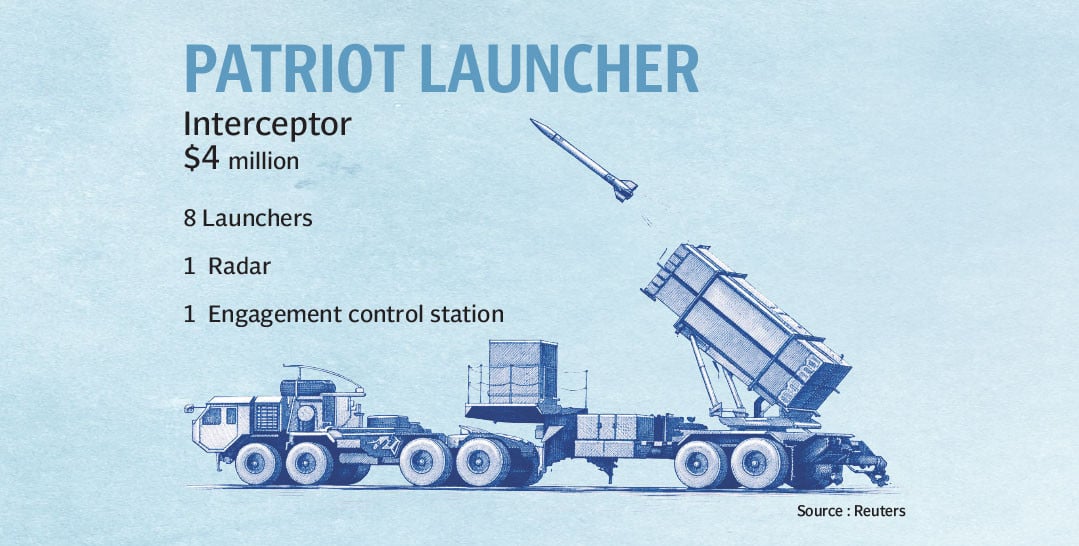
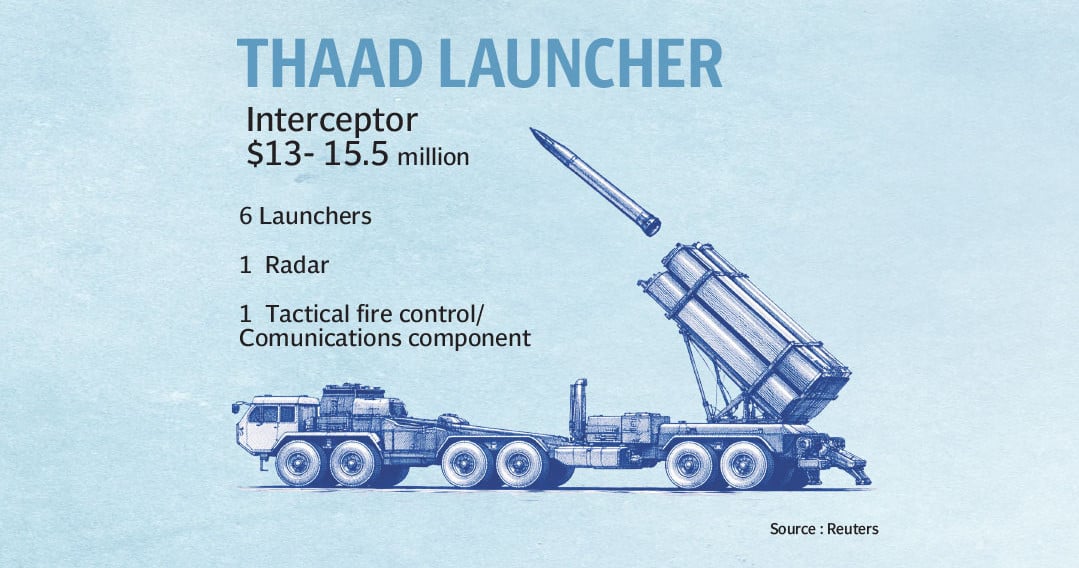
Iran’s drone swarms are not just a kinetic tool; they are economic warfare by design. A cheap drone becomes a costly problem for the defender. A budget weapon forces billion-dollar responses. A Shahed-136 can cost roughly $20,000-$50,000 to produce. But intercepting it can cost hundreds of thousands to millions of dollars.
A single Patriot missile used to shoot down drones or missiles can cost around $1-4 million per interceptor. Even systems like THAAD operate at similar high-cost per shot levels. So the math is brutal.
“This disruptive conflict technology has changed the dynamics of how the wars are being fought,” says Swain. “One Iranian drone costs around $10,000 to $20,000, whereas if you want to shoot down one drone, you have to use at least $100,000 or $200,000 missiles. Or it can compete with a $100 million AWACS plane or fighter jet,” he adds. “If a $10,000 to $15,000 drone requires a $200 million Patriot missile to intercept it, how long can you compete with that?”
Air Vice Marshal (retd) Shahzad Chaudhry argues that deploying high-end, radar-guided systems like the Patriot is sheer overkill — a disproportionate response that should be avoided. “It’s a wrong choice militarily. It’s a wrong choice tactically. And it’s a wrong choice in terms of the price that it is going to entail,” he adds.
 SATURATION OF THE SKIES
In “Operation True Promise 4”, drones made up nearly three-quarters of Iran’s strikes — no longer a supporting asset, but the core of the campaign. They are launched in coordinated waves — often paired with missiles — to overwhelm response systems.
Iran’s doctrine was simple: saturation. Flood the skies. Stretch the defences. Break the rhythm of interception. Not every drone was meant to hit its target — only enough to get through. Hundreds of low-cost UAVs forced split-second decisions, drawing out expensive interceptors and exhausting defensive stockpiles. In the resulting chaos, sensors overloaded, command chains slowed, and critical gaps began to open.
“When air defence systems are saturated, their ability to respond is significantly degraded,” says Maj Gen (retd) Dr Raza Muhammad. “Drones operate at very low altitudes and have minimal signatures, making them extremely difficult for traditional defence systems to detect, track, and intercept.”
Modern militaries were built for a different war — fighter jets, ballistic missiles, precision strikes. But drones slip through the cracks. Even the United States — spending over a trillion dollars on defence — is struggling to fully adapt.
FROM LEAD TO LAG
The United States was the leader in unmanned warfare. It built a fleet defined by precision and reach, including the MQ-9 Reaper, the MQ-1 Predator, the RQ-4 Global Hawk, the stealthy RQ-170 Sentinel, and smaller battlefield eyes like the Raven.
But these systems are extremely expensive to build, operate, and maintain. A Reaper costs tens of millions. A Global Hawk can exceed $100 million. The doctrine was clear: fewer systems, more capability. Precision over quantity. Intelligence over saturation.
That said, the battlefield has changed since and Turkey and Iran rewrote its rules. Cheap, mass-produced, and expendable drones. Swarm logic instead of platform superiority. And suddenly, the most advanced military in history finds itself adapting to the simplest idea in war — overwhelm the system, not outperform it.
“With drones, war will become cheaper but much more dangerous, more lethal, and easier to fight. The United States and Europe are still stuck in the old way of thinking. China has gone far ahead in preparing for 21st-century warfare,” says Swain.
“Iran’s annual military spending is only $10 billion maximum. If Iran with just $10 billion can withstand the United States and Israel and retaliate against American allies in the Gulf, that shows you don’t need big money if you have the right technology,” he adds.
But not everyone agrees that drones will fundamentally redefine the conflict calculus.
JUST A SUPPORTING TOOL?
Many defence experts argue that UAVs remain a supporting tool, not a replacement for traditional air power. In their view, control of the skies still depends on manned, high-performance fighter aircraft capable of speed, range, stealth, and complex decision-making in contested environments.
“Drones are just a nuisance. They are helpful for ISR. They can distract an enemy from its defences for a little while if the enemy is not smart. But beyond that, I only see it as a good accompaniment to the air campaign and not becoming the main part of the air campaign ever,” says AVM Chaudhry.
He believes that had Iran possessed a truly high-quality air force, it could have directly taken on — and held its own against — the combined might of the American and Israeli air forces. “But since they did not have that air force, they were forced to use another option, an asymmetric option. And that asymmetric option came to them in the form of low-cost drones,” he adds.
FUTURE BATTLESCAPE
Nonetheless, there is growing consensus among experts that the Iran conflict offers a glimpse into future warfare. Power is no longer defined only by tanks and fighter jets. It is increasingly shaped by algorithms, automation, and mass-produced machines.
What unfolds in the Persian Gulf is already reshaping military thinking. Lessons written today will define doctrine for decades. Drones are changing the rules of war — how battles are fought, and how they are won. And the balance of power is shifting. Smaller militaries, limited by size and hardware, may now challenge far stronger adversaries with speed, scale, and smart systems.
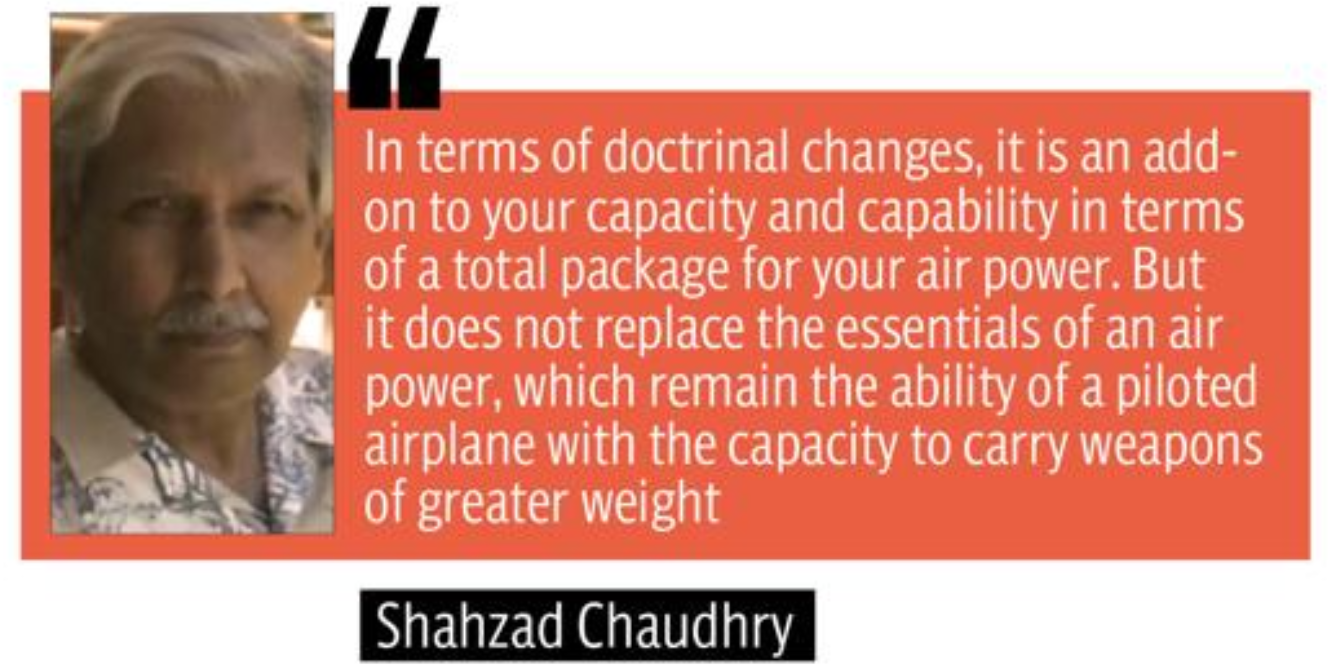
“In terms of doctrinal changes, it is an add-on to your capacity and capability in terms of a total package for your air power. But it does not replace the essentials of an air power, which remain the ability of a piloted airplane with the capacity to carry weapons of greater weight, which can go and destroy, penetrate,” says AVM Chaudhry.
Maj Gen Raza frames it differently: “Drones have added an entirely new dimension to warfare. They provide a low-cost means of engagement, forcing the adversary to burn through far more expensive interceptors in response.”
AI-POWERD SWARMS
What comes next may be even scarier. Autonomous drone swarms, AI, and self-coordinating attacks. AI-driven swarms enable fast, mass-coordinated strikes that outpace human decision-making. But putting AI in control carries serious risks. Algorithmic bias in targeting and the chance of rapid, unintended conflict add to the danger.
“You cannot depend entirely on AI. Human control was, is, and will remain essential. Machines can err. They can create confusion. That is why control cannot be surrendered,” says Maj Gen Raza. “In real operations, the future lies in balance — AI and automation working alongside human judgment. Not in isolation, but in tandem. The battlefield cannot, and should not, be handed over to machines,” he adds.
Whether AI will ever take over the role of deciding what to engage, replacing human judgment in that critical moment, remains an open question, still up for debate, says AVM Chaudhry. “Conventional wisdom until this time is not to let AI enter where you have nuclear or strategic decisions to be made. Let the man always make that decision,” he adds.
TAKEAWAYS FOR PAKISTAN
For Pakistan, the lessons are clear: The battlefield is changing and traditional doctrines may no longer be enough. Affordable, scalable defence systems, electronic warfare, and counter-drone technologies are becoming essential. These will define future security.
It seems this reality has already sunk in. And it was on full display in Pakistan’s latest conflict with India. For perhaps the first time in their long history, the two militaries were not staring each other down. Instead, both sides relied heavily on drones alongside missiles and fighter jets.
AVM Chaudhry recalls Pakistan’s use of drones during the brief flare-up with India as a defining moment: not merely a battlefield tactic, but a strategic signal. By pushing as far as Gurgaon, on the edge of Delhi, Pakistan made its point with clarity — distance is no longer a barrier; reach is no longer limited.
On countering such threats, he stresses the need for specialised systems. “We need something akin to a Tunguska-type platform,” he says — a radar-guided, quad-barrel gun mounted on a tracked vehicle, capable of delivering an extremely high rate of fire” to neutralise incoming drones swiftly and effectively.
What truly matters, according to Maj Gen Raza, is securing technology transfer, not dependence but self-reliance through domestic capability and production, where the real cost advantage lies. He says that future warfare will be defined by swarm systems — waves of drones that will come in numbers — and stresses the need to be prepared to counter them in kind.
Doctrinal debate aside, the message is clear. Warfare is no longer defined by conventional superiority, but by who can adapt faster, produce cheaper, and fight smarter. For militaries worldwide, the warning is clear: evolve, or be outpaced because the next war will not wait to be understood. It will arrive fast, swarm the skies, and decide outcomes before old tactics even have time to react.
With additional reporting by Hammad Sarfraz

