



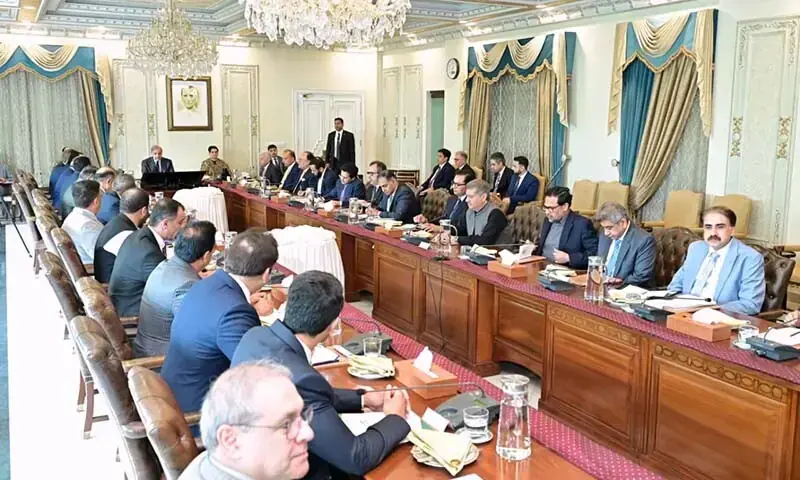

AS the government prepares the budget for FY27, Prime Minister Shehbaz Sharif’s meeting with the country’s leading businessmen on Monday offered a glimpse of the wide gap that exists between the two sides’ perception of Pakistan’s economic recovery. While the businessmen pressed their case for tax relief, faster refunds and deeper economic reforms, Mr Sharif boasted of the stability his government had pulled off and his intention of converting recovery into growth.
The government’s narrative is simple. After saving Pakistan from a likely sovereign default, restoring macroeconomic stability, reducing inflation and complying with the IMF programme, officialdom believes the foundation for sustained recovery has been laid. PM Sharif argued that the next phase would focus on growth. He did not say when. But the businessmen’s proposals suggest that much of the private sector is unconvinced that the investment climate has improved.
Their proposals focused on familiar but unresolved concerns: higher taxes, stuck-up refunds, excessive compliance burdens, policy unpredictability and absence of reforms to encourage investment and exports. These concerns are not new. By repeating them, the business leaders once again laid bare the mismatch in perceptions.
For the government, the economy may be more stable now than it was three years ago, but for manufacturers and exporters, it is still difficult to do business. Credit conditions remain restrictive despite monetary easing, industrial output is subdued and private investment has yet to recover. Businesses argue that the stabilisation strategy, while necessary, has extracted a heavy toll in terms of growth and export competitiveness. To ease pressure on the business community, Mr Sharif instructed the FBR to clear all pending tax refunds by June 15. Similarly, he decided to maintain the export refinance scheme rate at 4.5pc until June 2027 to provide certainty to exporters navigating a tight financing environment.

But these measures are not likely to restore business confidence, encourage private investment, make exports competitive or boost growth. Likewise, the business community’s supportive tone during the meeting should not be taken as an expression of their satisfaction with the existing economic conditions. While the larger business community acknowledges that it was essential to restore macroeconomic stability, it is already asking when the economy will start to grow.

The PM’s emphasis on SMEs, housing, privatisation and e-vehicle manufacturing suggests he recognises the need for a growth narrative beyond fiscal consolidation. But his hands remain tied. Chances of his government pushing growth under the IMF appear dim. The upcoming budget will, therefore, be an austere document like before. And the problems that business leaders have asked the PM to address will remain unresolved even next year. This is how mismanaged economies generate crises.
Published in Dawn, June 3rd, 2026

