




Aid groups warn child deaths are rising as many arrive at health centres too late for treatment
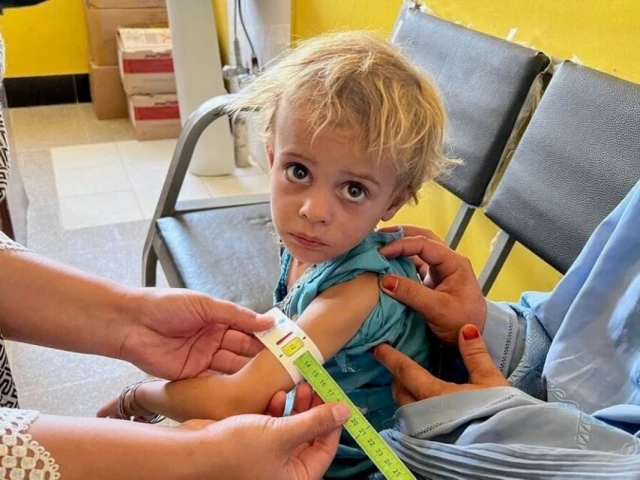
Sediqa’s 3-year-old daughter is tested for malnutrition as malnutrition is growing in Afghanistan. Photo: World Food Program
Fuelled by drastic aid cuts, child malnutrition is reaching critical levels in Afghanistan, with the number of children being rushed to health centres soaring, the United Nations warned on Tuesday.
John Aylieff, the Afghanistan country director for the UN’s World Food Programme, painted a bleak picture of fully preventable deaths and acutely malnourished children being turned away without assistance.

The country’s nutrition crisis “is spinning out of control”, he told reporters in Geneva.

“It’s a crisis which is getting worse by the day, and tragically one which we are unable to contain,” he said, speaking from Kabul.
“Child wasting, the deadliest form of malnutrition, has reached critical levels in one third of the country’s provinces now.”
He said conflict, trade disruptions, forced returns from neighbouring countries and dramatic aid cuts were driving unprecedented levels of acute malnutrition.
Last year saw the highest year-on-year surge in malnutrition and this year, the situation is “even worse”, he said.
“The number of children being rushed to health centres is soaring” but “too many of them are arriving too late to be saved”.
Children aged under two make up 80% of the worst cases.
Read More: Ex-Afghan army Lt Gen Sami Sadat announces armed campaign against Taliban after talks fail
Aylieff said the World Food Programme (WFP) only had sufficient funds this year to feed just one in seven acutely malnourished women and children.
“We are turning away six out of seven and we’re turning them away empty-handed, with absolutely nothing,” he said.
“Feeble cries of malnourished babies haunt the health clinics of Afghanistan.
“This crisis could eclipse all previous projections and condemn countless more children and mothers to preventable death.”
Instability and funding cuts
Aylieff warned that hunger drives migration, radicalisation and ultimately instability — and an unstable Afghanistan is “in no-one’s interest”, given the history of instability spilling over across the country’s borders.
He said that in the past three years, millions of Afghans had been forcibly returned from neighbouring countries like Iran and Pakistan, adding to the strain within the country.
This year has brought a better harvest — but that has been completely offset by Afghanistan’s challenges.
“At present, close to 14 million Afghans are acutely hungry,” and, “crippled by funding cuts, WFP has only been able to feed one in nine of them”.
The UN agency has also completely stopped food distributions aimed at preventing famine in particular hotspots, as “we simply don’t have the funding”, he said.
WFP needed $900 million at the start of the year but has received only $130m so far.
The agency said it now needed $540m to address acute food insecurity in Afghanistan over the next six months.
“We would like all donors to be returning to Afghanistan to address the humanitarian situation, including the United States and others that have ceased funding Afghanistan,” Aylieff said.

