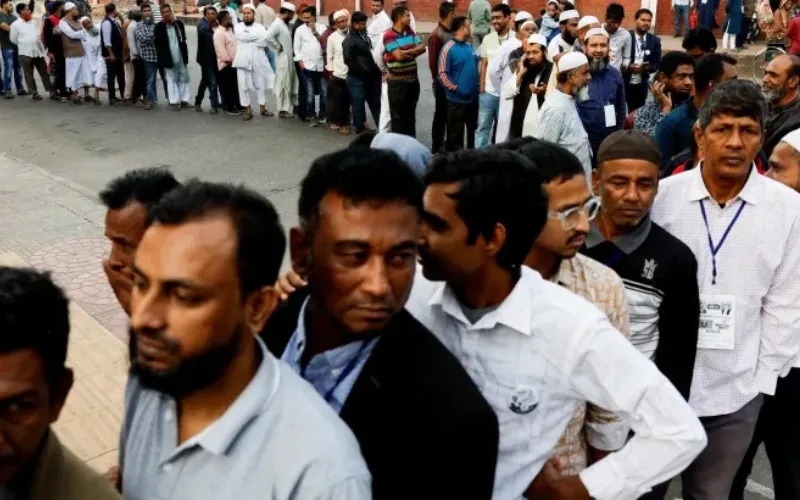

Almost 127 million registered voters are casting their ballots across Bangladesh in a pivotal election seen as a major test of the country’s democratic recovery following the student-led uprising that forced former Prime Minister Sheikh Hasina from power in August 2024.
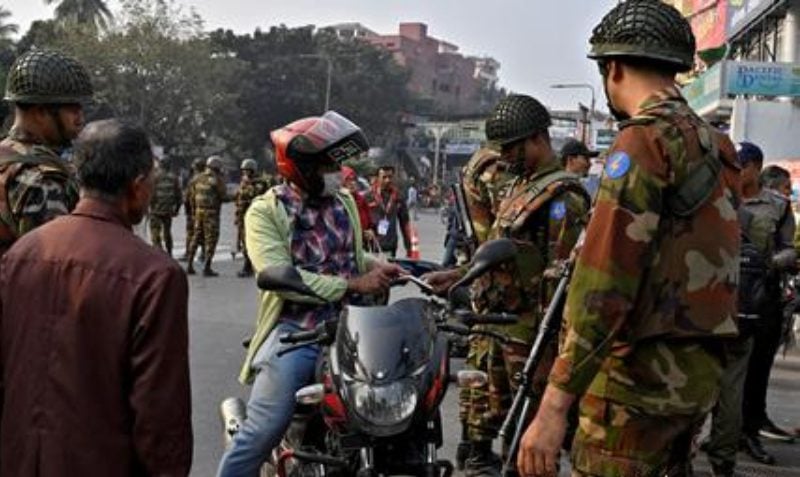
Polling stations opened at 7:30 a.m. local time in 299 constituencies and will remain open until 4:30 p.m., with security forces deployed heavily across urban and rural areas to prevent unrest.
The race is primarily between the Bangladesh Nationalist Party (BNP) and an 11-party alliance led by Jamaat-e-Islami. The coalition includes the National Citizens Party (NCP), established by youth leaders who played a central role in last year’s protests that ended Hasina’s long tenure.

Voters are focused on pressing concerns such as corruption, soaring living costs, job creation and broader economic reform in the world’s eighth most populous country. Alongside the parliamentary vote, citizens are also deciding on the proposed National Charter 2025, drafted by the interim administration headed by Nobel laureate Muhammad Yunus, which aims to outline principles for future governance.

Although Hasina’s Awami League has largely vanished from active politics, Bangladesh continues to resemble a two-bloc system. The Jamaat-led alliance has effectively stepped into the space left vacant by the Awami League.
Despite that continuity, BNP leader Tarique Rahman widely considered the frontrunner may introduce shifts in direction. Though he comes from a prominent political family, Rahman has pledged to strengthen democratic institutions and restructure governance. At the same time, critics note his vow to hold the Awami League accountable for alleged abuses during its years in power.

Suspending the Awami League raises concerns in a liberal democratic framework, suggesting that a formal truth and reconciliation process might have provided a more balanced approach to addressing past grievances.
Bangladesh operates as a parliamentary republic. Executive authority lies with the prime minister and the cabinet, while the president serves as ceremonial head of state and is elected by parliament for a five-year term.
The prime minister, typically the leader of the majority party or coalition, appoints cabinet members, directs government policy and oversees administration. Legislative power is held by the Jatiya Sangsad, the 350-seat parliament comprising 300 directly elected representatives and 50 seats reserved for women, allocated proportionally according to party vote share.
The country is administratively divided into eight divisions, 64 districts and 495 subdistrict councils known as upazilas. While local authorities oversee services such as education, infrastructure and rural programs, they remain financially and politically dependent on the central government.
Home to more than 173 million people, Bangladesh ranks as the eighth most populous country in the world and among the most densely populated, with about 1,366 people per square kilometre. Its population density far exceeds that of neighbouring India and Pakistan.
The capital, Dhaka, is the largest city, with more than 37 million residents surpassing the populations of several medium-sized countries.
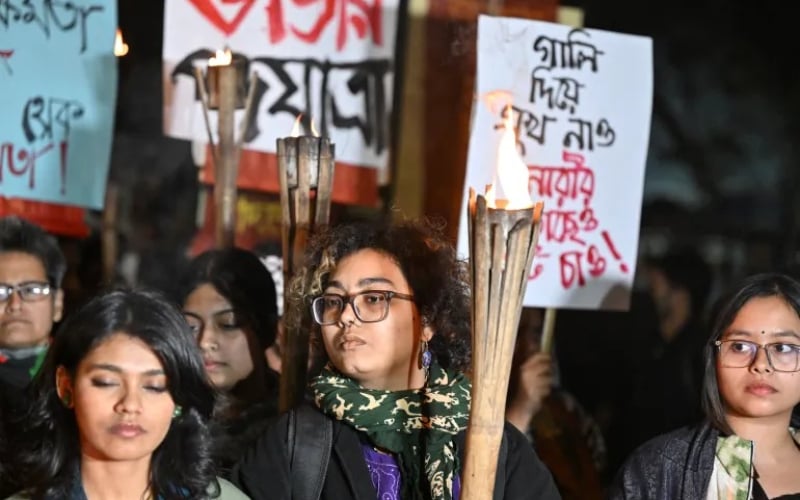
This election marks the first vote for nearly five million new voters. With a large share of citizens under 30 and almost half of the electorate aged between 18 and 37, young voters are expected to play a decisive role in shaping the country’s political future.
Shafiqur Rahman casts his ballot
Shafiqur Rahman, leader of the Bangladesh Jamaat-e-Islami party, cast his vote at the Dhaka-15 polling centre located at Monipur Boys’ High School in the capital.
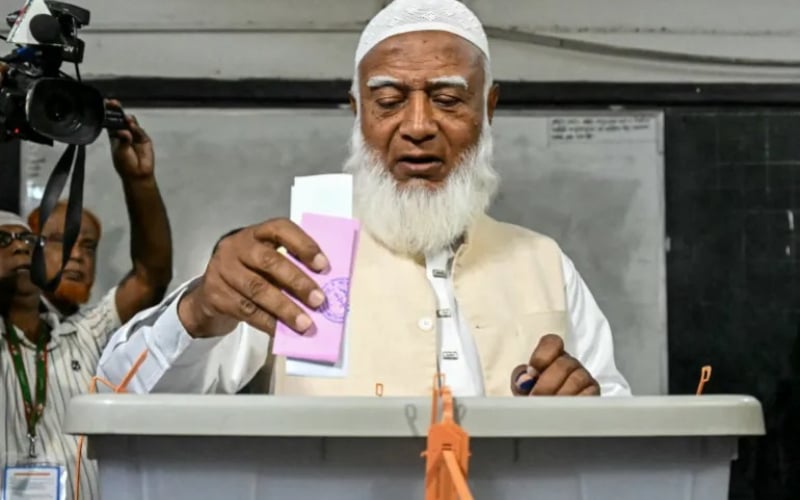
In recent months, Rahman has built notable momentum for the party as he works to rebrand Jamaat as a more moderate Islamist political force. In a historic first, the party has also nominated a Hindu candidate, signaling an effort to broaden its appeal and reshape its public image.