




Authorities to probe JUI-F chief’s alleged frontman’s two Islamabad properties for benami links
Aman Ullah was allegedly acting as a frontman for JUI-F chief Maulana Fazlur Rehman and was used to acquire properties on behalf of other individuals. PHOTO: ET
ISLAMBAD:

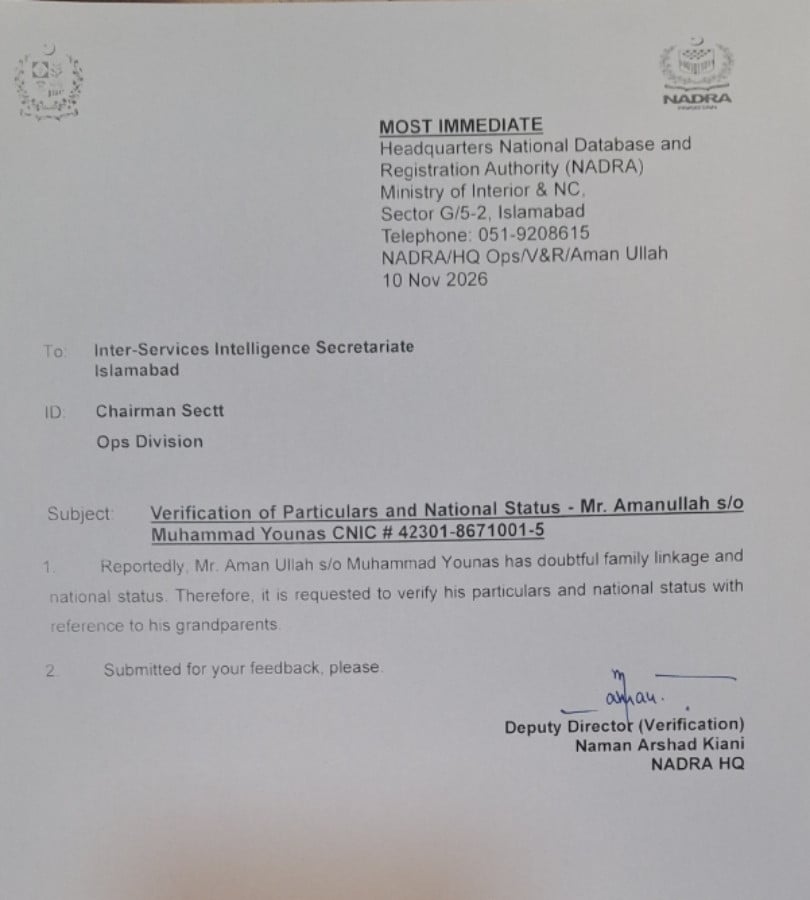
The Islamabad Capital Territory (ICT) administration has ordered a comprehensive investigation into the alleged acquisition of immovable properties by a foreign national in the federal capital after the National Database and Registration Authority (NADRA) cancelled his Pakistani Computerised National Identity Card (CNIC) following verification of his nationality.

In a letter dated November 25, the Office of the ICT District Magistrate directed the Additional Deputy Commissioner (Revenue) and Deputy Commissioner (CDA) to scrutinise land, revenue, allotment and transfer records to determine whether the individual, identified as Aman Ullah alias Iman Ullah, son of Muhammad Younas, had acquired or owned any property in Islamabad, either directly or through intermediaries.
The move followed a Special Branch report dated November 22 and subsequent verification by NADRA on November 25, which identified the individual as a foreign national, resulting in the cancellation of his Pakistani identity card.
According to the official correspondence, the matter came to light after authorities found that his father’s CNIC had already been blocked, while his own identity card remained active, prompting further scrutiny of his nationality, credentials and family records.
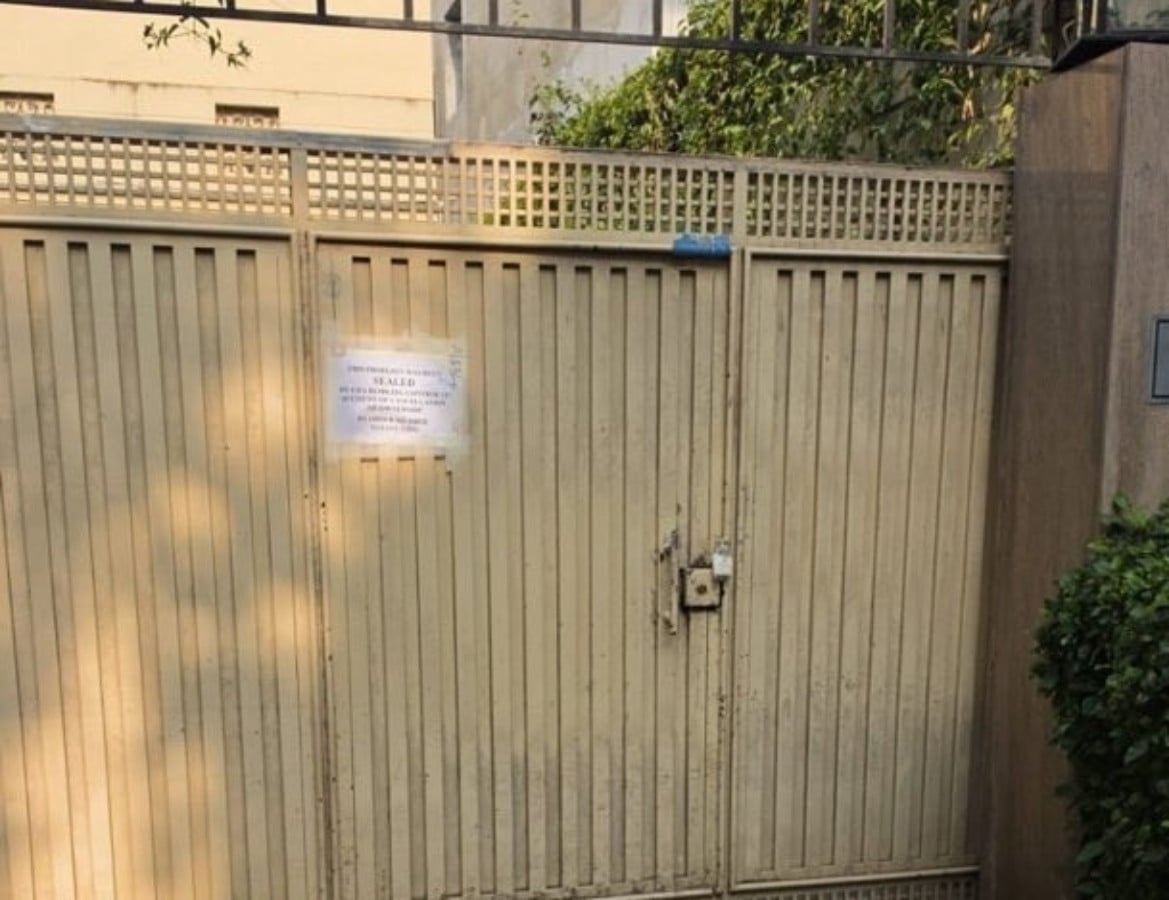
The district administration has specifically directed officials to investigate two properties allegedly linked to him: House No 318, Street 9, Block A, Gulberg Greens, and House No 7, Street 83, Sector G-6/4, measuring 1,200 square yards.
Officials have been asked to establish the ownership and acquisition history of the properties, examine the relevant allotment and transfer documents, and determine whether the transactions were conducted in accordance with the law and with the requisite government permission.
The correspondence invokes Section 3 of the Foreigners Act, 1946, read with federal government Order No 18/153/84-Poll.B(II), dated September 9, 1984. Under the cited provisions, foreign nationals cannot acquire land or any interest in immovable property in Pakistan, directly or indirectly, without prior written permission from the competent government authority.
The district magistrate has directed the concerned departments to initiate legal proceedings, subject to due process, if any violation is established and submit a comprehensive report detailing their findings and action taken at the earliest.
The case was initially flagged by the Special Branch’s Police Station Koral, Zone Soan, which described the individual as a suspected Afghan national allegedly holding a Pakistani CNIC. It recommended that NADRA verify his nationality, identity documents, Family Registration Certificate (FRC), family tree and other supporting records.
However, the investigation has also raised broader questions about how an individual subsequently identified as a foreign national could allegedly obtain Pakistani identity documents and acquire properties in the federal capital, potentially circumventing legal restrictions on foreign ownership.
Aman Ullah was allegedly acting as a frontman for JUI-F chief Maulana Fazlur Rehman and was used to acquire properties on behalf of other individuals. These claims, however, have not been independently established, and the official inquiry announced by the ICT administration does not, at this stage, establish any link between the properties and the JUI-F chief.
The allegations point towards a possible benami ownership arrangement in which properties are registered in one person’s name while the funds for their acquisition and the actual benefits of ownership may belong to someone else. If substantiated, such an arrangement could warrant scrutiny under the relevant laws governing benami transactions, in addition to the provisions regulating property acquisition by foreign nationals.
The questions facing investigators include the source of funds used to purchase the properties, the identity of the actual beneficiaries, the individuals who occupy or use the premises and whether any intermediaries facilitated the transactions. Authorities may also need to establish whether any government officials or other individuals assisted in obtaining identity documents or processing property transfers.
Read More: JUI-F stages protest in Karachi over Fazl’s alleged house arrest, detention of workers
The cancellation of the CNIC has brought Aman Ullah’s citizenship credentials into question, but it does not, by itself, establish the ownership status of the properties or prove that any criminal offence has been committed. Those questions will depend on the findings of the ongoing inquiry and the examination of relevant documentary and financial records.
The scope of the investigation could extend beyond the two Islamabad properties if records establish links with other assets or transactions in different parts of the country.
The case has brought renewed attention to weaknesses in identity verification, property registration and interdepartmental scrutiny, particularly where assets are allegedly acquired through questionable identity documents or concealed beneficial ownership.
The ICT administration’s investigation is expected to establish whether the properties were lawfully acquired, whether the required permissions were obtained and whether any violations warrant criminal or other legal proceedings.

