



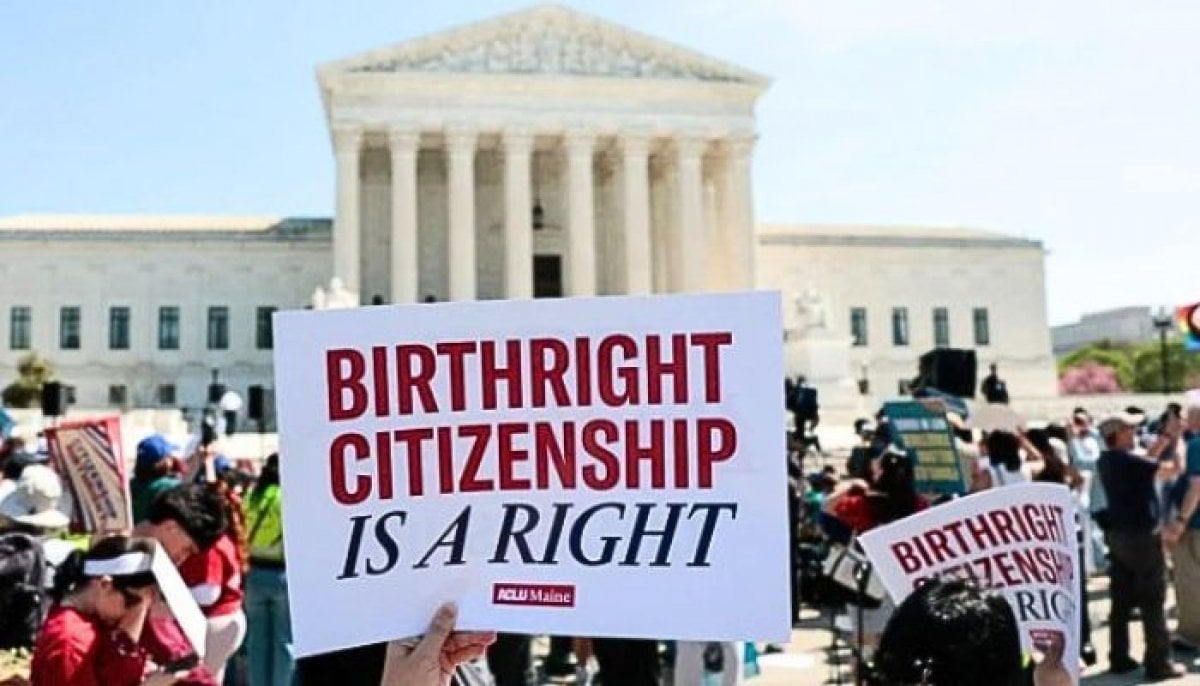

The U.S. Supreme Court rejected President Donald Trump’s bid to end birthright citizenship.
Trump signed an executive order on 20 January 2025, his first day back in power, to deny citizenship to babies born to illegal and temporary migrants, but a lower court blocked the order.
The Trump administration launched an appeal with the Supreme Court, but it ruled against his order 6-3 today.

Speaking after the decision, US correspondent David Blevins said Trump had lost one of his “signature immigration policies”.

While the US president remains defiant, saying on Truth Social that while it was “too bad for our country”, it’s not over and “we can easily make it up in Congress” through legislation.
In delivering the court’s overall opinion, chief justice John Roberts said, “Citizenship, then and now, was the right to have rights-to freely participate in our political community.
“The Framers of the Fourteenth Amendment extended that promise to ‘every free-born person in this land.’
“We keep that promise today.”
What is birthright citizenship?
For more than 150 years, the majority of people born in the US automatically became US citizens, with a few exceptions.
It’s seen as a key part of US identity as an immigrant nation, and first came into law when the 14th amendment to the constitution was ratified in 1868 in the aftermath of the Civil War-ending slavery.
The top court in the US has ruled against Donald Trump’s bid to end the rule granting those born on American soil automatic citizenship.
It has also cleared the way for state bans on transgender student athletes. Catch up below.
The 14th Amendment was ratified in 1868 in the aftermath of the Civil War of 1861 to 1865 that ended slavery in the United States, and overturned a notorious 1857 Supreme Court decision that had declared that people of African descent could never be U.S. citizens.
In delivering the court’s overall opinion today, chief justice John Roberts said “Citizenship, then and now, was the right to have rights – to freely participate in our political community, and “We keep that promise today.”
Robert added that the authors of the 14th Amendment extended that promise to every free-born person in the land.

