




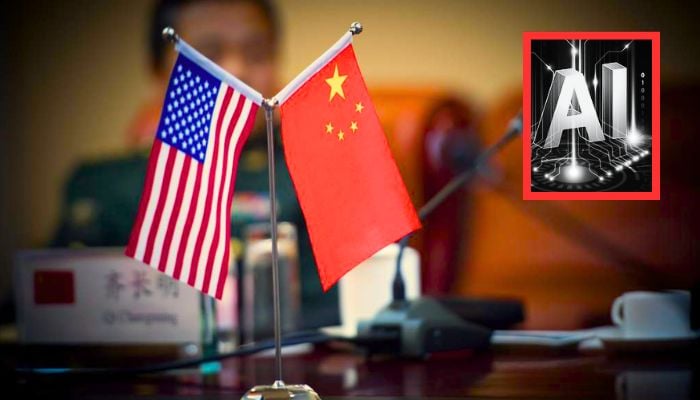
As autonomous military technology races ahead of diplomacy, the United States and China are facing a chilling new threat; an AI-driven escalation that could trigger a global catastrophe before a human has time to blink.
According to security experts from the United States and China, an AI (artificial intelligence) system that interferes with a nuclear command network or launches a military cyber operation could leave Washington or Beijing with only minutes to decide whether the other government has launched an attack.
Fudan University’s Jiang proposed explicit red lines preventing AI from independently deciding to use nuclear weapons or autonomously attacking nuclear command systems, along with protections around critical infrastructure including energy, finance and healthcare.
Jiang also proposed a dedicated U.S.-China military hotline for AI incidents, warning that automated cyber exchanges could escalate too quickly for human intervention.

One country’s defensive AI might automatically respond to suspicious activity, while the other side could interpret that response as an attack and retaliate before understanding what actually happened.

He also urged a shared definition of “meaningful human control” to prevent both countries from using identical language to justify different levels of machine autonomy.
The initial idea to mitigate military ‘AI risks’
The idea builds on a principle endorsed by then-U.S. President Joe Biden and Xi in November 2024 that humans should retain control over decisions to use nuclear weapons.
The recommendations, developed through bilateral track-two dialogues designed to help inform official policy, address growing anxieties that increasingly powerful and autonomous systems integrated into defense networks could drastically accelerate conflict timelines.
Experts are urging both governments to establish strict red lines and preventative protocols before technological capabilities outpace diplomatic guardrails.
The proposals outline explicit boundaries prohibiting AI systems from independently deciding to use nuclear weapons or autonomously attacking nuclear command, control, and communications networks.
Additionally, the specialists call for a universally shared definition of “meaningful human control” to ensure both superpowers interpret automated military thresholds identically, alongside dedicated communication hotlines for resolving AI-related military or cyber incidents.
As reported by Reuters, Washington has no equivalent single arms-control home for AI, with national security policy spread across the White House National Security Council, State Department, Pentagon and other agencies.
Both governments remain wary of measures that could slow their own technological development.
U.S. President Donald Trump has warned broad restraints could hand China an advantage, while Beijing views many U.S. technology controls as attempts to preserve American dominance.
While the recommendations build upon prior high-level acknowledgments—such as the joint consensus by leadership emphasizing that humans must retain authority over nuclear weapon use—formal adoption by both capitals remains slow.
Analysts note that while Beijing has integrated AI concerns into its formal arms-control bureaucracy, Washington maintains a more decentralized approach, with both nations remaining cautious of rigid constraints that could compromise their respective technological advantages.

