




• US president praises Pakistan for facilitating dialogue, says it will remain part of process
• After Oman, Araghchi stops in Islamabad en route to Moscow; discusses peace framework with Pakistani officials
• Tehran’s top envoy reaches out to Saudi, Turkish, Egyptian counterparts; Turkiye FM speaks to US team
• IRGC says no plan to lift Hormuz blockade as US intercepts another Iranian vessel
• US, UK discuss urgent need to end disruptions in vital maritime route
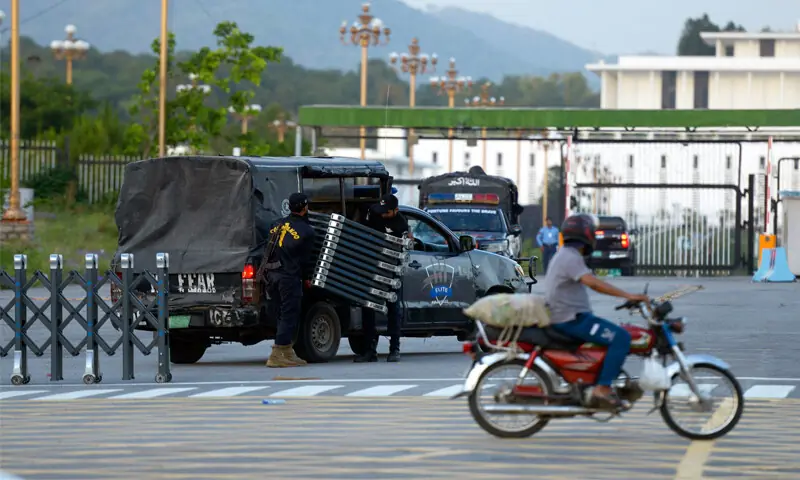
• Dar announces end to restrictions on citizens’ movement in Islamabad, Rawalpindi
ISLAMABAD: US President Donald Trump on Sunday hinted that peace talks between Washington and Tehran would continue — but over the phone — a day after he called off his team’s visit to Islamabad in light of Iran’s reluctance to participate in the dialogue.
Speaking to Fox News on Sunday, President Trump said he had halted US diplomatic travel for talks, telling Iran it could call, or come to Washington instead.
“We have all the cards,” he said, adding that the US was not sending representatives on an 18-hour journey to Pakistan when it held the stronger negotiating position. “They know what has to be in the agreement… They cannot have a nuclear weapon, otherwise there’s no reason to meet,” he said, adding that this action did not mean a return to hostilities.
The US president also appreciated Pakistan’s role in facilitating the dialogue, saying that he had “great respect for Pakistan” and that Islamabad would remain involved in the process. “We are going to do it by telephone,” he said about the talks with Iran.

Likewise, Iran’s ambassador to Pakistan Reza Amiri Moghadam, in a tweet, expressed gratitude to Pakistan, “especially H.E. Prime Minister Muhammad Shahbaz Sharif and Field Marshal Asim Munir, for their tireless efforts and good office initiative to end the war and bring lasting peace to the region”. He also appeared grateful for the arrangements made for Araghchi’s visit.
The statements came after Iranian Foreign Minister Abbas Araghchi left Islamabad — where he made a brief stopover — for Moscow following his trip to Muscat, where he met the Omani leadership.
The Iranian envoy had been in Islamabad on Saturday as well, when he met the army chief and the prime minister to share Iran’s response to the US proposals.
On Sunday, Araghchi sat down with Pakistani officials to convey “Iran’s positions and views on the framework of any understanding to completely end the war” in the Middle East, before embarking on his trip to Moscow.
Iranian media said that the second visit had nothing to do with the nuclear talks and that he was back to continue his “recent consultations”, Al Jazeera reported.
After Trump’s statement, it was evident that Islamabad would not be a venue for the next round of talks, at least for now, and restrictions on citizens’ movement in the twin cities were also been lifted.
A late-night statement by Deputy Prime Minister Ishaq Dar announcing the end of restrictions also hinted that the guests had departed.
Dar tweeted that the restrictions around the Serena Hotel and the red zone had been lifted, as he expressed gratitude to the residents of the twin cities for their ‘patience and cooperation’. For the past several days, the residents endured traffic jams and roadblocks.
Earlier, two US Air Force C-17s carrying security staff, equipment and vehicles flew out of Pakistan, two Pakistani government sources told Reuters on Sunday.
Araghchi’s engagements
In Muscat, the Iranian FM briefed Oman’s Sultan Haitham bin Tariq “on the Iranian side’s perspectives” regarding the regional developments and the peace efforts, said Oman’s foreign ministry. The sultan affirmed the importance of prioritising the language of dialogue and diplomacy in addressing issues in a way that contributed to consolidating the foundations of peace.
Reuters quoted Iran’s foreign ministry saying that they also discussed security in the strait and Araghchi called for a regional security framework free of outside interference.
Qatar’s Prime Minister Sheikh Mohammed bin Abdulrahman bin Jassim Al Thani also had a phone call with Araghchi. The two officials “discussed efforts to achieve peace and enhance security and stability in the region”, said Al Jazeera quoting the Qatari foreign ministry.
The Iranian envoy also spoke to Saudi, Turkish and Egyptian counterparts, with the IRNA news agency reporting that FM Araghchi and FM Badr Abdelatty “discussed and exchanged views on issues related to diplomacy and ceasefire, as well as the latest regional developments”.
Araghchi discussed regional developments and ongoing diplomatic processes in a telephonic conversation with his Saudi counterpart, Iran’s state media IRIB reported in a post on X. “Iran’s FM Araghchi and Saudi FM Faisal held a phone call, discussing the latest regional developments and ongoing diplomatic processes.”
Turkiye’s Anadolu news agency, meanwhile, reported that the talks between Turkey’s Fidan and Araghchi “focused on the latest developments in the negotiation process between Iran and the US”. Reuters reported that the Turkish foreign minister also spoke to the US negotiators and discussed latest developments in the Iran-US peace talks.
Hormuz blockade deepens
Pressure to end the war has intensified as the Strait of Hormuz remains closed. Iran’s powerful Revolutionary Guards said they had no intention of lifting their blockade, which has roiled energy markets. “Controlling the Strait of Hormuz and maintaining the shadow of its deterrent effects over America and the White House’s supporters in the region is the definitive strategy of Islamic Iran,” the Guards said on their official Telegram channel.
The IRGC also warned of delivering a “beyond expectation” response to further aggression, according to Iran’s IRNA news agency. The statement warned that this restraint “can at any moment, in the event of miscalculation and any renewed aggressive action by the warmongering and oath-breaking enemy, become the prelude to a ‘hellish storm’ against them”.
Meanwhile, the US Central Command has said it intercepted a merchant vessel trying to get through the blockade of Iran, Reuters reported. The ship, identified as the Sevan, was part of a 19-vessel “shadow fleet” transporting Iranian oil and gas products to foreign markets, the US military said. Since the blockade began, 37 ships have been “redirected,” the US military said.
Separately, British Prime Minister Keir Starmer and US President Donald Trump discussed the urgent need to get shipping moving again in the Strait of Hormuz during a call, Al Jazeera reported, citing a Downing Street spokesperson. “The prime minister shared the latest progress on his joint initiative with [French] President Macron to restore freedom of navigation,” the spokesperson added.
With input from Agencies
Published in Dawn, April 27th, 2026


