


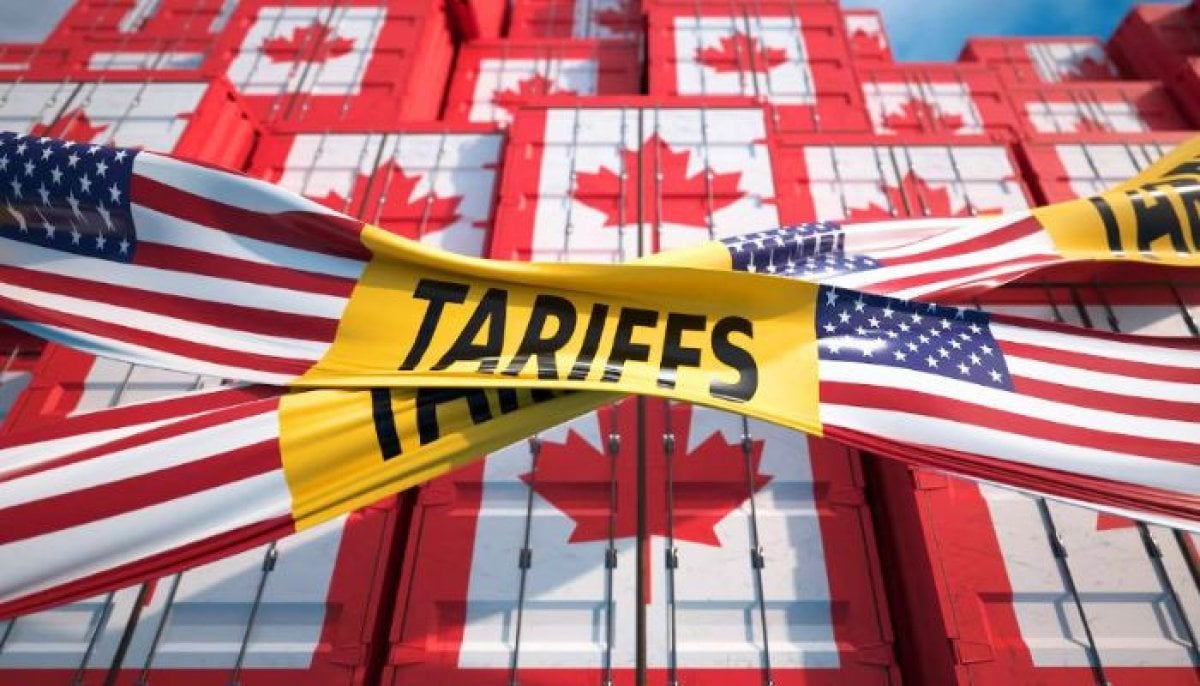

The U.S. administration announced a new 50% tariff on a broad range of Canadian imports, set to take effect 30 days after the signing of the executive order.
As reported by Reuters, the US President Donald Trump signed three proclamations to impose the tariffs under a nearly century-old trade law, Section 338 of the Tariff Act of 1930, which allows for tariffs of up to 50% on imports from specific countries.
Key Highlights:
U.S. officials pointed to alleged trade “discrimination” and unfair practices by Canada, specifically citing provincial bans or removal of American alcohol from store shelves, dairy supply management/quotas, and tax or quota policies affecting U.S. vehicle exports.
Section 338:
The administration invoked Section 338 of the Tariff Act of 1930. This rarely utilized statute allows the President to impose retaliatory duties if a foreign nation discriminates against U.S. commerce.

Impact on Free Trade:
Crucially, the administration stated that goods complying with the U.S.–Mexico–Canada Agreement will not be exempt from these levies.

This eliminates a major carve-out that previously protected a major portion of duty-free cross-border trade.
Economists and industry groups warned that the measures risk reigniting severe trade friction, driving up consumer prices, and disrupting supply chains across North America as the Canadian Dollar dropped Soon after the Tariffs’ announcement.
New Tariffs on Goods:
According to a White House fact sheet, the products covered by the tariffs range from wine to hockey sticks to cement.
The new tariffs would also apply to a variety of other items including dairy products, swimming pools, furniture, fishing rods, seeds, clothing and wigs.
U.S. Trade Representative Jamieson Greer said in a statement, “While the Administration continues to secure fair and reciprocal trade deals with our trading partners, Canada, unlike other partners and allies, continues to retaliate against the United States for its efforts to rebalance trade and protect U.S. industry in national-security sensitive sectors.”
The announcement comes just days after Trump blamed Canada for wildfire smoke spreading across the United States and threatened to add the “incalculable cost” of dealing with the pollution to existing tariffs on Canadian goods.
The tariffs announced on Monday take effect on August 19 and apply regardless of whether goods qualify under the U.S.-Mexico-Canada Agreement, though energy, potash, fish, critical minerals and products already covered by Section 232 tariffs are exempt.

