



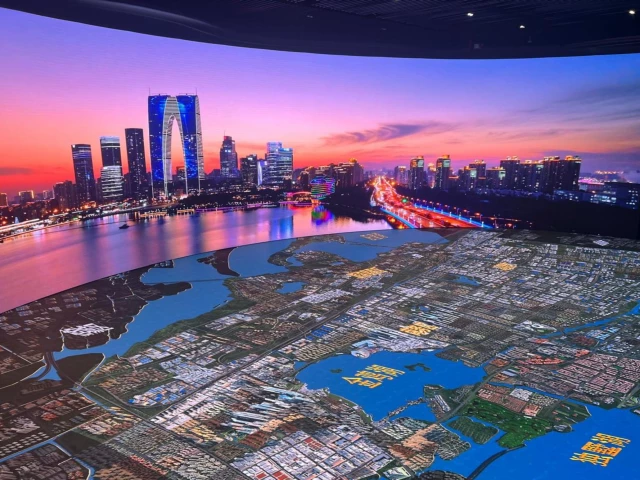

A view of Suzhou Industrial Park (SIP), a China-Singapore collaboration on the outskirts of Suzhou, China.
Over three decades ago, what is now Suzhou Industrial Park (SIP) was a modest stretch of paddy fields on the outskirts of a fabled Chinese city famed for its classical gardens and picturesque canals. Suzhou has since morphed into one of China’s most dynamic innovation hubs — a spectacular transformation driven by strategic planning, openness, and a sustained focus on technology-led growth.
Established in 1994 and spanning 278+ square kilometres, SIP stands as a beacon of China-Singapore collaboration. It was designed to integrate best practices in planning, economic management, and governance from both countries. Few could have imagined that this once unassuming expanse of farmland would evolve into a high-tech hub driving Suzhou’s rise as a centre of industrial innovation.
Openness and innovation were the two central pillars of SIP’s development model. This approach has enabled the park to attract foreign investment, fuel technological advancement, and build a thriving ecosystem for enterprises, including high-tech manufacturing, biotech, AI and green technology. SIP’s GDP reached 400 billion yuan ($55–60 billion) by 2025, accounting for nearly one-sixth of Suzhou’s total economic output.

The park’s focus on innovation is further highlighted by its R&D intensity, which stood at 5.61%. This, officials say, reflects a continued commitment to embedding innovation at the core of economic planning. “Opening up and innovation are the park’s greatest features,” said Liu Hua, deputy secretary of the CPC SIP Working Committee and deputy director of the SIP Administrative Committee, underlining the guiding philosophy that has shaped SIP’s trajectory.

An enterprise-driven approach played a key role in SIP’s success, according to local officials. Rather than relying entirely on top-down industrial policy, the park has focused on empowering businesses as the primary drivers of innovation. It has channelled resources into supporting companies at every stage of development, from startup incubation to scaling advanced technologies.
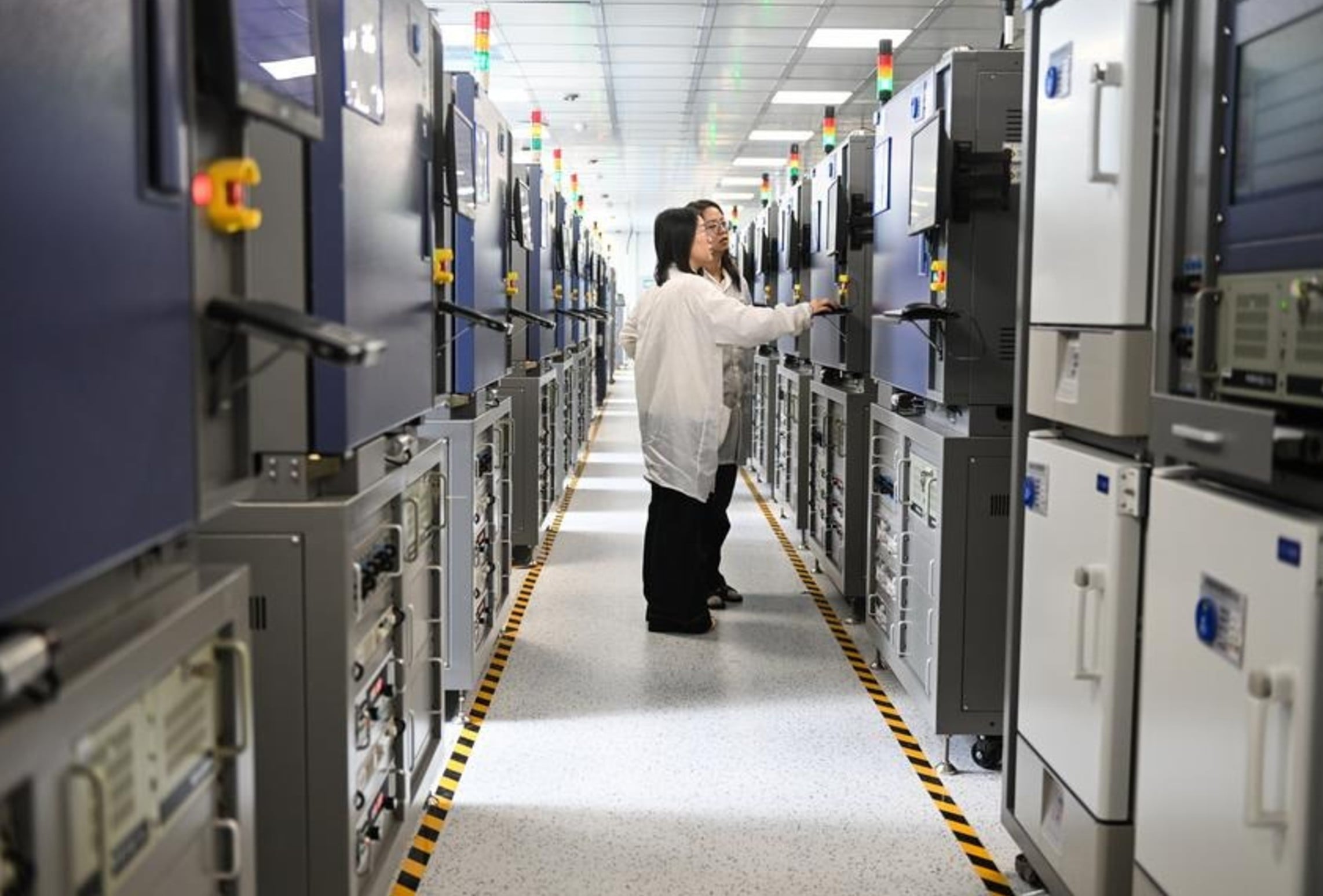
Today, SIP hosts more than 10,000 technology companies, including over 3,000 national high-tech enterprises and around 4,600 small and medium-sized tech firms. This dense concentration of companies has created a vibrant ecosystem where collaboration, competition, and innovation reinforce one another.
The park has also accelerated the development of a modern industrial system centred on AI, digital industries and next-generation information technologies. This strategic focus aligns with broader efforts by Suzhou to position itself as a leader in intelligent manufacturing and AI-driven industrial transformation.
One company that exemplifies this ecosystem is AISpeech, a firm specialising in conversational AI. Founded in 2007, the company chose to establish itself in SIP the following year. The company has developed extensive intellectual property, holding 1,597 intellectual property rights and contributing to more than 70 national and industry standards. Its technologies are now integrated into a wide range of applications, including automotive systems and smart home devices, with clients spanning major global brands.
According to its co-founder and chief scientist Yu Kai, Suzhou’s proactive approach to attracting talent and investment played a decisive role in AISpeech’s decision to locate in the park. “Suzhou offers a solid foundation with its strategic planning, efficient governance, and clear support for technology industry policies,” Yu said.
SIP’s real strength lies in its ability to cultivate industrial clusters. By bringing together firms across the value chain — from upstream suppliers to downstream applications — the park has created an integrated ecosystem that accelerates technological development and commercialisation.
This cluster-based model has been particularly effective in sectors such as AI, automotive electronics, and the Internet of Things. Companies benefit from proximity to partners, customers and research institutions, enabling rapid iteration and deployment of new technologies.
Suzhou’s broader industrial landscape further reinforces this ecosystem. The city is home to a vast network of industrial enterprises and high-tech firms, supported by a talent pool of over four million people, including more than 510,000 professionals holding bachelor’s degrees or higher — ranking first in talent quality among China’s National Economic and Technological Development Zones. SIP also benefits from the presence of more than 30 prestigious universities and colleges and more than 40 scientific research institutes, fuelling active innovation and driving sustainable growth.
At the same time, SIP’s development has been shaped by a commitment to maintaining openness. The park has actively attracted foreign investment, positioning itself as a key destination for multinational companies seeking to expand their presence in China. Today, according to official figures, SIP is home to over 5,100 foreign-invested enterprises, including 174 projects backed by 104 Fortune 500 companies.
This openness is evident in the growing number of international firms establishing R&D operations in the region. Companies are drawn by Suzhou’s strong industrial base, skilled workforce and integrated supply chains, which offer significant advantages for innovation and production.
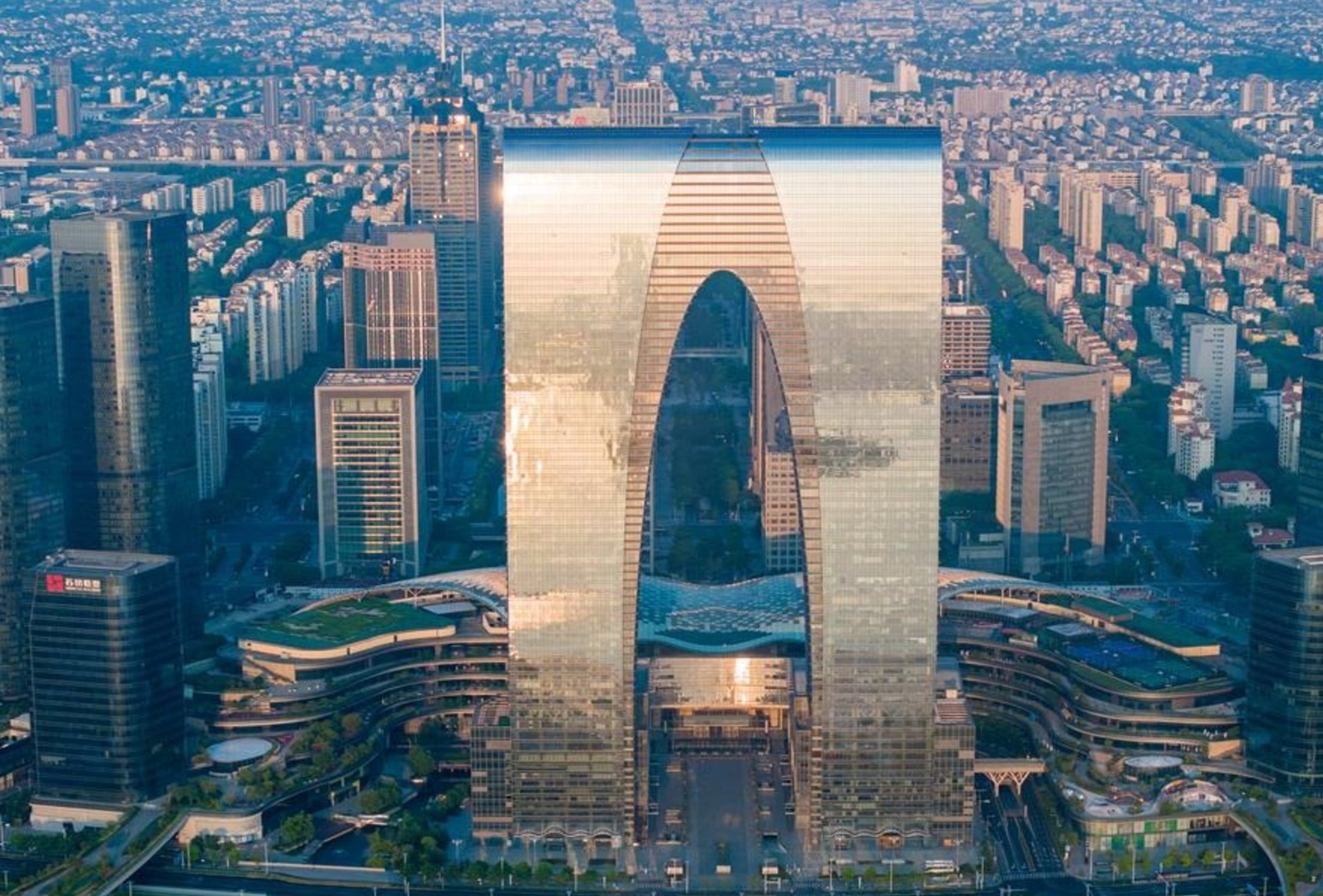
The park’s success mirrors Suzhou’s broader transformation. SIP exemplifies a futuristic model of urban development, integrating sustainability, advanced technology, and quality-of-life improvements. With its scenic landscapes, cultural attractions, and strong community services, the park not only draws businesses but also fosters a highly liveable environment. This dynamic balance of economic vitality and urban liveability continues to position SIP as a global benchmark for integrated industrial and urban development.
While modern infrastructure and skyscrapers define districts like SIP, strict regulations have preserved the historic skyline of the city’s traditional areas. Cultural heritage is not treated as an obstacle to development but as an asset that enhances the city’s global appeal.
This integration of past and future is also evident in the use of technology to preserve and promote cultural traditions. Digital tools and AI are being employed to revitalise classical art forms and local dialects, making them accessible to new generations and global audiences.
Despite its rapid growth, SIP continues to evolve. Officials have set ambitious targets for further expansion, including increasing industrial output and deepening the integration of advanced technologies across sectors. The park is expected to play a central role in Suzhou’s goal of reaching new economic milestones in the coming years.
At its core, the story of SIP is one of transformation — not just of a physical landscape, but of an entire economic model. From paddy fields to a high-tech hub, SIP illustrates how strategic vision, policy continuity and a commitment to innovation can reshape a region’s destiny.

