




• Rejects office objection claiming high courts are final forum in rent matters
• Judgement clarifies scope of appellate jurisdiction after 27th Amendment
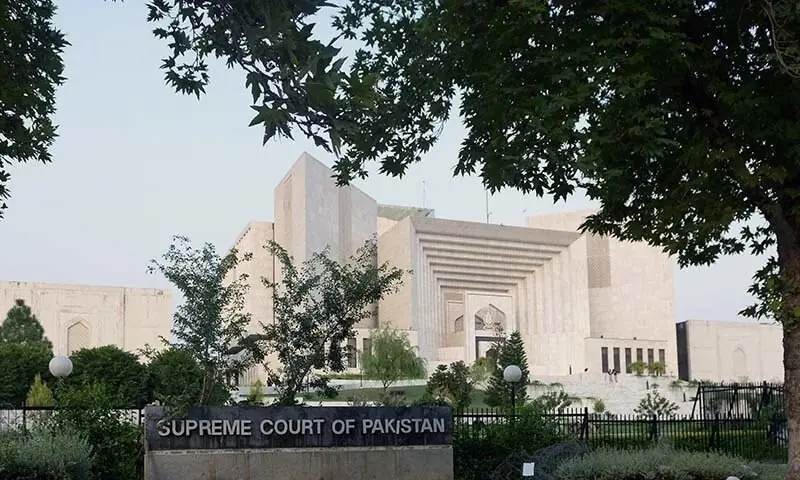
ISLAMABAD: In a loud and clear message, the Supreme Court on Tuesday affirmed its appellate hierarchy under the 27th Amendment by holding that civil petitions concerning rent and family matters, previously adjudicated by high courts under Article 199, are maintainable before it.
The controversy emerged from an office objection regarding the maintainability of a civil petition on the ground that the impugned judge-ment had been rendered by a high court under Article 199 in a rent matter and, thus, was not maintainable before the SC under the constitutional dispensation introduced through 27th Amendment.
The office objection further contended that following the insertion of Article 175F(1)(c) by the 27th Amendment, high court functions as the final judicial forum in rent matters, and as such, no appeal against a judgement pertaining to a rent matter lies before the SC.

The office also argued that while Article 185(3) confers general appellate jurisdiction upon the SC, Article 175F(1)(c), being a specific provision introduced subsequently, excludes rent matters from all appellate forums beyond the high court.

A three-judge SC bench headed by Chief Justice of Pakistan Yahya Afridi, and comprising Justice Muhammad Ali Mazhar and Justice Muhammad Shafi Siddiqui, overruled the office objection through a short order on Dec 12, 2025, while hearing the case of Messrs Moon Dental Clinic, Islamabad.
In the detailed reasons authored by the CJP, the court cited Article 175-F(1) of the Constitution, which provides for the appellate jurisdiction of the Federal Constitutional Court (FCC).
From a plain and textual reading of Articles 185(3) and Article 175-F(1)(c), the judgement explained that Article 185(3) operates as a general source of appellate jurisdiction of the SC in respect of judgements, decrees, orders or sentences of the high courts, subject only to the exclusion contained within it — namely, cases to which clause (1) of Article 175F applies.
Article 175F(1), in turn, sets out the appellate jurisdiction of the FCC and, by virtue of the proviso to clause (1)(c), expressly excludes cases relating to rent and family matters from its jurisdiction.
The core question before the court, therefore, was whether judgements or orders of a high court pertaining to rent and family matters, which stand expressly excluded Article 175F(1), are removed altogether from the appellate framework beyond the high court, including the Supreme Court, or whether such exclusion places them outside the scope of Article 175(1), thereby attracting the appellate jurisdiction of the SC under Article 185(3).
The judgement clarified that the proviso to Article 175F(1)(c), which states that “no appeal shall lie against a judgement or an order of a high court made under Article 199 in a case relating to rent and family matters,” operates as a true proviso and qualifies the general scope of clause (1)(c) by expressly excluding such matters.
By this exclusion, rent and family matters are removed from the operative field of Article 175F(1)(c).
Read in conjunction therewith, the proviso to Article 185(3), which provides that “no appeal shall lie to the Supreme Court in cases to which clause (1) of Article 175F applies”, it becomes evident that the bar on the appellate jurisdiction of the SC applies only to cases that actually fall within.
Article 175F(1).
Since rent and family matters are expressly excluded from the applicability of Article 175F(1)(c), such cases cannot be regarded as falling within Article 175F.
Consequently, petitions arising out of rent and family matters are not barred from the appellate jurisdiction of the SC under Article 185(3), it explained.
The court held that the office objection, premised on the petition arising from a rent matter, was misconceived and rightly overruled.
Accordingly, the SC ruled that the present petition was maintainable and would be proceeded with in accordance with law.
Published in Dawn, January 21st, 2026

