


Subcontinent might see subdued monsoon as ‘super El Niño’ expected this year: weather expert

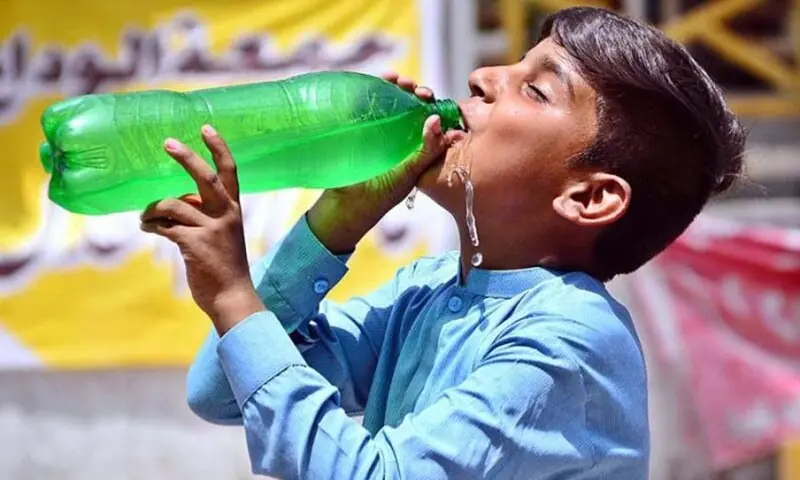

KARACHI: The subcontinent might witness a subdued monsoon this summer as the warming El Niño weather phenomenon is expected to form later this year, according to a weather expert.
“We are expecting El Niño in the coming summer and it is expected to become ‘super El Nino’ by the end of August to September,” Pakistan Meteorological Department’s (PMD) spokesperson Anjum Nazir Zaigham told Dawn. He noted that El Niño suppresses the summer monsoon in the subcontinent.
El Niño and its cooler sister La Niña are climate patterns in the Pacific Ocean that can affect weather worldwide.
El Niño and La Niña events occur every two to seven years, on average, but they do not occur on a regular schedule, according to the United States’ National Oceanic and Atmospheric Administration (NOAA).

Last month, NOAA noted there was a 50- to 60-per cent chance of El Niño developing during the July-September period and beyond.

The last El Niño occurred in 2023-2024, contributing to making 2023 the second highest year on record and 2024 the all-time high.
El Niño’s impact would be higher in 2027 than in 2026 if it develops in the second half of this year, according to Tido Semmler, a climate scientist at Ireland’s National Meteorological Service. “It takes time for the global atmosphere to react to the El Nino,” he said earlier.
Meanwhile, in a weather forecast issued on Wednesday, the PMD said “hot and dry weather was likely to prevail over most parts” of Sindh.
It forecasted “warm” weather today and tomorrow in Karachi, with the maximum temperature reaching 36 degrees Celsius today.
Humidity levels in the morning were expected to remain 80 per cent, before dropping to 40-50pc in the evening.
For Friday, the PMD predicted hot weather in the metropolis, with mercury surging to 37°C during the day and remaining between 24-26°C at night.
What is El Niño?
El Niño typically results in drier conditions across southeast Asia, Australia, southern Africa, and northern Brazil, and wetter conditions in the Horn of Africa, the southern United States, Peru and Ecuador.
El Niño can weaken consistent trade winds that blow east to west across the tropical Pacific. “Warm water is pushed back east, toward the west coast of the Americas,” NOAA notes.
This weakening warms the usually cooler central and eastern sides of the ocean, altering rainfall over the equatorial Pacific and wind patterns around the world.
The extra heat at the surface of the Pacific releases energy into the atmosphere that can temporarily drive up global temperatures, which is why El Niño years are often among the warmest on record.

