



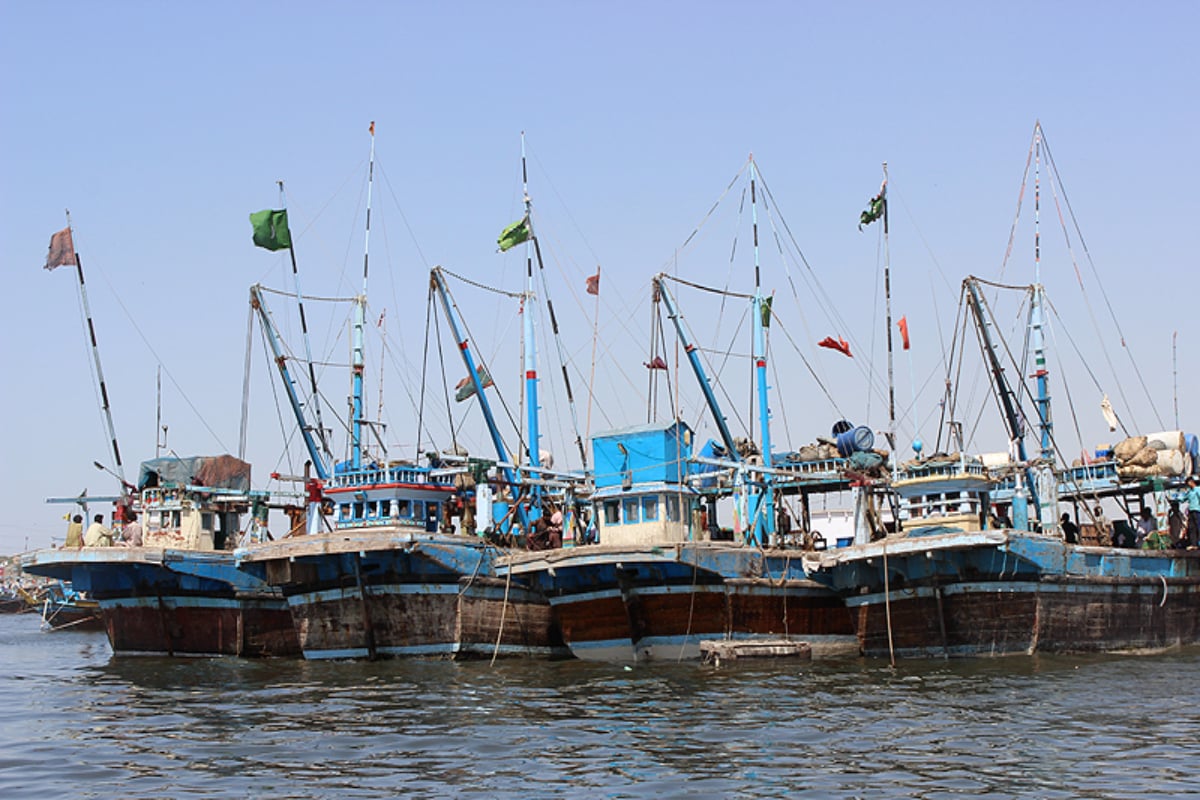

KARACHI: The federal minister for maritime affairs warned Friday that a marine heatwave in the northern Arabian Sea poses an escalating threat to coastal communities, fisheries and maritime infrastructure, and called for urgent climate adaptation measures.
In a statement marking Climate Day, Minister Muhammad Junaid Anwar Chaudhry said sea-surface temperatures in the region have exceeded the 90th percentile across more than 30% of the area in recent weeks.
Scientists describe the event as an unprecedented marine heatwave already intensifying climate risks along Pakistan’s coast and altering forthcoming monsoon behavior, he added.
Chaudhry said the anomalous warming could increase tropical cyclone activity in the North Arabian Sea, putting added pressure on ports, fishing fleets and coastal infrastructure. He demanded heightened preparedness across government and industry.

Climate records show a warming trend since the 1980s and a westward shift in monsoon moisture that could raise the likelihood of heavier-than-normal rainfall in southern Pakistan, particularly Karachi and Sindh, between mid-August and mid-September, the minister said. He warned that intense rainfall events could overwhelm urban drainage systems and heighten flood risk.

Chaudhry said the planet was sending urgent warning signals through increasingly frequent climate extremes, including rising heatwaves, prolonged droughts and devastating floods.
“We must respond collectively to protect future generations from escalating environmental risks and ensure sustainable development policies,” he said.
Citing recent U.N. Environment Programme reports, Chaudhry noted that record greenhouse gas emissions and rapid planetary warming are increasing the frequency, intensity and duration of marine heatwaves worldwide.
“The ocean has absorbed a large share of excess atmospheric heat,” he said, adding that this buffering role is straining marine ecosystems and dependent communities.
The minister called for an accelerated, integrated response combining climate adaptation, disaster risk reduction and sustainable maritime governance.
Priority actions include strengthening early-warning systems for marine heatwaves, cyclones and extreme rainfall; expanding alternative livelihoods for fishing communities; accelerating mangrove restoration and shoreline protection; improving port and shipping preparedness; and enhancing real-time ocean monitoring through scientific collaboration.
Chaudhry said the Ministry of Maritime Affairs will coordinate with the Ministry of Climate Change, provincial governments, the Pakistan Navy, fisheries cooperatives and international partners to implement the measures. He also appealed to the private sector, port authorities and civil society to join a coordinated national response.
“We are at a critical moment,” Chaudhry said, urging timely, science-based action, stronger global emissions cuts and climate finance to help developing coastal states adapt. He called for heightened vigilance ahead of the monsoon season and an intensified national campaign on coastal preparedness to protect lives, food supplies and the ecological and economic health of Pakistan’s seas.

