


• Cites constitutional question over nomination of Balochistan bar representative
• SJC examines complaints against IHC judges; references against ECP members ‘filed to record’
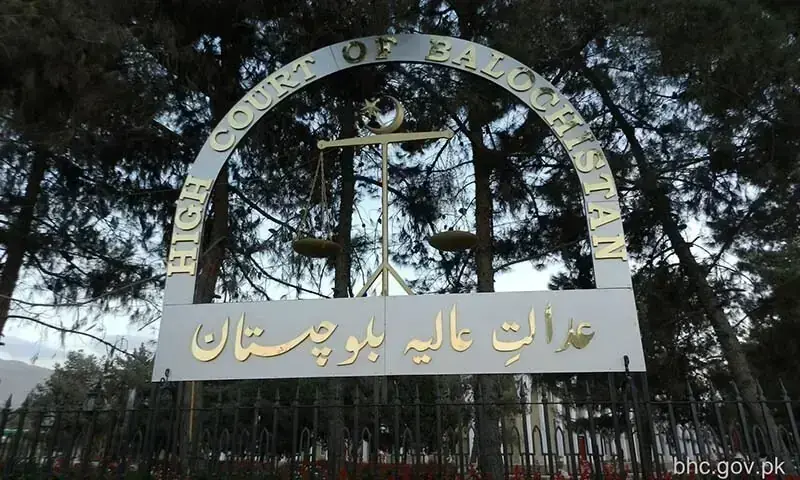
ISLAMABAD: The Judicial Commission of Pakistan (JCP) on Wednesday deferred the consideration for the elevation of two additional judges to the Balochistan High Court from the provincial district judiciary.
Presided over by Chief Justice of Pakistan (CJP) Yahya Afridi, the consideration was postponed in view of a constitutional question concerning the nomination of the representative of the Balochistan Bar Council. The members of the commission stressed the need for comprehensive consideration of the issue before proceeding further.
Names of six serving district and sessions judges (DSJ) were under consideration of the JCP for their appointment to the BHC. They were: Jan Muhammad Gohar, Pazir Ahmed Baloch, Allah Dad Roshan, Abdul Qayyum Lehri, Inayatullah Khan and Rehmat Ullah.

On Tuesday, the JCP was requested on behalf of vice chairman of Balochistan Bar Council, Jadain Dashti, to postpone its meeting until the finalisation and notification of clear rules and procedures governing the removal or replacement of those members of the commission who have lost confidence of their respective nominating authorities.

The two-page letter said that lawyers of Balochistan were deeply aggrieved and have lost confidence in the member representing Balochistan owing to serious allegations and concerns regarding his conduct and integrity.
The prevailing situation has created dissatisfaction within the legal fraternity of the province and has undermined the confidence reposed by the nominating authority, the letter said, adding that in the absence of finalised rules addressing such circumstances, the continuation of meetings of JCP may give rise to ambiguity and institutional complications.

The letter further said the matter directly concerns the authority, confidence, and representation of the nominating authorities, including provincial bar councils and, therefore, requires clarity and resolution before any substantive proceedings are undertaken.
In these circumstances, it is earnestly requested that the scheduled meeting be deferred until the relevant rules are duly finalised and notified, so that the proceedings of the commission may be conducted within a clear, transparent, and undisputed legal framework, the letter stated.
Meanwhile, the CJP also presided over the commission’s meeting to discuss the proposed framework for framing rules governing interviews of candidates at the time of their appointment as judges. After preliminary discussion, the commission resolved to defer the agenda to enable members to undertake further in-depth deliberations on the proposed regulatory contours.
SJC meeting
Separately, CJP Yahya Afridi also presided over a meeting of the Supreme Judicial Council (SJC) and examined 59 complaints filed under Article 209 of the Constitution.
Among them were references related to IHC Justices Sardar Ejaz Ishaq Khan and Saman Rafat Imtiaz, sources said. The complaint against Justice Khan was filed over his announcement of a judgement after reserving it for nearly three years.
Sources also said that a reference against former IHC judge Justice Tariq Mehmood Jahangiri has been placed on the record as infructuous, as he had already been removed from office.
Insiders said that IHC CJ Sarfraz Dogar had recused himself when cases involving judges from his court were taken up. He was replaced by Peshawar High Court Chief Justice S M Atiq Shah for the relevant proceedings.
Sources also revealed that the SJC reviewed and filed to record references against the chief election commissioner, and other members of the Election Commission of Pakistan (ECP).
According to an official statement, of the 59 complaints, 50 were ordered to be disposed of, six were deferred, and three were directed to be processed further in accordance with the law. The council also unanimously decided to defer the finalisation of draft rules on the code of conduct until its next meeting.
Published in Dawn, February 12th, 2026