



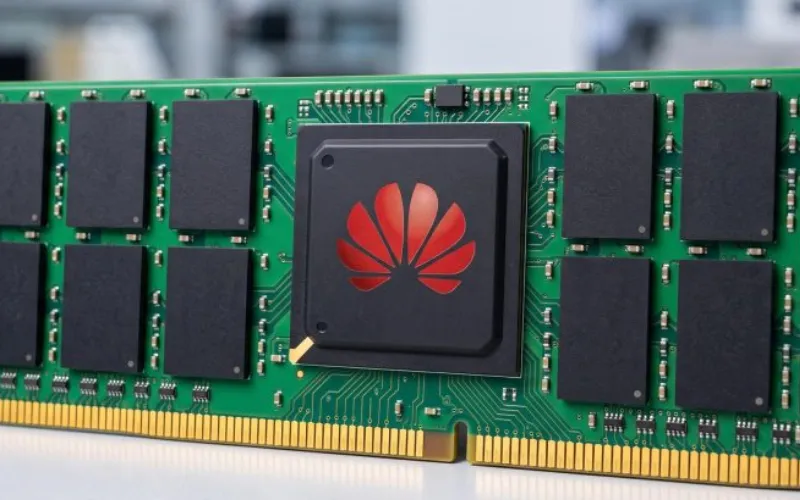

SHENZHEN: Huawei is reportedly supporting a large-scale DRAM project in China, aiming to boost local chip production and secure memory supplies as global demand rises and technology restrictions intensify.
According to industry reports, the project involves SwaySure Technology, a Shenzhen-based state-backed memory company that has previously been linked to Huawei.
The proposed facility is expected to operate on a 12-inch wafer production line, initially using a 28-nanometre (nm) process technology and targeting a monthly production capacity of 140,000 wafers.
The latest claims emerged from information shared by semiconductor industry sources and the Semiconductor Insider account on X. However, neither Huawei nor SwaySure has officially confirmed the reported partnership or production targets.

Technology publication Wccftech described the report as “plausible” but noted that independent verification remains limited.

Industry observers also highlighted that the reported 28nm process and 140,000-wafer monthly capacity figures are not entirely new.
Similar details were reported when SwaySure was established in Shenzhen in 2022, suggesting that the latest information may relate to the expansion or development of an existing project rather than a completely new facility.
Founded in March 2022, SwaySure Technology is a state-supported memory chip developer and manufacturer focused on products for consumer electronics, automotive applications, and other technology sectors.
The Financial Times previously reported that SwaySure operates one of several semiconductor facilities developed in Shenzhen with government support. Industry sources claimed that Huawei provided assistance to some related companies through technical expertise, employee support, and fundraising efforts.
Huawei, however, has denied that SwaySure and other semiconductor companies are its affiliates, stating that it is inaccurate to directly associate all semiconductor activities in Shenzhen with the company.
SwaySure has recruited senior executives with extensive experience in the global semiconductor industry.
Chief Executive Officer Liu Xiaoqiang previously managed fabrication facilities for Taiwan Semiconductor Manufacturing Company (TSMC), while Yukio Sakamoto, the former chief executive of Japanese DRAM manufacturer Elpida Memory, serves as the company’s Chief Strategy Officer.
Their industry experience could help SwaySure develop DRAM manufacturing capabilities, an area where Huawei has limited direct production experience.
Huawei currently depends on external suppliers for many memory chips used in smartphones, telecommunications equipment, vehicles, and AI hardware.
A domestic DRAM production facility could provide Huawei with greater supply security if foreign shipments face additional restrictions or rising costs.
The company has faced US technology restrictions since 2019, limiting access to advanced chips, manufacturing equipment, and international suppliers. These restrictions have pushed Huawei and China to accelerate efforts toward building a more independent semiconductor ecosystem.
A successful DRAM facility could reduce dependence on global memory leaders, including Samsung Electronics, SK hynix, and Micron Technology, which currently dominate the global DRAM market.
The reported project comes as the semiconductor industry faces increasing pressure due to rising demand for memory chips driven by artificial intelligence (AI) data centres and high-performance computing.
SK hynix Chief Executive Officer Kwak Noh-jung recently warned that the memory industry could face its worst-ever supply shortage by 2027, with demand expected to continue exceeding production capacity beyond 2030 despite major investments in new facilities.
The rapid growth of AI applications has increased demand for both high-bandwidth memory (HBM) and conventional DRAM, contributing to higher component prices and supply challenges across smartphones, computers, vehicles, and other electronic devices.
No official construction schedule or mass production timeline has been announced for the reported facility.
It also remains unclear which generation of DRAM products SwaySure plans to manufacture initially. Experts suggest that a 28nm process would likely focus on mature memory applications rather than advanced HBM technology used in cutting-edge AI processors.
Although the project remains unconfirmed, SwaySure’s government backing, experienced leadership, and reported connections with Huawei highlight China’s continued push to develop a stronger domestic memory chip supply chain.

