


How was Alexander Skarsgård transformed in ‘Wicker’? Wētā Workshop reveals the process

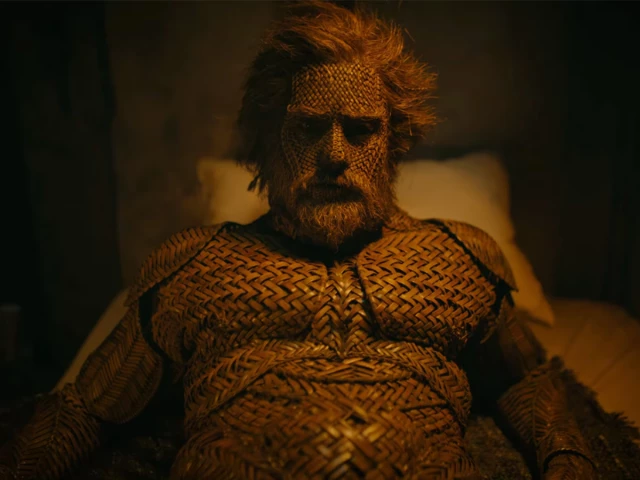

The production relied on New Zealand-based Wētā Workshop to build the film’s central character
Alexander Skarsgård’s striking wicker appearance in Wicker was created primarily with practical effects rather than CGI, according to details released alongside the film’s first official trailer.
The production relied on New Zealand-based Wētā Workshop to build the film’s central character as a wearable practical suit, using only minimal digital effects to complete the illusion.
The fantasy drama, starring Olivia Colman, Skarsgård, Peter Dinklage and Elizabeth Debicki, premiered at Sundance earlier this year and is scheduled to open in select US cinemas on October 23 before expanding nationwide on October 30.

Directors Alex Huston Fischer and Eleanor Wilson reportedly decided early in production that the wicker husband could not be created as a fully digital character.

Instead, Wētā Workshop developed a three-layer construction featuring a 3D-printed prosthetic shell shaped to Skarsgård’s body, genuine wicker weaving applied over the surface, and minor CGI compositing to make the character appear hollow through the gaps in the weave.
According to the publication, the 3D-printed underlayer solved a complex design challenge, as a human body cannot be accurately recreated using only straight woven fibres. The printed structure provided the necessary contours while preserving the appearance of an entirely woven figure.
Skarsgård described wearing the suit as “a new, different experience”, explaining that the extensive prosthetics covering much of his face meant he had to exaggerate his movements during filming, with directors sometimes asking for “more eyebrow action”.
The restrained use of CGI allowed the character to remain physically present on set, giving performers genuine interaction and helping preserve the realism of the film’s central relationship.

