


Govt has placed stunting, population management at ‘highest national priority’: Ahsan Iqbal

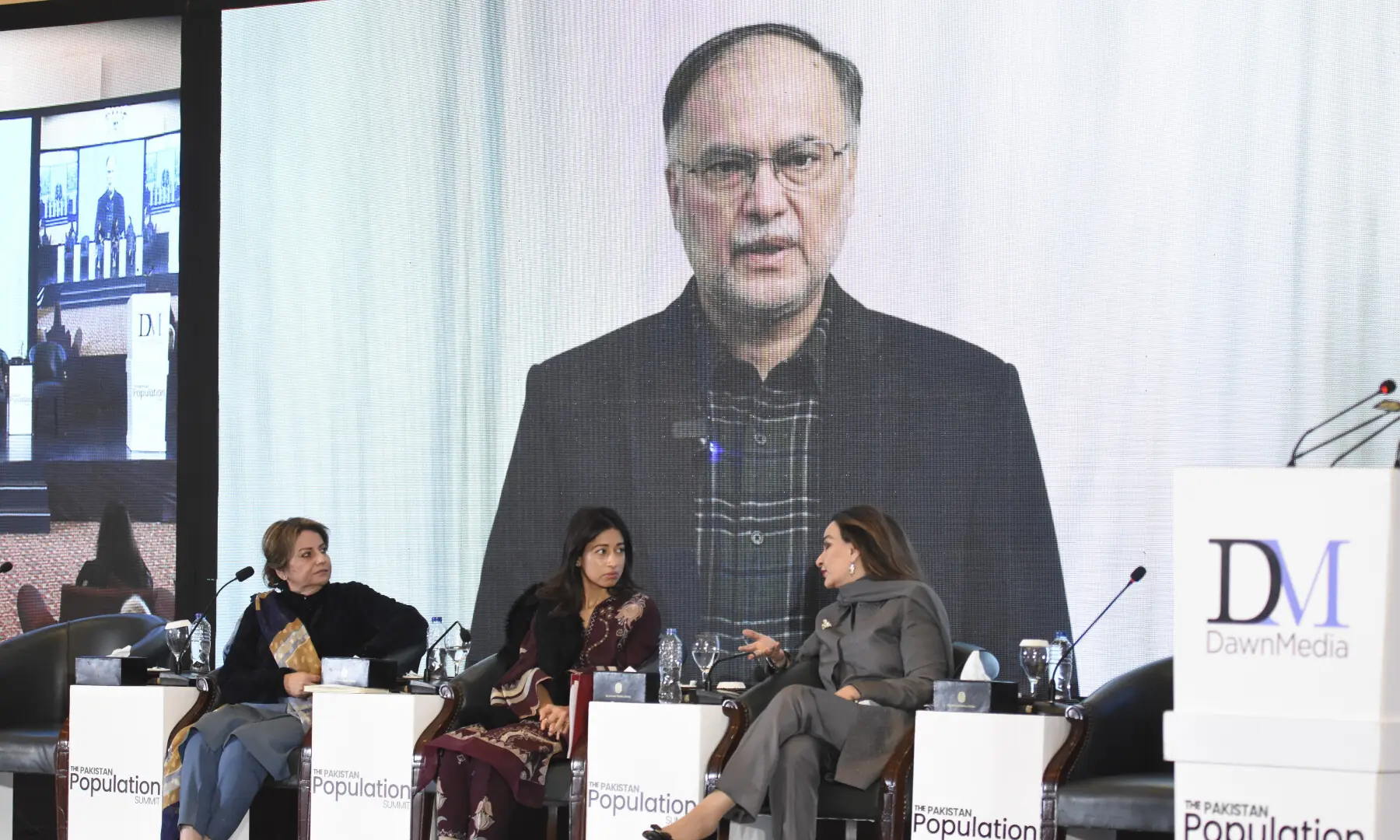

The ‘Pakistan Population Summit’ — a national dialogue on restoring balance and building sustainable futures — has begun in Islamabad to emphasise the need to recognise population planning as an investment in the country’s development.
Organised by DawnMedia, the two-day summit is bringing together politicians, economists, development specialists, private sector leaders, and experts to develop a shared vision as the rising population continues to place pressure on health systems, food and water security, and employment.
Pakistan, with a population of over 241 million, is the fifth most populous country in the world, adding four to five million people every year. Its population growth rate of 2.40 per cent is the highest in South Asia.
The rapid increase is outpacing employment opportunities, with official statistics showing the country will require 104m jobs by 2040. Pakistan will not be able to achieve Sustainable Development Goals (SDGs) by 2030 if the current trajectory of population growth does not slow down.

View the full agenda here.

11:55 — Dr Sathar sounds alarm on out-of-school children
On the number of out-of-school children, Dr Sathar termed it an “unacceptable figure”.
She said the figures were not huge because of parents not wanting to send their children to school, but it was a “failure” of the governments.
“I don’t want to point to any particular government; all the past few governments.”
11:40 — Dr Zeba Sathar calls for restoring balance to address population growth
Dr Zeba Sathar, the country director for Pakistan at Population Council, opened the second session, explaining the summit’s theme on “balance” in addressing population growth.
“We have centred our whole theme around balance because it is important to have a national narrative,” Sathar said.
“The balance really is about responsibility, the state’s responsibility; the balance has to be restored in terms of societal issues, the balance between resources, and the number of people in Pakistan,” she said.
Comparing Pakistan’s population growth with other countries in South Asia, she noted that “We are clearly out of balance in terms of where we are standing with our neighbours.”
“Our growth rate is double that of our neighbours,” she added.
11:38 — Govt has placed ‘stunting, population management at highest national priority’
Speaking further, the planning minister highlighted that Prime Minister Shehbaz Sharif has placed “stunting and population management at the highest national priority”.
“The government is moving towards emergency multi-sector action integrating health, nutrition, education, social protection, water and local government systems,” Ahsan Iqbal said.
“It is not population size but population quality that drives national progress.”
The minister stressed that Pakistan’s priority must be fewer children but better outcomes for every child.
11:35am — Planning Minister Ahsan Iqbal highlights child stunting
Addressing the summit via video link, Planning Minister Ahsan Iqbal termed child stunting one of the most painful demographic challenges.
“Countries with high stunting lose 2-3pc of GDP annually. Due to no productivity and impaired human capital, a stunted child earns up to 22pc less over their lifetime,” Iqbal said.
He added, “This is not a health issue alone. It is a national productivity crisis, a national development emergency, and a direct threat to Pakistan’s long-term economic strength and sustainability.”
“I commend DawnMedia group, the Population Council and all our development partners for convening a dialogue on an issue that will shape Pakistan’s destiny more than any other.”
Citing the estimated figure of 370m by 2050, Iqbal termed population growth a “defining challenge for our future stability, prosperity and competitiveness”.
“Every single year, Pakistan adds almost the entire population of New Zealand, around 4-4.5m people,” the minister noted.
11:30am — No more a demographic issue: Shaista Pervaiz
MNA Shaista Pervaiz began her address by commending the participants, lauding their “collective resolve to address population challenges”.
She stressed that “population growth is no more a demographic issue”.
She continued: “It is linked with our economy, it is linked with the well-being of our people, linked with the future of our children, linked with everything a country is judged by.”
Pervaiz noted that while there was “political will” present to address the issue, it was time that it should be “turned into action”.
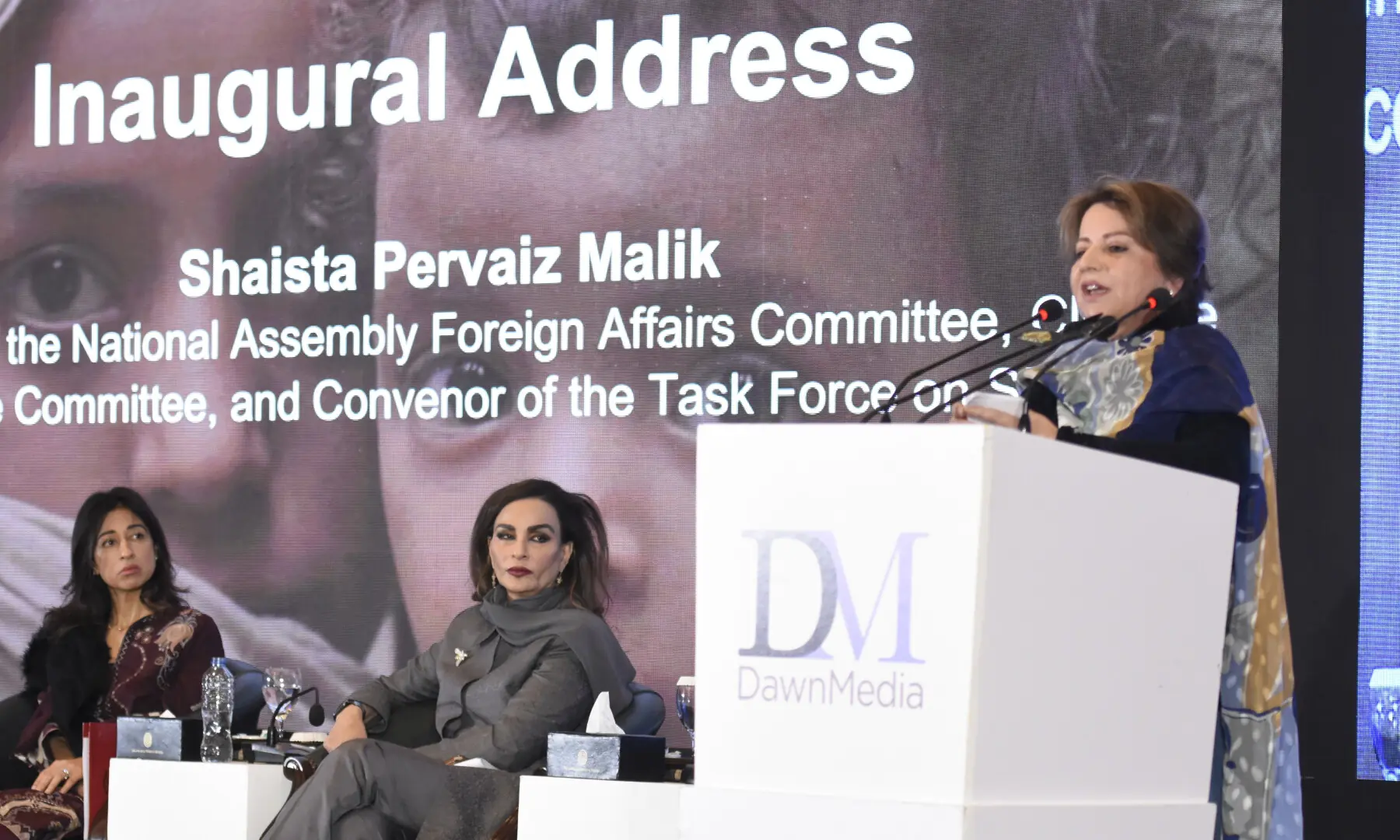
11:26am — ‘No new ministry needed; have information ministry do awareness drive’
Providing suggestios on how to tackle the issue, Sherry Rehman said the federal government should have the information minister hold an awareness drive in the national language on population and family planning.
“It doesn’t need to worry about having a population ministry. Please don’t have ministries. Please don’t,” the senator said.
“Start putting this on phones, on Androids, on anything. And you will have yourself a campaign that goes into your doors.”
11:14am — There is demand for the ‘C-word, for contraception’: Sherry Rehman
Sherry Rehman stressed, “There is demand for the C-word, for contraception. Contraception prevalence rate (CPR) is what you need to talk about.”
Noting that the CPR was 34pc, she emphasised that contraceptive usage would lower the birth rate and said there was a need for it to be easily and cheaply accessible.
“One province is offering vasectomies to men who are willing to take it up,” she remarked.
“Every 50 minutes, before we finish this session, a woman in Pakistan will die due to pregnancy or childbirth complications.”
The senator noted the Council of Islamic Ideology’s ruling allowing birth spacing and said the hesitation was not a religious matter, but rather a cultural taboo.
Noting the high unemployment rate, Rehman said it raised “discontent in the state’s ability to provide a climate where employment is easily available”.
11:05am — ‘72pc of a woman’s day spent carrying water’
Sherry Rehman also pointed out the excessive water consumption, calling for the need to reduce it. She termed large-storage dams “a thing of the past”, noting the lack of financing for them and the displacement caused by them.
“Seventy-two per cent, three quarters, of the average woman’s day in Pakistan is taken up carrying water. Shocking, isn’t it?” the senator highlighted.
“Food, climate and poverty are all impacted,” Rehman, the chairperson of the Parliamentary Forum on Population, said.
“Forty per cent of children under five are stunted,” she added, noting that mothers were also not able to make the health choices that they need to, including birth spaces.
11:03am — Population numbers amplify climate shocks: Sherry Rehman
Speaking about the intersection of climate change and population growth, Senator Rehman said, “With our economic growth dragged down by climate shocks and institutional fragility — let’s not pretend that is not the case —we are not able to lift millions out of the poverty I just spoke about.”
She detailed that if the GDP was already being impacted by multiple factors, such as the recent floods, “population numbers stretch those numbers further”.
“There are simply more people to save, more people to shelter, more people to feed, house, clothe, and save from diseases.”
11:00am — ‘Population growth has passed some kind of danger line’
Referring to Nazafreen’s comments on Pakistan’s “youth bulge”, Senator Sherry Rehman said, “Pakistan talks about this demographic dividend non-stop, but at which point does this dividend become a challenge?
“When you are not able to provide jobs for the 1.5m jobs needed per year,” she said, stressing that “it was a huge number”.
“Population growth, in my view, and I am sure everyone agrees, has passed some kind of danger line,” Rehman cautioned.
“Of course, we love people, we love our births, and we mourn our deaths, but what goes round here is the pressure on our resources,” the senator explained.
10:55am — Sherry Rehman terms population growth a ‘ticking time bomb’ for Pakistan
In a keynote address, Senator Sherry Rehman recalled: “Seven years ago, I wrote about three ticking time bombs for Pakistan — unchecked population growth was one of them, water scarcity, and of course, climate stress.”
“In my view, they are no longer ticking; they have noiselessly exploded around us,” the minister warned.
“They have already done the damage they needed to do,” she said.
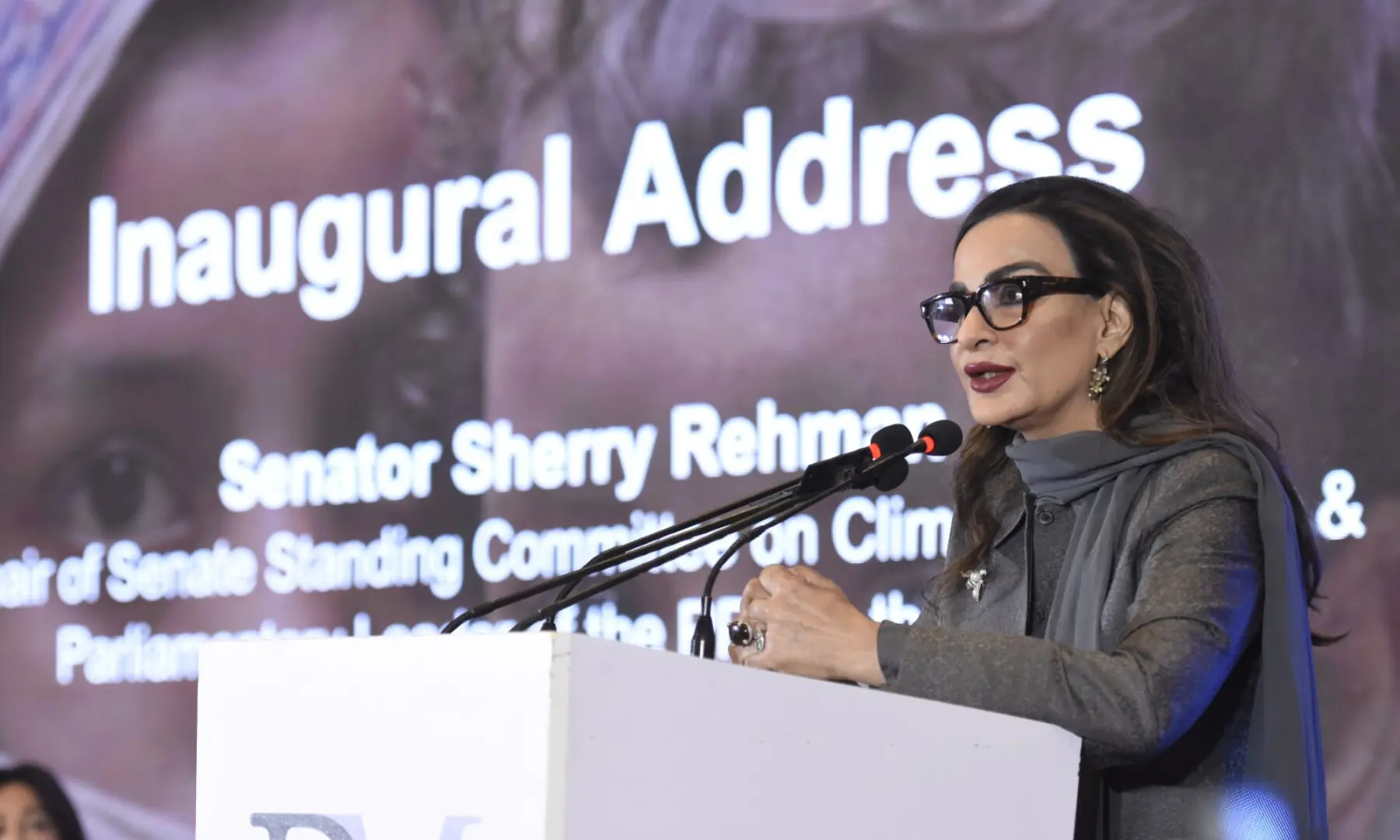
10:50am — Dawn CEO Nazafreen highlights Pakistan has ‘young’ population
Inaugurating the moot, Nazafreen Saigol-Lakhani, the CEO of Dawn, highlighted that Pakistan had a mostly young population, with the “median age of just over 20 years”.
Stating some estimates about the expected population in the coming years, she said the rapid growth directly affects the lives of people and the country’s future.
“It places immense pressure on our health care system, especially maternal and child health. It stretches our education system, leaving millions of children without access to quality learning. It increases the demand for jobs, housing, clean water, sanitation, transport and for energy.”
Nazafreen further said, “We will bring you ideas, detailed reporting, expert analysis and focused storytelling, so that the conversations here reach people across the country and help shape a more informed national debate.”
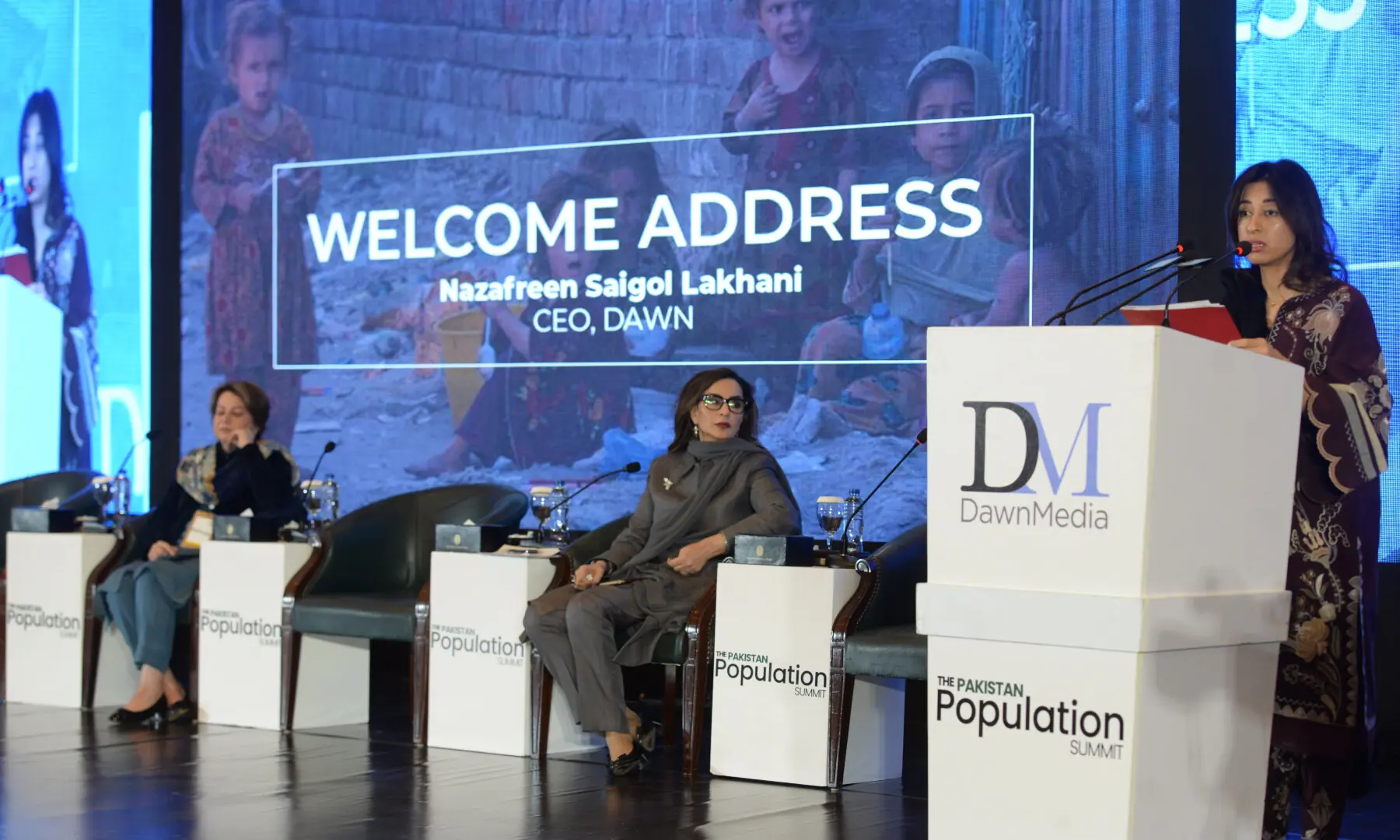
10:40am — Conference begins
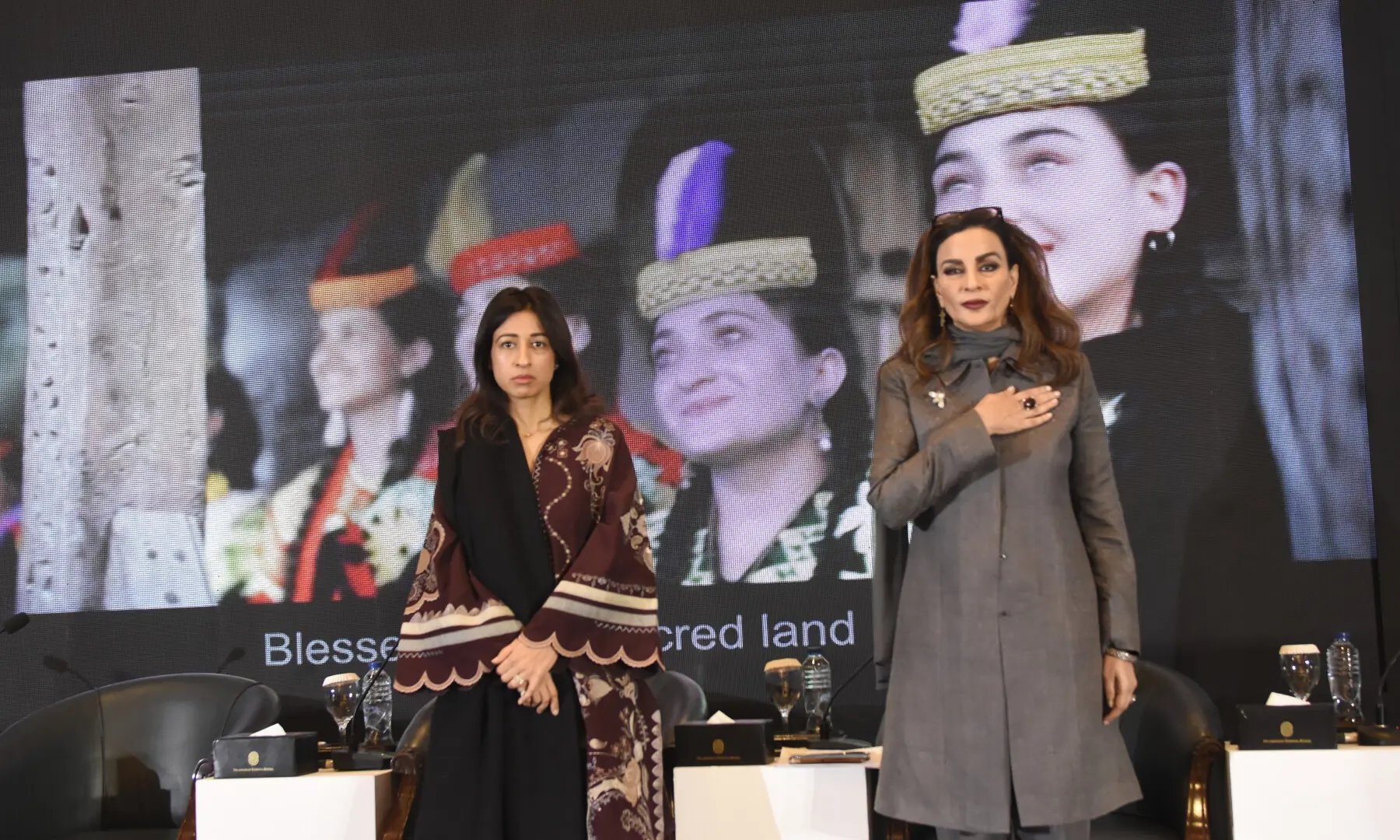
The conference has begun, with the national anthem being played, followed by the recitation of the Holy Quran.
Senator Sherry Rehman and Dawn CEO Nazafreen Saigol-Lakhani are present at the stage as the national anthem is played.
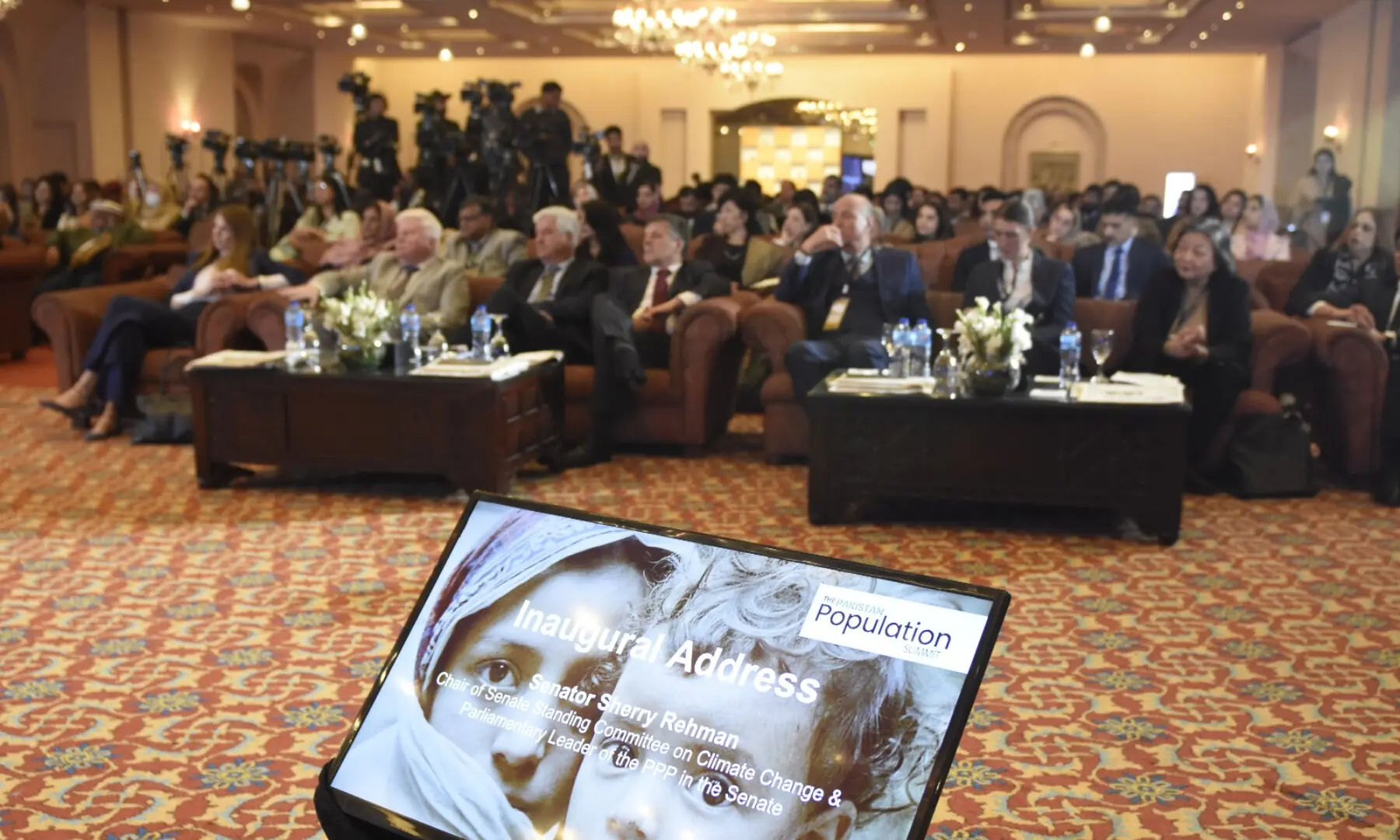
10:25am — Guests are seated ahead of moot
With the summit set to begin shortly, guests are seated at the venue as they look forward to a day of constructive discussions.
More to follow

