




KARACHI: Pakistan’s automotive manufacturing industry has made an urgent appeal to Prime Minister Shehbaz Sharif, warning that proposed tariff reductions under the National Tariff Policy 2026-31 could trigger permanent plant closures, job losses for 2.5 million people, and the erosion of over $5 billion in industrial investment.
In a formal letter sent to the Prime Minister’s office on Monday, the Pakistan Automotive Manufacturers Association (PAMA) called for the immediate exclusion of the automotive sector from the planned reduction in Completely Built Unit (CBU) import duties.
The association specifically demanded that a minimum 40% tariff differential be maintained between CBU imports and locally manufactured vehicles, arguing that such a buffer is essential to sustain production volumes, encourage long-term investment, and enable deep localization of parts and technology.
“Rather than promoting industrial growth, the proposed tariff cut to 15% will accelerate deindustrialization by making imported vehicles significantly more competitive than locally manufactured ones,” warned Abdul Waheed Khan, Director General of PAMA, in the letter addressed to the premier.

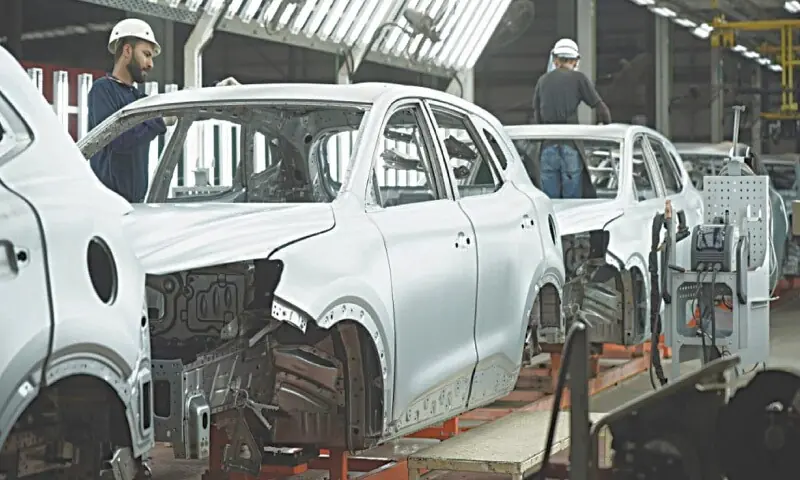
Pakistan’s automotive sector currently ranks among the largest producers of Completely Knocked Down (CKD) vehicles globally, hosting 31 vehicle brands and over 100 models. Over the last three automotive policy cycles, original equipment manufacturers (OEMs) and parts suppliers have injected more than $5 billion into the industry.

The passenger car segment alone contributes over Rs 700 billion annually to national tax revenues and supports direct and indirect employment for nearly 2.5 million Pakistanis.
Despite these achievements, the industry is operating at less than 50% of its installed annual capacity of 500,000 units. PAMA attributed this underperformance to repeated policy shifts and demand-suppressing measures, compounded by the annual import of roughly 45,000 CBU vehicles, which diverts nearly 18% of domestic demand away from local producers.
The association also pointed out that the proposed tariff policy rests on unrealistic assumptions about export readiness and competitiveness. It noted that major automotive manufacturing nations continue to protect their domestic industries through calibrated tariff regimes. For example, Vietnam maintains CBU tariffs of up to 70%, while Thailand applies duties as high as 80% on imported vehicles.
Should the automotive sector fail to secure an exemption, PAMA outlined three severe consequences:
– Permanent shutdown of vehicle assembly plants and approximately 1,324 auto parts manufacturers.
– Wipeout of more than $5 billion in cumulative industrial investment.
– Direct unemployment for factory workers, with ripple effects endangering the livelihoods of roughly 2.5 million people.
Beyond the tariff differential, the association urged the government to introduce a stable, long-term automotive policy framework with predictable tariff structures, replacing the current cycle of abrupt revisions that have undermined investor confidence.
The letter was copied to the Federal Minister for Industries and Production, the Chairman of PAMA, and all member organizations.
As Pakistan navigates fiscal consolidation and trade liberalization, the automotive industry’s plea highlights a broader tension between consumer-friendly tariff reductions and the protection of domestic industrial capacity, a debate that now rests with the Prime Minister’s office for a decisive response.

