


‘Architect of wars’: Netanyahu gears for what could be his political life’s defining contest – World

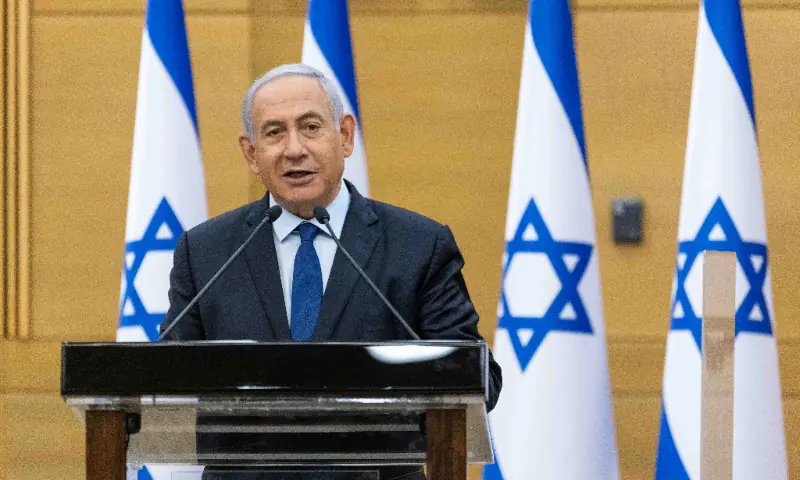

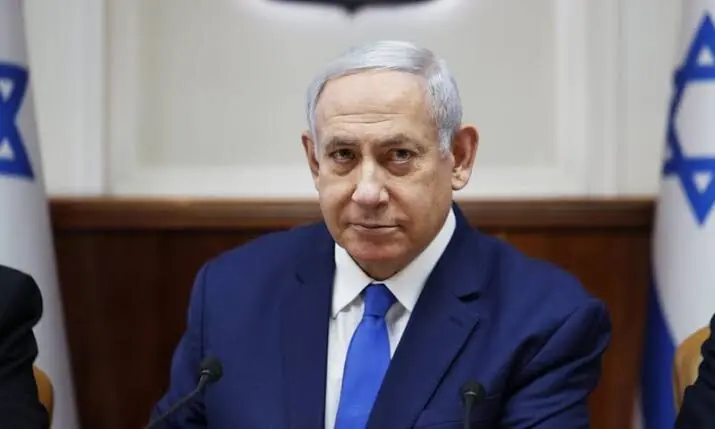
Polls remain challenging, with a majority of Israelis wanting Netanyahu out over the October 7 security failures.
He has led multiple wars, outlasted several American presidents, and watched his political obituary written — only to be shredded — more times than any other leader in modern Israeli history.
Benjamin Netanyahu, Israel’s longest-serving prime minister, faces an international arrest warrant over alleged war crimes in Gaza, a long-running corruption trial, and a spiralling multi-front conflict that has dragged on for nearly three years and has seen his country’s first direct military confrontations with arch-foe Iran.
Now the silver-haired 76-year-old, nicknamed “Bibi”, is staring down an election that many believe could finally draw the curtain on one of the most consequential and contested careers in Israeli politics — or extend it once again.

Netanyahu has declared that he “intends to win” in the election scheduled for October 27, setting the stage for what could be the defining contest of his political life.

Shattered image of ‘Mr Security’
Netanyahu built his entire career on a single promise: that he alone could keep Israel safe.
Then came October 7, 2023.
It was the deadliest day in Israel’s history, with Hamas’s attacks leaving more than 1,200 people dead and shattering the image of “Mr Security” that Netanyahu had spent decades cultivating.
The wars that followed have become both a political lifeline and his legacy’s greatest threat.
Netanyahu has overseen relentless bombardment of Gaza for two years that left tens of thousands dead. Israel’s actions under his watch were declared a genocide by Amnesty International, Human Rights Watch and experts, which Tel Aviv rejects.
The conflict quickly spread beyond the Palestinian territory, drawing in Lebanon’s Hezbollah, Yemen’s Houthi rebels, and eventually Iran, fundamentally reshaping the Middle East’s strategic landscape.
Militarily, Israel demonstrated overwhelming reach, striking deep inside Iran, yet the diplomatic endgame has largely unfolded outside Netanyahu’s control.
Whether these wars ultimately redeem or irreparably taint his leadership remains the central question in the elections.
Born in Tel Aviv on October 21, 1949, Netanyahu is the son of a right-wing Zionist historian — an ideological inheritance that shaped his entire career.
He served in Israel’s commando unit and fought in the 1973 Arab-Israeli war.
Netanyahu has two sons with his third wife, Sara and a daughter from a previous marriage. In his early life, his elder brother Yonatan was killed leading the Entebbe hostage-rescue mission in Uganda.
“When the news reached me that Yoni had died, I felt as if my life had ended,” Netanyahu later wrote.
Reshaping Middle East
Raised partly in the US and educated at MIT, he became one of Israel’s most effective international advocates — a polished, English-speaking envoy equally comfortable in Washington television studios and UN halls.
He entered parliament in 1988, took control of the Likud party in 1993 and, three years later, became Israel’s youngest prime minister at 46.
In all, he has spent nearly two decades in the role across multiple terms.
For years, Netanyahu argued that Israel’s security rested on military strength, intelligence superiority and deterrence.
The Hamas assault exposed catastrophic failures in all three under his watch.
As the war widened, Netanyahu cast the conflict in increasingly historic terms: not merely as a battle against Hamas, but as a once-in-a-generation struggle to reshape the region and break Iran’s regional influence.
“We are going to change the Middle East,” he vowed after the Hamas attacks.
Supporters say he responded to Israel’s darkest hour with unprecedented military determination, challenging Tehran more directly than any predecessor.
Critics tell a different story: a leader who used the war to delay a reckoning over the failures behind October 7, and who, they argue, fell short of his own war goals — namely eliminating Hamas and toppling the Iranian leadership.
The conflict has also unfolded against a backdrop of a collapsed Israeli-Palestinian peace process and the continued expansion of Jewish settlements in the occupied West Bank, developments that critics say have pushed the prospect of a Palestinian state further out of reach than ever.
The Trump alliance
Netanyahu has survived and often frustrated successive American administrations, but few foreign relationships have mattered more to him than his ties with US President Donald Trump.
Since Trump’s return to the White House, the two have maintained a close relationship, with Netanyahu hailing him as “the greatest friend” Israel ever had in the White House.
But even that alliance has shown signs of strain, with Trump unleashing profanity-laced tirades on his ally amid the fraught negotiations over the Iran deal, which Israel watched from the sidelines.
At home, the criticism has grown sharper.
“Benjamin Netanyahu is a man blessed with talents, but he has grown old and tired, and is surrounded by the least suitable people to run a country,” opposition leader Yair Lapid said recently, insisting that accountability for October 7 and Netanyahu’s continued leadership are irreconcilable.
Tough polls
Polls remain challenging, with a majority of Israelis wanting Netanyahu out amid lingering public anger over the October 7 security failures, and he is still fighting corruption charges in court.
For decades, Netanyahu has defied every prediction of his downfall — most dramatically in 2022, when he returned to power backed by far-right allies.
Now, the battle over his legacy may prove the hardest fight of all.
The wars waged under his watch will determine how history remembers him.
In a recent interview, Netanyahu expressed his comfort with making unpopular decisions that he felt were right, saying he felt little need to be lionised in the press.
“I would rather get a bad editorial than a positive obituary,” he said.

