War Diary Day 13: Instigating Iran’s internal dissent and absorbing oil shock – World


From Tehran’s perspective, widening the geographical scope of the conflict appears to be an important element of the strategy.
On the 13th day of the US-Israel war against Iran, the conflict appeared to be entering a more volatile phase in which the battlefield could gradually extend beyond conventional air and missile exchanges into attempts to weaken Iran from within; the maritime confrontation in the Gulf continued to tighten pressure on global energy markets and reinforce the centrality of oil flows in shaping the strategic calculations of the belligerents.
Reports circulating among Iranian observers and security analysts suggested that Washington and Tel Aviv may now be testing a strategy aimed at fomenting internal dissent while maintaining external military pressure, with recent drone strikes on Basij security infrastructure inside Tehran. This was widely interpreted as an attempt to erode the regime’s internal control mechanisms and probe whether domestic instability could complement the ongoing military campaign.
The approach bears resemblance to the strategy pursued during the 12-day war of June 2025 when provoking an internal uprising formed a core pillar of Israeli planning, with precision strikes and coordinated information operations designed to fracture regime cohesion and trigger street-level dissent. That attempt had then failed to generate the expected cascade of unrest.

The current war also began with a decapitation phase in which precision strikes assassinated Supreme Leader Ayatollah Ali Khamenei and several senior officials in an operation that was calibrated to produce rapid collapse of authority. Yet, the result turned out to be the opposite as national mourning generated a ‘rally round the flag effect’ that consolidated both the population and the security apparatus far more quickly than anticipated, thereby derailing the initial regime-change timeline.

Tehran responded to external aggression with asymmetric resilience, relying on calibrated missile and drone barrages, disruption of maritime traffic in the Strait of Hormuz and sustained proxy pressure through Hezbollah and other elements of the resistance axis, thereby shifting the contest into domains where Iran could impose disproportionate economic and political costs.
But recent security developments inside Iran have reinforced suspicions that the regime change objective has not been abandoned, particularly after Iranian authorities dismantled an armed cell in Khuzestan where a gang leader and five operatives were arrested and firearms along with four improvised explosive devices were seized, with security sources alleging links to US and Israeli handlers and describing the operation as part of a wider pattern of infiltration and sabotage.

Iran observers also point to drone strikes targeting Basij checkpoints in Tehran, which officials quickly framed as attempts by foreign powers to trigger unrest during wartime. Security authorities responded by tightening procedures around Basij deployments and increasing patrols in sensitive urban locations.
State media simultaneously reported that new volunteers had stepped forward to join Basij units following the attacks. This message was clearly intended to demonstrate that targeting the ideological backbone of the system would not weaken the government’s support base but rather strengthen mobilisation during the conflict.
The possibility that the war could move toward attempts at internal destabilisation has also been discussed in Washington, where intelligence briefings to lawmakers reportedly assessed that the Iranian leadership structure remains largely intact despite the ongoing bombardment.
After attending one such classified briefing, US Senator Richard Blumenthal cautioned that escalation could eventually generate pressure for ground involvement, reflecting concerns within policy circles that if aerial strikes fail to weaken the regime they may gradually create momentum for deeper military engagement.
Such thinking echoes earlier efforts to exploit internal fractures, including attempts to activate Kurdish channels that failed to meaningfully materialise. Therefore, the current focus on Basij-linked targets may represent another attempt to test whether internal pressure can open a pathway for limited ground operations.
While these developments point to the emergence of a potential internal front, the most decisive theatre of the war, for the moment, continues to lie in the maritime domain where the confrontation in and around the Strait of Hormuz has steadily intensified.
In the past 24 hours alone at least four vessels were reportedly attacked in or near the strait, including two oil tankers in the Persian Gulf, adding to a series of earlier strikes on bulk carriers and container ships. These attacks have reinforced the perception among shipping companies that the waterway has effectively become an active conflict zone.
The disruption has not been confined to shipping lanes, as drone strikes were reported against a luxury hotel in Dubai while fires spread at oil facilities in Oman’s Salalah port following an earlier attack. Bahrain also reported drone activity targeting energy infrastructure in the Muharraq governorate and near the international airport.
Taken together, the pattern suggests that Iran and allied actors have demonstrated that the war can directly threaten the economic lifelines of the Gulf and by extension the stability of global energy markets.
The effect on oil prices has been immediate as crude climbed back above $100 per barrel despite coordinated releases from strategic reserves by major consuming countries, including an announcement by the International Energy Agency of a roughly 400 million barrel release aimed at calming markets. Analysts say the near halt of shipping through the Strait of Hormuz continues to weigh heavily on prices.
Some Western assessments now model scenarios in which disruption to the waterway persists for weeks, warning that if the conflict extends into May prices could surge above $150 per barrel, while even a confrontation lasting into mid-April could push prices towards $130.
The war is already affecting regional production and transport patterns as Iraqi authorities suspended certain tanker operations following attacks and insurance costs for vessels operating in the Gulf surged sharply, leaving energy flows through one of the world’s most critical corridors functioning under wartime disruption.
These pressures are also driving up the financial cost of the conflict for all sides, with US defence spending linked to the war already estimated at around $11.3 billion within the first six days of operations while Israel, which continues to maintain an intensive tempo of air strikes and missile defence deployments, is believed to be spending close to $3 billion a day.
Meanwhile, Iran continues to apply pressure through asymmetric means as drone and missile attacks on Israeli cities persisted, with air raid sirens again sounding in Tel Aviv overnight. At the same time, Hezbollah maintained cross-border rocket and anti-tank fire along Israel’s northern frontier, forcing the Israeli military to divide its attention across multiple fronts.
From Tehran’s perspective, widening the geographical scope of the conflict appears to be an important element of the strategy, with Iranian analysts suggesting that Hezbollah and Iraqi groups’ escalation helps reduce direct pressure on Iran by obliging Israel and the United States to allocate resources across Lebanon, Iraq and potentially other theatres.
There are also indications that additional fronts could emerge as discussions among regional observers increasingly mention the possibility of Yemen’s Ansarullah movement becoming more actively involved, which would bring the Bab al-Mandab shipping route into play and further threaten global energy flows, while Israeli planning about establishing a base in Somaliland to counter Houthi operations have been cited as evidence that the conflict could extend toward the Horn of Africa.
Amid this widening confrontation, however, diplomatic activity is also quietly gathering momentum with several regional states attempting to open channels for dialogue.
Officials from Oman, Egypt, Pakistan and Turkiye were reported to be engaged in behind the scenes contacts with Iranian counterparts aimed at opening a line of communication with the Trump administration, with Oman once again playing its traditional role as a discreet intermediary.
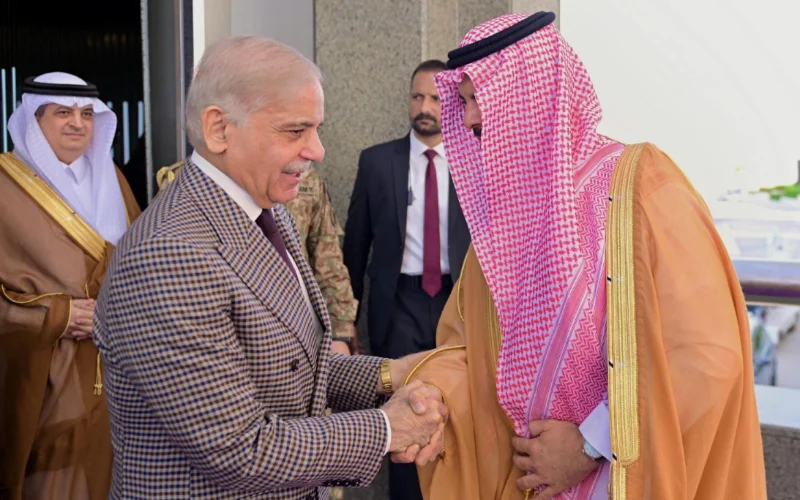
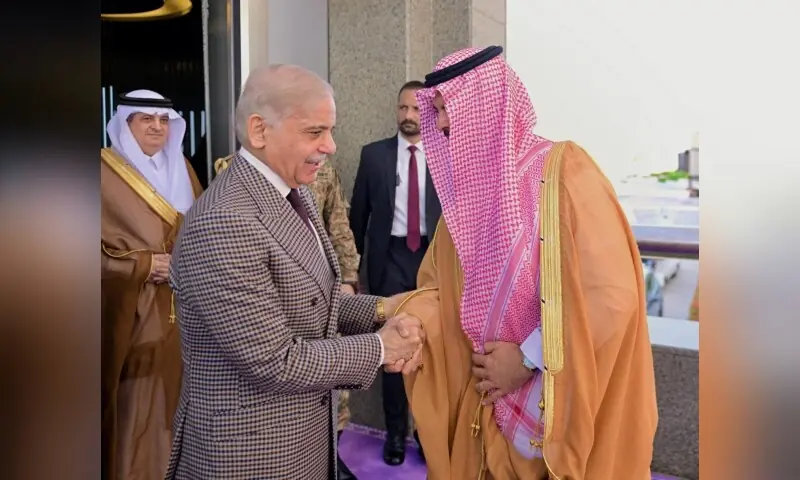
Pakistan has also become involved in these efforts as Prime Minister Shehbaz Sharif on Thursday travelled to Saudi Arabia for urgent consultations with Saudi Crown Prince Mohammed bin Salman focused on the regional security situation and possible avenues for de-escalation. Sharif’s visit followed his earlier telephone conversation with Iranian President Masoud Pezeshkian.
Despite these initiatives the path to ending the conflict remains uncertain as Pezeshkian on Wednesday night reiterated that Iran would consider a ceasefire only if it included firm guarantees against future attacks, reparations for war damage and recognition of Iran’s security concerns.
Such conditions leave limited room for compromise as Washington and Tel Aviv risk appearing to retreat if they scale back operations without visible gains, while Tehran would find it difficult to accept a temporary pause that does not translate its current leverage into lasting political guarantees.
The war, therefore, appears to have settled into a contest of endurance in which military strikes, maritime disruption and economic pressure are unfolding simultaneously, while the search for a diplomatic exit continues in the background without producing the concessions needed to halt the fighting.
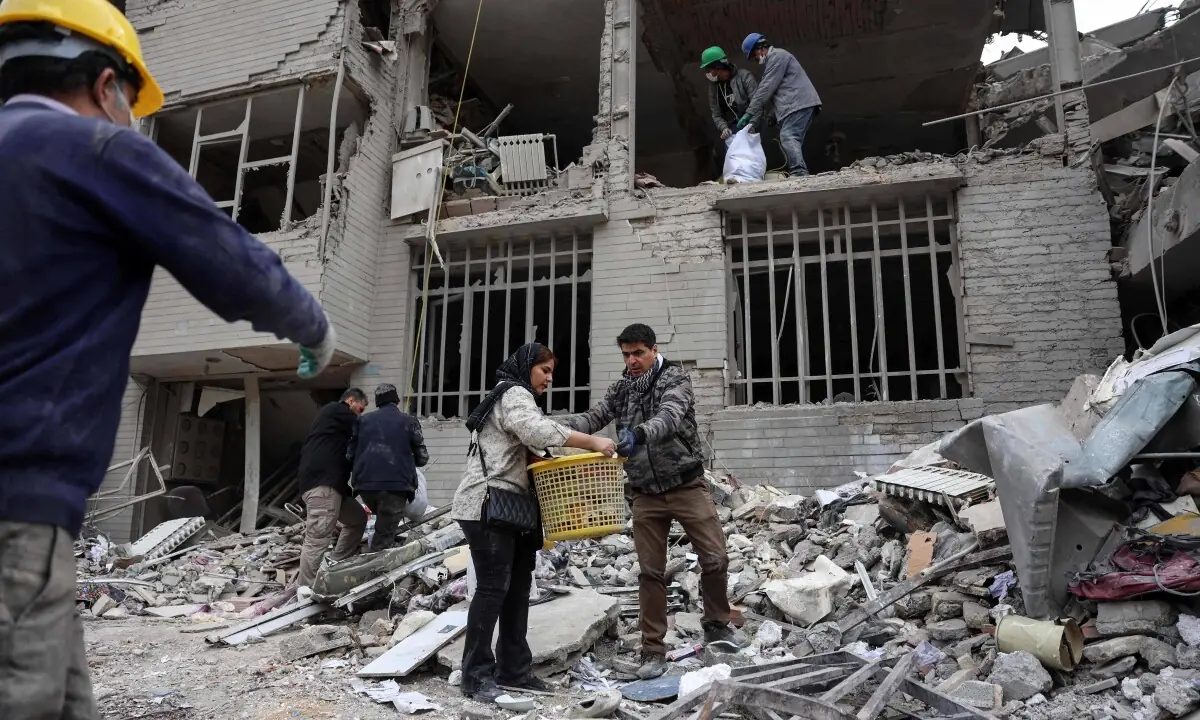
Header image: Iranians collect belongings from the rubble of a damaged residential building in Tehran on March 12, 2026. — AFP