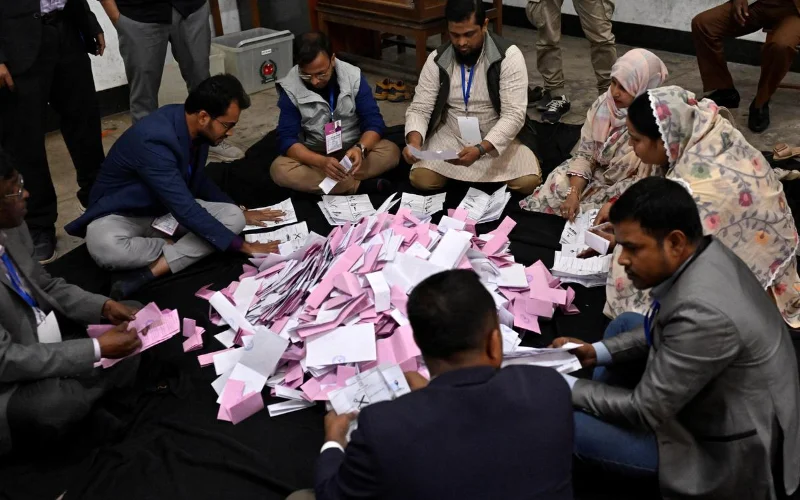

Dhaka: The vote counting is underway across Bangladesh following the conclusion of polling for the country’s 13th National Parliamentary Elections, marking a significant political milestone.
The elections are being held 18 months after a student-led movement that brought an end to Sheikh Hasina’s two-decade rule, reshaping the nation’s political landscape.
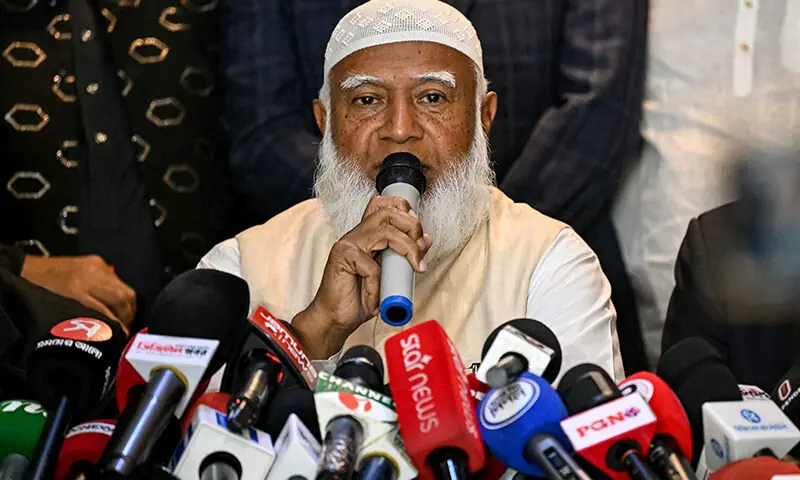
A fierce contest is expected between alliances led by the Bangladesh Nationalist Party (BNP) and Bangladesh Jamaat-e-Islami, both vying to secure the largest share of seats in the Jatiya Sangsad.
In previous elections, unofficial results typically began emerging by the following morning. However, officials from the Bangladesh Election Commission have indicated that the counting process may take longer this time.

In addition to the standard white parliamentary ballot papers, pink ballots are also being counted for a referendum on the July National Charter. Moreover, a higher number of political parties and candidates is contributing to the extended counting process.

The Election Commission has appealed for special prayers for peace, prosperity, and continued development to be offered in mosques across the country after Friday prayers.
Similar requests have been made to places of worship of other faiths to organize prayer gatherings at appropriate times.
In its statement, the Commission expressed gratitude to political parties, candidates, law enforcement agencies, election officials, observers, journalists, and voters for their cooperation in maintaining a free, fair, and impartial electoral environment.
According to the Election Commission, voting was held in 299 of the 300 parliamentary constituencies at 42,761 polling stations across all 64 districts of the country. Fifty seats are reserved for women and allocated on the basis of proportional representation.
As per the final voter list issued in November 2025, Bangladesh has a total of 127,711,793 registered voters, including 64,825,361 male voters and 62,885,200 female voters.
For the first time, postal voting has been introduced, benefiting approximately 15 million overseas workers.
Bangladesh’s Parliament is unicameral, known as the Jatiya Sangsad, with a total of 350 members — 300 elected through direct voting and 50 seats reserved for women.