
Britain’s ban on pro-Palestinian campaign group Palestine Action as a terrorist organisation was ruled unlawful by London’s High Court on Friday, though the ban will temporarily remain in place and the government said it would appeal against the decision.
Palestine Action was proscribed in July, having increasingly taken “direct action” against Israel-linked defence companies in Britain, often blocking entrances or spraying red paint.
Britain argued the group’s actions amounted to terrorism, citing a 2024 raid on a factory of Israel’s largest defence firm Elbit Systems, in which prosecutors said activists caused around £1 million ($1.4 m) of damage and a police officer was hit with a sledgehammer.
Ban followed break-in at air base
Palestine Action was banned shortly after a June break-in at the Royal Air Force’s Brize Norton air base, in which activists damaged two planes, an action described by Prime Minister Keir Starmer as “disgraceful”.

Lawyers representing Huda Ammori, who co-founded Palestine Action in 2020, argued at a hearing last year that the move was an authoritarian restriction on the right to protest.

Judge Victoria Sharp said Palestine Action “promotes its political cause through criminality and the encouragement of criminality”.
The High Court nonetheless ruled the ban was a disproportionate interference with the right to freedom of expression, though the ban was not lifted ahead of a further hearing to decide whether it should remain pending an appeal.

Interior minister Shabana Mahmood said in a statement: “I intend to fight this judgment in the Court of Appeal.”
Government defeat follows ‘not guilty’ verdicts
The ban put Palestine Action on a par with Islamic State or al Qaeda and made it a criminal offence to be a member, carrying a maximum 14-year prison sentence.
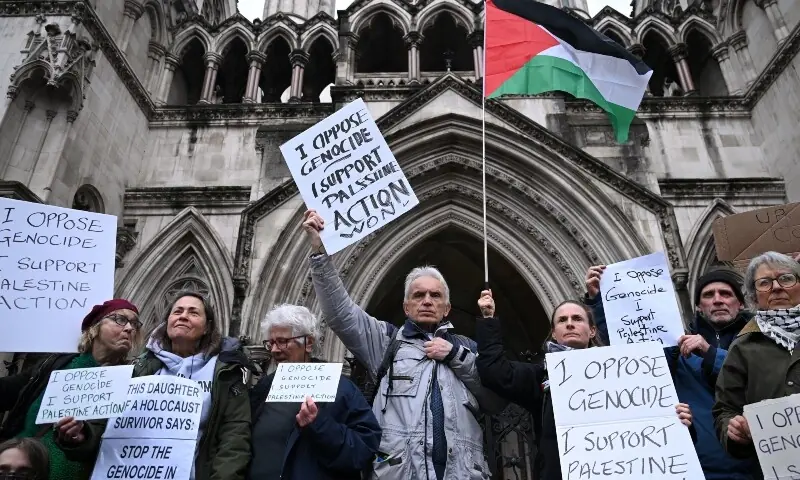
More than 2,000 people have since been arrested for holding signs in support of the group though Friday’s ruling could lead to any criminal charges being dropped.
London’s Metropolitan Police said following the judgment that it would focus on gathering evidence where people expressed support for Palestine Action rather than making arrests.
Civil liberties groups, including Amnesty International, had called for the ban to be lifted and Irish novelist Sally Rooney said it could even lead to her books being withdrawn from sale due to her public support for Palestine Action.
The British government argued proscription only prevented support for Palestine Action and had not prevented people from protesting in favour of the Palestinian cause.
The High Court, however, said it could cause pro-Palestinian protesters to “exercise self-restraint in terms of what they say and what they do”.
The judgment was announced two weeks after six people charged over the 2024 raid on Elbit were all acquitted of aggravated burglary.
Prosecutors have said they will seek a retrial on those counts on which the jury could not reach a verdict, including the alleged assault on a police officer.