



House of Lords passes the Hereditary Peers Bill, fulfilling a reform launched more than 25 years ago
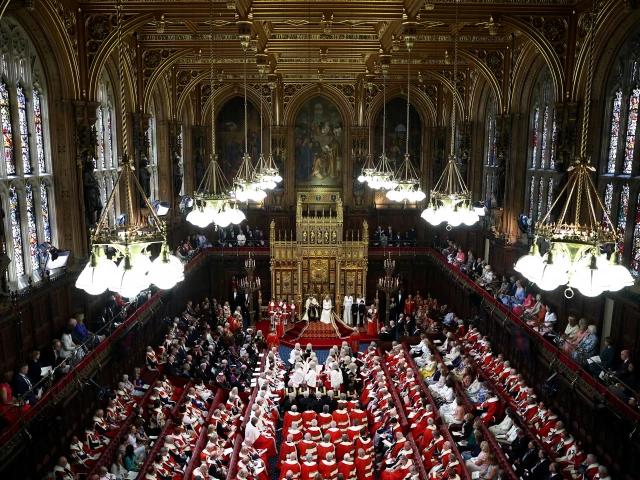
Britain’s King Charles III, wearing the Imperial State Crown and the Robe of State, reads the King’s Speech from the The Sovereign’s Throne in the House of Lords chamber, during the State Opening of Parliament, at the Houses of Parliament, in London, on July 17, 2024. Photo file: Reuters
Britain’s parliament has approved legislation to remove the remaining hereditary peers from the House of Lords, ending a centuries-old system of aristocratic seats in the upper chamber that the government says should not be secured by birth.
The House of Lords passed the Hereditary Peers Bill on Tuesday evening, fulfilling a reform launched more than 25 years ago and a key manifesto pledge from Prime Minister Keir Starmer’s Labour government to modernise the upper chamber.

Angela Smith, the leader of the upper chamber, said in a statement on Tuesday that the Lords played a “vital role within our bicameral parliament, but nobody should sit in the House by virtue of an inherited title”.

“Getting this bill through is a major first step towards reform of the Lords, with further changes to follow, including on members’ retirement and participation requirements,” she added.
Read More: Spain’s PM calls for end to UNSC veto power, criticises US over global conflicts

Blair’s unfinished reform
Before the reform, 92 hereditary peers could still sit and vote in the upper chamber, a number retained as an interim compromise after more than 600 were removed in 1999 under Tony Blair, the former Labour prime minister, who had labelled the hereditary system an “anachronism”.
Under the system, around 15 Conservative hereditary peers would secure life peerages, and it will be up to the party to decide whom to nominate.
The ornate red and gold chamber in the Palace of Westminster currently has about 800 members in total, mostly appointed for life by the prime minister on the advice of political parties or an independent commission, alongside Church of England bishops and, until now, some by birthright.
Critics have long called for an overhaul of the appointments system, saying it had led to cronyism and created the largest upper chamber in the world, larger than the 650 elected members of parliament who sit in the lower house.
The Lords can amend but not block legislation, and changes it makes to bills can be overruled by the elected lower chamber.