
ISLAMABAD:
Prime Minister Shehbaz Sharif is set to travel to Washington next week to attend the inaugural Board of Peace summit, sources told The Express Tribune, as Pakistan intensified its diplomatic outreach on Wednesday with Deputy Prime Minister and Foreign Minister Ishaq Dar holding separate telephonic conversations with his Turkish and Iranian counterparts amid evolving regional developments.
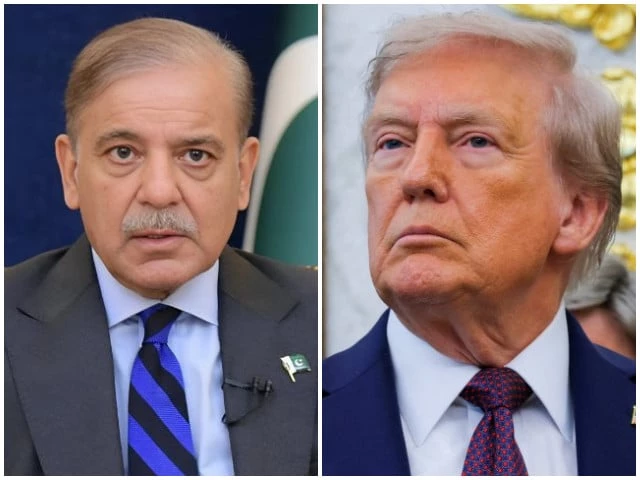
While a formal announcement regarding the prime minister’s visit has yet to be made, well-placed sources confirmed that it has been decided at the highest level that he will represent Pakistan at the summit scheduled to take place in Washington on February 19. The high-level meeting, to be chaired by US President Donald Trump, will focus on conflict resolution efforts and post-war stabilisation initiatives, particularly in Gaza.

The sources further disclosed that there is also a possibility of a bilateral meeting between Prime Minister Shehbaz Sharif and President Trump at the White House on the sidelines of the summit.

Although no official confirmation has been issued regarding the potential engagement, diplomatic channels are said to be working on the schedule.
Pakistan’s participation in the Board of Peace summit reflects Islamabad’s cautious but proactive diplomatic posture as it navigates shifting geopolitical alignments. Officials say the country intends to use the platform to reiterate its principled stance on key international issues, including its longstanding support for Palestinian self-determination, an immediate ceasefire in Gaza, and a sustainable political solution based on international law.
Besides Gaza peace plan, the Prime Minister is likely to discuss the Iran-US tensions with President Trump as Pakistan is one of the regional countries actively engaged with relevant players to ease Washington-Iran tensions.
On Wednesday, Foreign Minister Ishaq Dar spoke to his Iranian and Turkish counterparts as part of ongoing diplomatic efforts seeking de-esclation in tensions in the region.
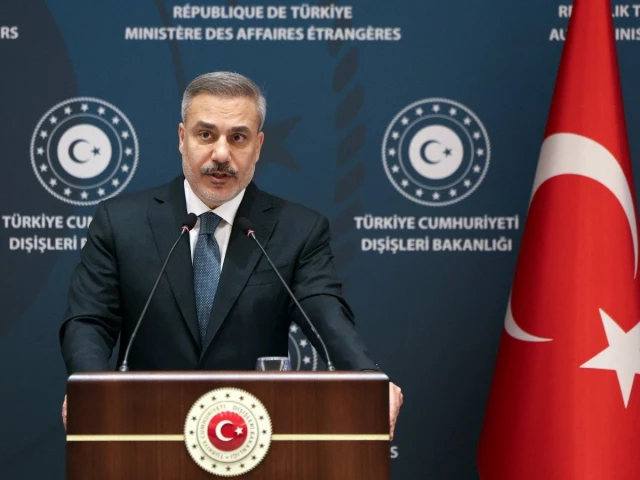
According to statements issued by the Foreign Office, Dar spoke with Turkish Foreign Minister Hakan Fidan, with the two leaders exchanging views on regional and international developments and discussing matters of mutual interest. Both sides agreed to remain in close coordination.
In a separate telephone call, Dar also spoke with Iranian Foreign Minister Abbas Araghchi. The two leaders discussed regional developments and underscored the importance of dialogue and diplomacy in addressing emerging challenges. They agreed to continue close engagement and coordination.
The outreach to Tehran comes amid increased volatility in the broader Middle East.
Pakistan has repeatedly stressed the need for restraint, de-escalation and diplomatic solutions to prevent further instability in the region.
The sources suggest that Pakistan’s current flurry of engagements, spanning Washington, Ankara and Tehran, signals a calibrated strategy aimed at strengthening its voice in ongoing global and regional conversations.
By participating in the Board of Peace summit while simultaneously consulting key regional partners, Islamabad appears to be positioning itself as an active but cautious stakeholder in evolving diplomatic frameworks.