The violence of liberation: How war is sold through the language of women’s rights – Prism

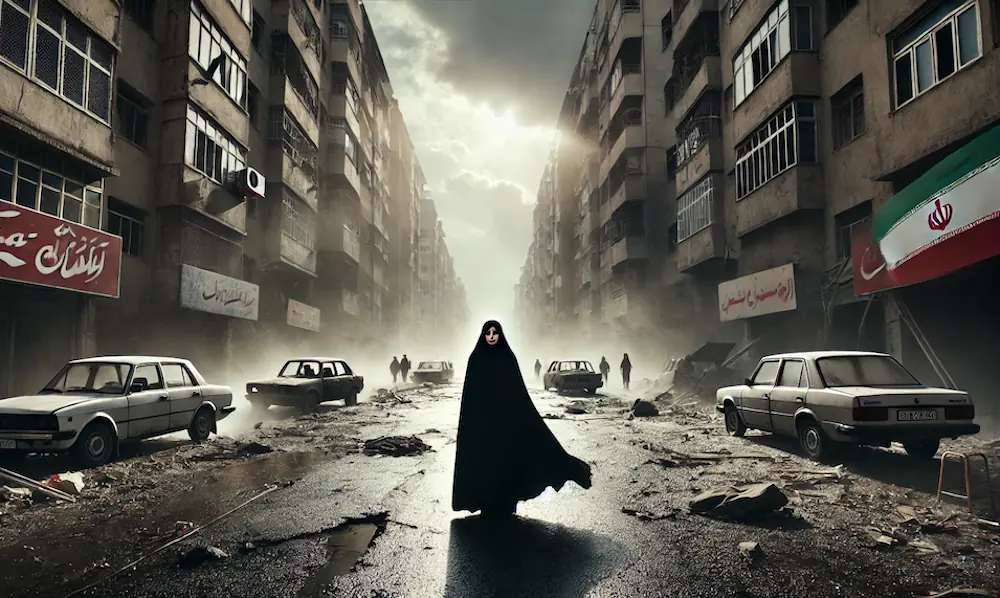

When military interventions are framed as rescue missions for women, feminism risks becoming a tool of empire rather than a challenge to it.
In contemporary international politics, the language of gender equality has increasingly appeared within the moral vocabulary of war over the past few decades. Western governments and political commentators have framed military interventions as necessary not only for security but also for the protection of women and girls in societies portrayed as oppressive or patriarchal.
This discourse presents intervention as a form of humanitarian responsibility. Yet when the material consequences of such interventions are examined, a profound contradiction emerges.
The recent bombing of a girls’ elementary school in Tehran during the US and Israeli strikes demonstrates this contradiction with stark clarity. When schoolchildren become casualties of imperial wars rhetorically justified through the language of women’s liberation, the ethical foundations of such claims demand serious scrutiny.

The politics of “saving” Muslim women
The use of women’s rights as a moral justification for military intervention is not new. Since the early 2000s, Western foreign policy discourse has repeatedly invoked the condition of Muslim women as evidence of the necessity of external intervention.

The invasion of Afghanistan in 2001 remains one of the most prominent examples. Political leaders and media narratives consistently emphasised the oppression of Afghan women under Taliban rule as a central rationale for war. Images of veiled women circulated widely in Western media. Such representations reduced Afghan women to passive victims awaiting rescue and helped frame the invasion as a humanitarian project.Yet the outcomes of this intervention exposed the limits of that narrative.
Despite two decades of military presence, the structural transformation of Afghan society remained fragile and uneven. When the Afghan government collapsed in 2021 and the Taliban returned to power, the promise of liberation that had accompanied the invasion appeared increasingly hollow. Many Afghan women themselves emphasised that meaningful empowerment could not be delivered through foreign military intervention, but required sustained social, economic, and political change within Afghan society.

Scholars in feminist international relations have critically examined this phenomenon. American anthropologist Lila Abu-Lughod famously questioned the assumption deeply rooted in such discourse by asking whether Muslim women genuinely need saving. Her critique was not a denial of gender inequality in particular societies, but rather a challenge to the idea that military intervention by foreign powers could serve as a credible path toward women’s emancipation.
According to Abu-Lughod, framing war as a rescue mission reproduces colonial patterns of thinking in which Western societies imagine themselves as civilising agents tasked with reforming supposedly backward cultures. The language of liberation thus becomes deeply entangled with geopolitical power.
Chandra Talpade Mohanty, a distinguished professor of women’s and gender studies, similarly argued that Western feminist discourse has historically constructed the “Third World Woman” as a singular, passive figure defined primarily by victimhood. Such representations erase the political agency of women in non-Western societies and obscure the diverse forms of activism and resistance that exist within those communities.
When the suffering of women is mobilised to justify military action, the result is a paradoxical form of advocacy in which feminist language is used to legitimise violence that ultimately harms the very populations it claims to defend.
The rise of militarised feminism
The ethical contradiction becomes even sharper when such events occur within a discourse that celebrates military action as a defence of women’s rights.
Recently, a Spanish politician criticised the celebration of strikes against Iran through feminist rhetoric, remarking that those who claim to defend Iranian women cannot simultaneously applaud the killing of schoolgirls. The statement resonated widely because it exposed the moral incoherence in the language of militarised feminism. If the stated objective is the protection of women and girls, the killing of those very girls cannot simply be dismissed as collateral damage.
Critical scholarship increasingly describes this phenomenon as the instrumentalisation of feminism. British sociologist Sara Farris has referred to similar dynamics in European politics as “femonationalism” — a process through which gender equality is invoked selectively to advance nationalist or neoliberalism agendas. While her work focuses primarily on immigration debates in Europe, the underlying logic extends to foreign policy as well.
Gender equality becomes a symbolic resource that states deploy when it strengthens their political position, but it rarely serves as a consistent guiding principle across all contexts.
This pattern of imperial or militarised feminism extends to the current strikes on Iran, where the role of female Israeli Air Force pilots has been highlighted in celebratory narratives. Posts and media coverage underscore that dozens of Israeli women pilots and navigators took part in the bombing campaign, presenting their participation as empowerment while obscuring the fact that these strikes constituted a direct military intervention against a sovereign state.
The bombings are framed as a form of feminist justice against a regime accused of oppressing women, turning military violence into a spectacle of liberation. A recent cartoon circulating on social media depicts an Israeli female fighter pilot bombing bearded men in Iran, visually reinforcing this rhetoric.
Such imagery demonises Muslim men as archetypal oppressors; portrayed as bearded, patriarchal figures deserving of violent retribution, while positioning Western-aligned (or Israeli) women as empowered liberators.
The caricature exemplifies how imperial feminism is weaponised to racialise and dehumanise Muslim men, casting military violence as a gendered civilisational clash rather than a geopolitical conflict. It perpetuates orientalist tropes that reduce complex societies to stereotypes of backward masculinity in need of forceful correction by “enlightened” female agents from the West or its allies.
The selective deployment of feminist rhetoric
An example of this instrumentalisation also occurred in the aftermath of the October 7, 2023, attacks. Israeli officials and supporters amplified unverified allegations of widespread and systematic sexual violence, including rape, allegedly committed by Hamas forces during the attacks. Despite a lack of independent evidence or conclusions from international investigators such as those affiliated with Amnesty International or even UN experts, these claims were used to frame the subsequent military aggression in Gaza as a necessary defence of women’s rights and a response to gender-based atrocities.
At the same time, a number of human rights organisations and UN experts have raised serious concerns about sexual violence perpetrated by Israeli forces against Palestinian detainees during the Gaza war. Reports by organisations such as Human Rights Watch, B’Tselem, and the United Nations Independent International Commission of Inquiry (COI) on the Occupied Palestinian Territory, including East Jerusalem, and Israel have documented evidence of sexual abuse, humiliation, and rape against Palestinian detainees held in Israeli custody, including in detention facilities such as Sde Teiman.
More broadly, the pattern of invoking humanitarian and feminist rhetoric to justify war has appeared in multiple interventions across the Middle East. The invasion of Iraq in 2003, the Nato intervention in Libya in 2011, and ongoing debates around Iran have all included arguments that frame military aggression as necessary to defend human rights.
Yet the conduct of intervening forces has often contradicted these claims. The abuses uncovered at Abu Ghraib prison during the Iraq War remain one of the most notorious examples. Investigations by organisations such as the Amnesty International documented detainees being subjected to forced nudity, sexual humiliation, threats of rape, and other degrading treatment by US personnel.
From a normative perspective, the idea that liberation can be achieved through aerial bombardment is deeply problematic. Political freedom and social reform cannot emerge from environments defined by destruction and insecurity.
If gender equality is invoked as a universal value, then its defence must remain consistent regardless of geopolitical alignment. Yet the selective deployment of feminist rhetoric suggests that states frequently condemn gender oppression in “adversarial” societies while remaining relatively silent about similar issues among allies. Such inconsistency risks transforming feminism from a universal ethical commitment into a geopolitical instrument.
Rethinking feminism in an age of war
In the face of endless wars, the myth of imperial salvation crumbles under the weight of its own hypocrisy.
Women in the Global South do not owe gratitude to a version of liberal feminism that appears in the language of liberation while bombs fall on their societies. Veiled women in Tehran, Kabul, or Gaza do not need to thank distant advocates in pantsuits for military campaigns that destroy their schools, homes, and communities.
The idea that war can be presented as a gift of emancipation reflects a deeply paternalistic assumption that these women lack agency and must be rescued by outsiders. Genuine solidarity with women across the world requires consistency, humility, and a commitment to peace rather than the destructive promise of liberation delivered from the sky.
Header image created with Generative AI