
• Opposes ‘muscular’ approach to debt recovery
• Calls blocking ID cards as unreasonable as cutting off water or electricity
• Says courts shouldn’t curtail basic rights
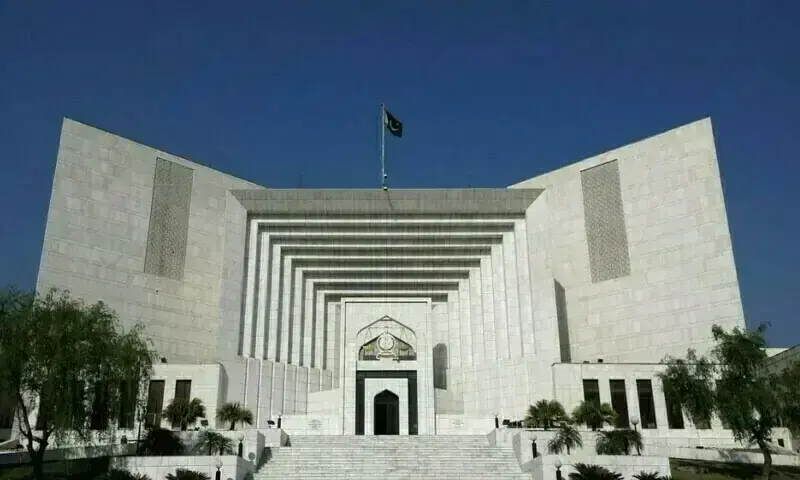
ISLAMABAD: The Supreme Court ruled on Saturday that a judgement debtor’s Computerised National Identity Card (CNIC) cannot be blocked as a mode of executing a money decree, declaring that such a practice is beyond the jurisdiction of executing courts.
A two-judge bench, headed by Justice Munib Akhtar and including Justice Irfan Saadat Khan, made the decision after hearing an appeal from Agha Abid Majeed Khan, who had challenged an Aug. 1, 2023, ruling by the Sindh High Court that rejected his plea.
In a three-page order authored by Justice Akhtar, the Supreme Court observed that a CNIC is not a luxury or a mere statutory requirement.

“In these times it has become essential to being able to carry on a normal way of life in the ordinary course,” the judgement said.

Petitioner Agha Abid was a judgement debtor in a summary chapter suit where a decree was passed in favour of respondent Idrees Ahmed. During execution proceedings initiated by the decree holder, the executing court ordered the blocking of Mr Abid’s CNIC until he furnished surety for the decretal amount.
Consequently, the petitioner approached the high court through a revision petition. It was dismissed on Aug 1, 2023, with an observation that blocking a CNIC was “a step towards execution of lawful orders”.
The lower court had noted that the litigation between the parties had been pending observation that blocking a CNIC was “a step towards execution of lawful orders”.
The lower court had noted that the litigation between the parties had been pending since 2012 and the judgement and decree had remained unexecutable since March 29, 2016.
However, the Supreme Court cautioned against a “muscular” approach, observing that Section 51 of the Code of Civil Procedure sets out different modes for executing a decree.
The final clause (e) allows the decree to be executed “in such other manner as the nature of the relief granted may require”. While this clause confers the necessary flexibility to enable the executing court to ensure that a decree is satisfied, the Supreme Court observed that it cannot obviously be stretched to the point where the order made in execution loses all contact with the statutory provision.
In the case at hand, the decree is simply a money decree on a summary chapter suit, Justice Akhtar noted, adding that the court was not at all satisfied that such a decree would require or make permissible execution by blocking the CNIC of the judgement debtor by resort to Section 51(e).
“One might as well then allow the executing court to order the blocking of utilities like electricity, water, etc., from the residence or workplace of a judgement debtor for execution of a money decree,” the judge observed.
While a robust approach should certainly be taken to ensure execution, it cannot be so muscular — especially in the exercise of a general power conferred by clause (e) — that it essentially deprives the judgement debtor of an essential aspect of living, the judgement continued.
To curtail a judgement debtor from this is not the proper exercise of discretion or statutory powers, as the high court erroneously concluded, Justice Akhtar emphasised.
During the hearing, an Additional Attorney General had drawn the attention of the court to a 2018 amendment in which Order 21, Rule 117 was added: “The modes of compelling the judgement debtor for his attendance or for completing the execution proceedings may include blockage of his CNIC.”
Justice Akhtar noted that the rule may apply in Khyber Pakhtunkhwa but not in Sindh, from where the present proceedings arose.
While concluding, the Supreme Court converted the petition into an appeal and allowed it while setting aside the orders of both the executing court and SHC.
Published in Dawn, February 22nd, 2026