
European Commission working on new incentives, price monitoring mechanisms under the Citizens’ Energy Package
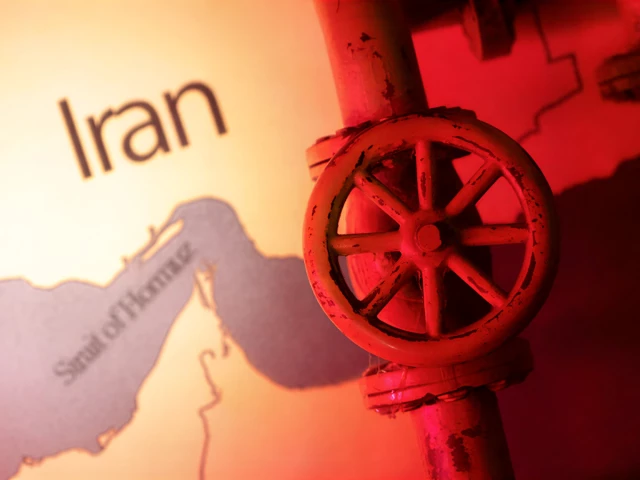
A map showing the Strait of Hormuz and Iran is seen behind a 3D printed oil pipeline in this illustration taken June 22, 2025. REUTERS
Sharply rising energy prices amid ongoing military tensions in the Middle East, deepened by joint US and Israeli attacks on Iran and Tehran’s subsequent retaliations and the effective closure of the Strait of Hormuz, brought a serious economic crisis to Europe.
With shipments at a standstill and disruptions in global energy flows, European countries scrambled to implement comprehensive measures to subsidise energy costs and shield economic stability.

Contracting energy supply pushed fuel prices above the €2 ($2.32) threshold in some European countries, fuelling cost pressures across all sectors.

Since the US-Israeli airstrikes on Iran began on February 28, Brent crude oil climbed as high as $119 per barrel, making energy Europe’s top priority.
Tehran’s retaliation on Qatari facilities, one of the world’s largest liquefied natural gas exporters, deepened supply concerns. Tightening energy supply impacted gas prices at the pump, with the economic cost of the Iran war affecting European consumers.

Read More: Trump approved Iran operation after Netanyahu argued for joint killing of Khamenei
Particularly in Germany and some other European nations, gas prices exceeding $2.32 per litre fuelled social unrest, while energy-intensive sectors struggled to operate under pressure.
The European Commission was working on new incentives and price monitoring mechanisms under the Citizens’ Energy Package.
European Commission President Ursula von der Leyen said during the March 19 EU leaders’ summit in Brussels that the European energy sector had felt most of the war’s direct impact, urging member states to take action.
She said the measures taken for energy prices in the EU had to be temporary, targeted, and tailored to the situation.
European Council President Antonio Costa said rising gas prices had to be alleviated with urgent measures, adding that the European Commission was ready to prepare targeted and temporary measures tailored to each member state’s differing needs.
Meanwhile, the International Energy Agency said the world was facing one of the deepest energy crises ever, calling for radical conservation measures from the public, such as working from home or driving slowly to reduce oil consumption.
Also Read: US permits 30-day sale of Iran oil at sea in effort to tame prices
Governments across Europe made critical decisions to ensure energy supply security, with Germany managing the process through market oversight and transparency.
Berlin decided to allow gas stations to change prices only once per day at midnight local time to make it easier for drivers to track prices, while cartel inspections were tightened and antitrust bodies were granted broad powers to ensure market competition.
Italy decided to provide a €0.25 ($0.29) per litre tax reduction on gas, as Prime Minister Giorgia Meloni established a mechanism linking fuel prices at the pump to crude oil prices. The Italian financial ombudsman, nicknamed “Mr Prezzi” (Mr Prices), launched inspections to combat price speculation.
France opted to focus on case-by-case direct aid to critical sectors such as transportation and fishing rather than a general cut, as limited fiscal space constrained broader measures amid public debt reaching 117% of its economy.
The UK’s energy regulator Ofgem was expected to raise the annual price cap from $2,200 to $2,882 in July, while British Finance Minister Rachel Reeves was working on targeted aid models to cut value-added tax (VAT) and environmental taxes for the most vulnerable households.
Meanwhile, one of the most comprehensive initiatives came from Spain, where the government agreed on a $5.8 billion support package to mitigate the economic impact of the war, reducing VAT on gas, diesel, natural gas, and electricity from 21% to 10%.
Spanish Prime Minister Pedro Sanchez announced a direct subsidy of $0.23 per litre on fuel prices for transport firms, farmers, and fishers. Spain’s package included a total of 80 measures, covering rent regulations alongside energy support.
Also Read: Biggest global oil supply disruptions in history
These measures included extending expired lease agreements for low-income families and protecting households unable to pay energy bills, ensuring their electricity and gas services were not cut off.
Spain’s fuel prices, with gas at $1.98 per litre and diesel at $2.13, were lower than those in countries such as Germany, though Madrid was still awaiting implementation of the tax cut.
Meanwhile, eastern and southeastern European countries also sought to implement direct measures to curb price hikes.
Hungarian Prime Minister Viktor Orban said the country capped gas prices at $1.77 per litre and diesel at $1.83.
Croatia, Albania, and Kosovo capped retail prices, bringing oil firms’ profit margins under control, while Greece capped profit margins on fuel and basic food products for three months.