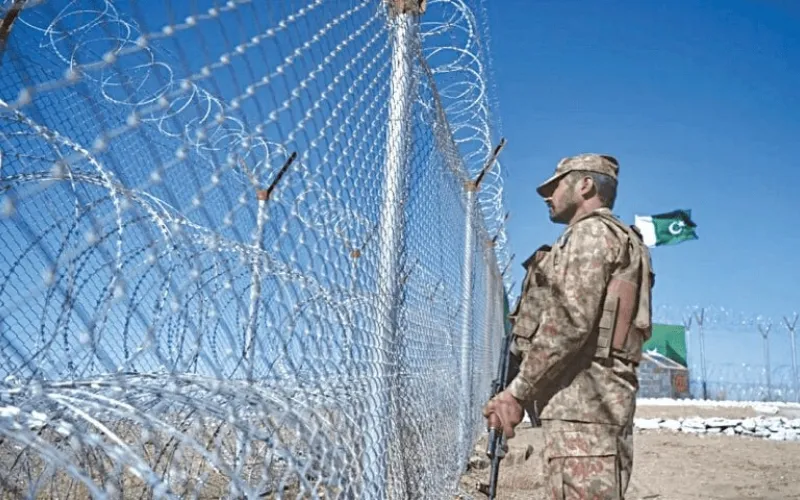

Pakistan has unleashed Operation Ghazab Lil Haq, “Wrath for the Truth” a bold military offensive against Afghan Taliban positions along the volatile Pakistan-Afghanistan border.
Launched on Thursday in response to unprovoked cross-border firing, the operation marks a sharp escalation in the cycle of tit-for-tat violence between the neighbors. What began as Pakistan’s airstrikes on TTP and ISIS-K camps inside Afghanistan on February 21 has now spiraled into a full-scale pushback.
The operation’s name, drawn from Arabic, frames Pakistan’s strikes as a righteous quest for justice, tapping into religious and moral narratives to rally support at home and assert legitimacy abroad. It’s a classic move in regional conflicts, blending military might with messaging amid accusations that the Afghan Taliban harbors Tehreek-e-Taliban Pakistan (TTP) militants responsible for cross-border attacks since the Taliban’s 2021 takeover in Kabul.
Why Now?

Tensions have been simmering for years over the presence of the Tehreek-e-Taliban Pakistan (TTP), which Islamabad accuses the Afghan Taliban of sheltering inside Afghanistan.

Pakistan’s latest offensive comes days after its February 21 airstrikes targeting alleged TTP and Islamic State Khorasan Province (ISIS-K) camps across the border.
Afghan authorities responded with retaliatory fire, triggering what analysts describe as a dangerous cycle of escalation.
Relations between Islamabad and Kabul have steadily deteriorated since the Taliban returned to power in August 2021, with cross-border attacks, diplomatic friction and border closures becoming increasingly frequent.
Pakistani Border Sectors Targeted:
- Chitral
- Khyber
- Mohmand
- Kurram
- Bajaur
- Afghan Provinces Hit by Strikes:
- Nangarhar Province
- Kandahar Province
- Paktia Province
Airstrikes reportedly extended to installations in Kabul
Border crossings including Torkham Border Crossing have seen tightened security, with Afghan families awaiting repatriation reportedly moved to holding centres in Landi Kotal.
Pakistani officials claim the operation has inflicted significant damage:
Taliban Casualties
- 133 fighters killed
- Over 200 wounded
- Pakistani Casualties
- 2 soldiers killed
- 3 soldiers injured
- Infrastructure Damage (According to Pakistan)
- 27 Taliban posts destroyed
- 9 posts captured
- More than 80 tanks, artillery guns and armoured personnel carriers destroyed
- 2 Corps HQs
- 3 Brigade HQs
- 3 Battalion HQs
- 2 Sector HQs
- 2 Ammunition depots
- 1 Logistics base
Afghan Taliban officials, however, have denied heavy losses, reportedly claiming no significant casualties and accusing Pakistan of exaggeration.
Escalation Risks
Security analysts warn the current exchange risks hardening into sustained confrontation.
The Afghan Taliban reportedly raised white flags at some positions following the strikes, while Pakistani sources claim militants attempted infiltration into Bajaur — an attempt allegedly thwarted with one suspect captured alive.
The back-and-forth underscores how fragile bilateral ties have become. What began as counterterrorism pressure against the TTP is now evolving into direct military confrontation between state forces and the Afghan Taliban.
A War of Narratives
Beyond battlefield developments, Operation Ghazab Lil-Haq reflects a broader strategic messaging campaign.
By invoking religiously charged language, Pakistan is positioning the operation within a framework of justice and legitimacy appealing to domestic audiences while signalling firmness to Kabul.
But the escalation also highlights deeper unresolved tensions:
- Border recognition disputes along the Durand Line
- TTP sanctuaries inside Afghanistan
- Mutual accusations of harbouring militants
- Growing mistrust since 2021
What Happens Next?
The immediate question is whether both sides seek de-escalation or deterrence through continued force.
With artillery duels, airstrikes, and cross-border raids intensifying, the risk of a wider regional crisis cannot be dismissed.
For now, Operation Ghazab Lil-Haq stands not only as a military campaign — but as a statement of intent in an increasingly volatile relationship between two uneasy neighbours.