

Scientists train artificial intelligence to interpret prehistoric chemical jigsaw

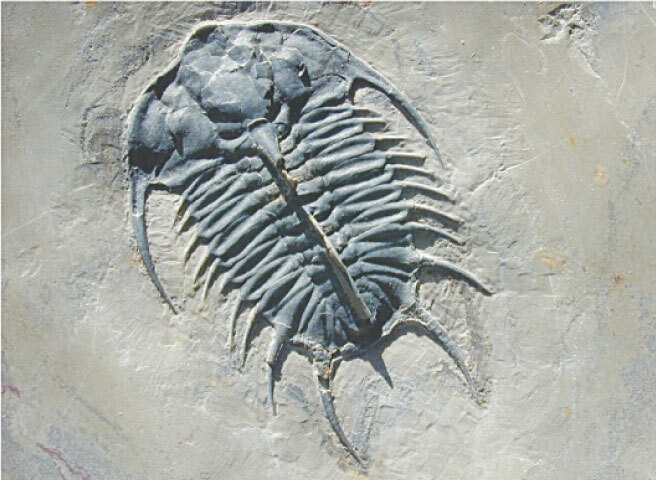

• Researchers from Carnegie Institution for Science find photosynthesis was taking place 800 million years earlier than previously thought
• New technology could ‘revolutionise search for extra-terrestrial life’
ISLAMABAD: Pairing cutting-edge chemistry with artificial intelligence (AI), a multidisciplinary team of scientists on Monday published fresh chemical evidence of Earth’s earliest life concealed in 3.3-billion-year-old rocks and molecular evidence that oxygen-producing photosynthesis was occurring over 800 million years earlier than previously documented.
In a ground-breaking study published in the Proceedings of the National Academy of Sciences, scientists from the Carnegie Institution for Science and several partner universities and institutions analysed over 400 samples, including ancient sediments, fossils, modern plants and animals, and even meteorites, to see if life’s signature still exists in rocks long after the original biomolecules are gone.

Using high-tech chemical analysis to break down both organic and inorganic materials, Michael L. Wong, Anirudh Prabhu, and colleagues trained AI to recognise chemical ‘fingerprints’ left behind by life — signals that can still be detected even after billions of years of geological wear and tear.

According to Carnegie Science, the results prove the possibility of distinguishing materials of biological origin (like microbes, plants and animals) from materials of non-living origin (like meteoritic or synthetic carbon) with over 90 per cent accuracy.
These methods teased out chemical patterns unique to biology in rocks as old as 3.3 billion years. Previously, no such traces had been found in rocks older than about 1.7 billion years. The results, therefore, roughly double the window of time in which organic molecules preserved in rocks can reveal useful information about the physiology and evolutionary relationships of their original organisms.

The work also provides molecular evidence that oxygen-producing photosynthesis (the process used by plants, algae and many microorganisms to harness sunlight) was at work at least 2.5 billion years ago. This finding extends the chemical record of photosynthesis preserved in carbon molecules by over 800 million years.
Besides helping find evidence of Earth’s earliest life, this work advances a potential way to identify traces of life beyond our planet.
Dr Robert Hazen, senior staff scientist at the Carnegie Institution for Science, said: “Think of it like showing thousands of jigsaw puzzle pieces to a computer and asking whether the original scene was a flower or a meteorite.”
“Our results show that ancient life leaves behind more than fossils; it leaves chemical ‘echoes.’ Using machine learning, we can now reliably interpret these echoes for the first time.”
One key insight was that age makes detection harder. Younger samples from the last 500 million years retained strong biotic signals.
The results suggest that machine learning applied to degraded organic matter can help resolve long-standing debates about the evolution of life on Earth in deep time.
This method could also assist in the search for signs of extraterrestrial life. If AI can detect biotic “fingerprints” on Earth that survived billions of years, the same technique might work on Martian rocks or even samples from Jupiter’s icy moon Europa.
Published in Dawn, November 18th, 2025