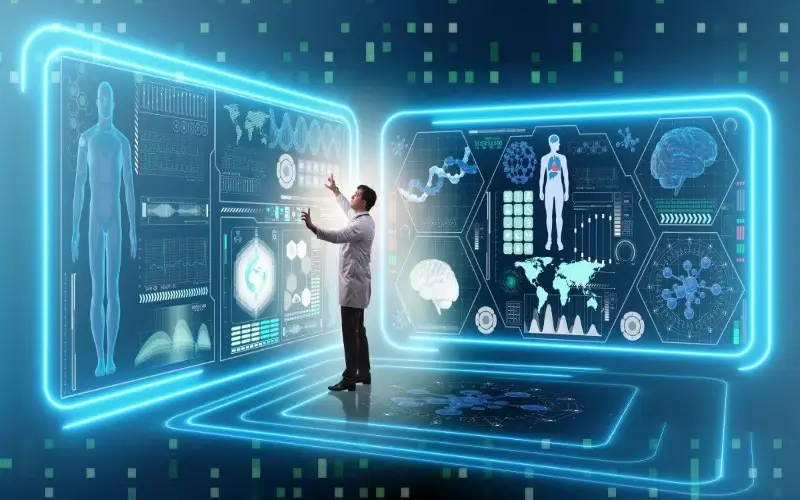

Artificial Intelligence (AI) is playing an increasingly important role in modern healthcare. It refers to computer systems that can perform tasks that normally require human intelligence, such as learning, analyzing data, and making decisions. In the 21st century, AI has become a powerful tool that helps doctors, researchers, and healthcare professionals improve patient care, diagnose diseases more accurately, and make healthcare services more efficient.
One of the most important uses of AI in healthcare is in disease diagnosis. AI systems can analyze large amounts of medical data, such as medical images, lab results, and patient records, in a very short time. This helps doctors detect diseases earlier and more accurately. For example, AI can help identify conditions like cancer, heart disease, and brain disorders by analyzing X-rays, CT scans, and MRI images. Early diagnosis allows patients to receive treatment sooner, which can greatly improve their chances of recovery.
AI is also helping doctors make better treatment decisions. By analyzing a patient’s medical history, lifestyle, and genetic information, AI systems can suggest personalized treatment plans. This approach, often called personalized or precision medicine, helps doctors choose the most effective treatment for each individual patient. As a result, patients may experience better outcomes and fewer side effects.
Another important role of AI is improving hospital management and healthcare operations. Hospitals generate a huge amount of data every day, and AI systems can help organize and analyze this information. AI can assist in scheduling appointments, managing patient records, and predicting patient admission rates. This allows hospitals to use their resources more efficiently and reduce waiting times for patients.

AI is also widely used in medical research and drug development. Developing new medicines normally takes many years and requires extensive research. AI can analyze scientific data and identify potential drug compounds much faster than traditional methods. This speeds up the process of discovering new treatments and vaccines, which can be especially important during global health emergencies.

In addition, AI-powered technologies such as virtual health assistants and chatbots are helping patients access medical information and basic healthcare services more easily. These systems can answer common health questions, remind patients to take medications, and monitor health conditions through wearable devices. This improves patient engagement and allows doctors to track patients’ health remotely.
Despite its many benefits, the use of AI in healthcare also presents some challenges. Issues such as data privacy, security, and ethical concerns must be carefully addressed. Healthcare organizations must ensure that patient information is protected and that AI systems are used responsibly and accurately.