

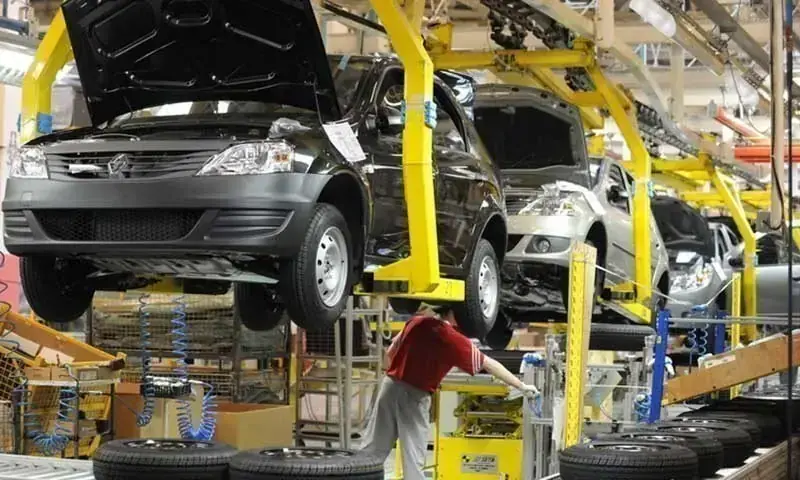

KARACHI: Robust demand further pushed outstanding auto loans for the 14th consecutive month to Rs328 billion in January, up from Rs319bn in December 2025.
The State Bank of Pakistan data revealed that consumers opted for more loans in January due to the change of model year and registration, as the growth in December 2025 was slightly slower than in November 2025.
Auto financing has been struggling to beat the peak of Rs368bn recorded in June 2022 when annual car sales volumes were around 240,000 units.
Auto sector expert Mashood Ali Khan said that the current trend shows consumers are increasingly leveraging bank financing to purchase vehicles, contributing to a gradual recovery in automobile sales despite prevailing economic challenges. This is a strong indicator that consumer demand still exists, and it only needs supportive policy to accelerate further.

The growth momentum comes primarily under the State Bank’s existing Rs3 million auto financing cap, enabling a large segment of middle-income consumers to access vehicle ownership. “I believe that the auto sector holds significantly greater potential if financing limits are revised upward to Rs6 to Rs7m.”

By doing this, the auto market will witness a substantial expansion, particularly in the sedan and mid-range vehicle segment, which remains largely inaccessible to financing-dependent consumers under current limits, he added.
“If financing ceilings are increased and interest rates continue to ease, Pakistan’s annual auto sales could potentially cross 200,000 units a year again,” he emphasised.

He said the small-car segment remains the primary beneficiary of financing due to its alignment with the SBP financing cap. A segment of consumers is also seeking to access sedans through partial financing combined with personal savings, highlighting the demand gap created by the current financing ceiling.
Banks are offering more flexible financing options, including comparatively lower markup rates, reduced down-payment requirements, and easier repayment structures. “This has supported recovery, but policy alignment is essential to unlock the sector’s full potential,” he said.
Raising financing limits, while supporting consumers, would also generate broader economic benefits, including industrial production growth, employment generation, vendor development, and increased government revenues through taxes and duties, he said.
He said continued interest rate moderation could further strengthen financing activity in the coming months. “I stress that revising financing limits remains the single most impactful policy intervention to accelerate growth,” Khan said.
Sales are likely to remain upbeat in view of a 137pc increase in imports of semi- and completely knocked-down kits by the local assemblers to $1.144bn in 7MFY26 from $706m in the same period last fiscal year.
Published in Dawn, February 18th, 2026