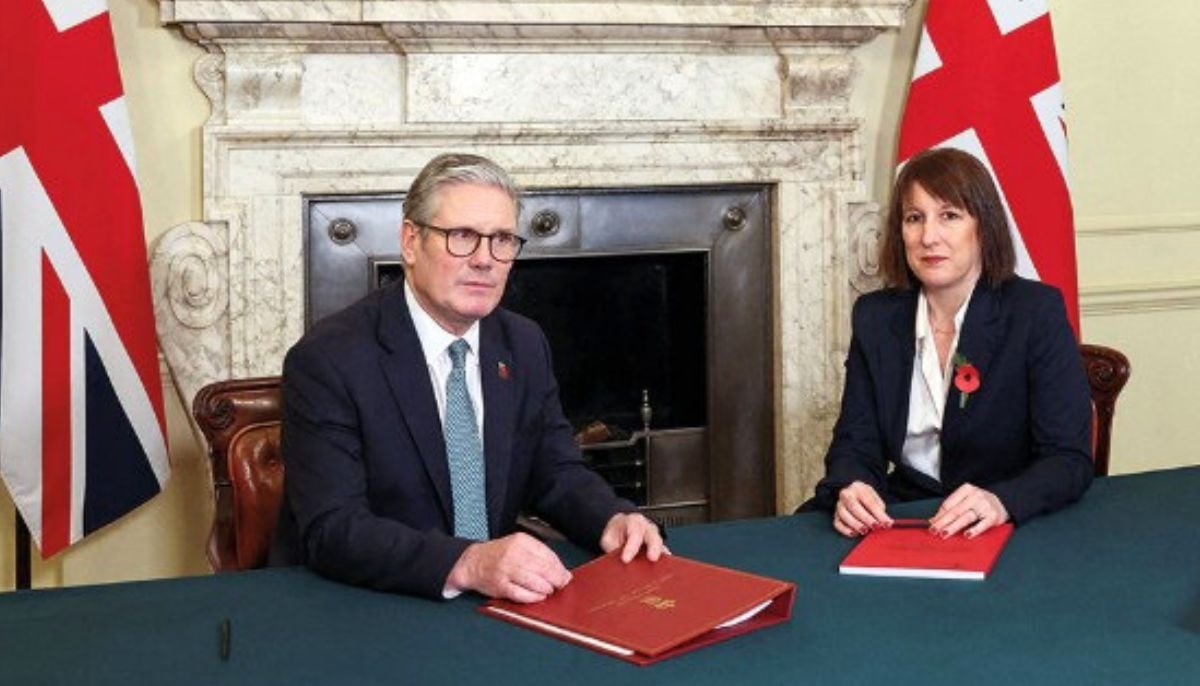

Rachel Reeves insists Labour has ‘the right economic plan’ for a world that has become ‘yet more uncertain,’ but experts have a different review.
It was always going to be a bit of a stretch for Rachel Reeves to maintain she had a brilliant plan and the economy had never been in better health when the figures show a fall in growth and a rise in unemployment.
Unless you happen to think those things aren’t so bad after all.
Experts say that stock markets around the world are falling—making earlier optimism look increasingly out of touch.

They warn that as global conflicts escalate, rising oil and gas prices, volatile bond markets, and falling equities are reshaping the economic outlook and challenging earlier forecasts.

There would be no spending or fiscal commitments.
Although the UK chancellor knows well about the Middle Eastern conflicts, she still gave hope to the Britishers that better days are coming.

“We have the right economic plan for this country,” said Rachel. “Not a plan that was more right than the plan of any other party’s plan. But one specially tailored for us. And frankly more than we deserved.”
But economists are still worried, as they don’t forecast any economic boom due to the current geopolitical tensions.
They said, “Given the poor forecasting record of the Office for Budget Responsibility (which relies on the UK Treasury model of the economy), another chancellor might not have relied so much on its projections of marginally better times ahead in future years.”
Indeed, this is worrisome, “But people clutch at straws when there is nothing else to cling to.”
They suggest that the clear path out of the crisis should be a significant increase in public sector investment, which could address the serious failings: a housing shortage, woefully inadequate infrastructure, and communications and transport. Public investment would kickstart the recovery, address significant problems, and be easily affordable at current real interest rates.
The key to getting Britain investing again is through an active, entrepreneurial state that sets clearly defined missions, confidently shaping its relationship with the private sector and investing to expand productive capacity.
That requires a shift in the way that we conceptualize and measure public value. The Treasury’s shift towards public sector net financial liabilities (PSNFL) in January last year is a positive step—allowing the government to measure not only what it owes but also what it owns. However, these metrics still create a short-term bias, with investments valued on a five-year horizon.
Public sector net wealth (PSNW) would be a more robust metric than PSNFL, factoring in long-run returns on public investment.
Additionally, they also suggested that “economic strategy” should be bold, inspirational, and catalyze structural change.
Because in an unpredictable world, resilience is about much more than headline macroeconomic figures or forecasts.