
For more than three decades, Muhammad Jahangir Khan has lived on Jamiat Rai Street off Spinny Road, a settled neighbourhood in Quetta with the basic markers of an urban locality. The area has gas and electricity connections, and most streets are paved. Yet in 2026, his house has still never been connected to a water pipeline.
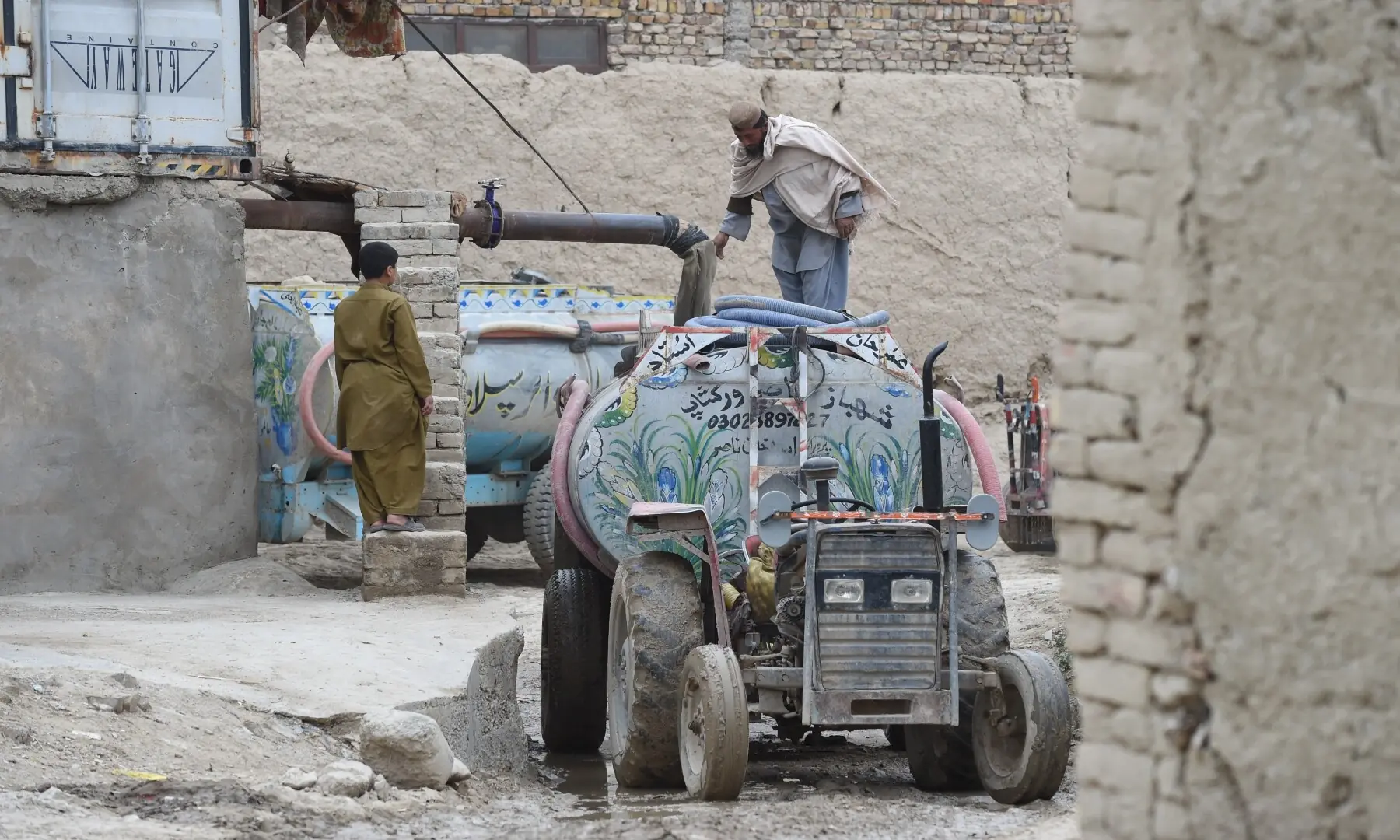
Like many of his neighbours, Jahangir plans his household routine around the arrival of a private water tanker, an expense that was once considered temporary but has long become permanent. What was once seen as an exception has quietly become the norm, as the experience is no longer confined to informal settlements.
Across Quetta, even residents of established urban localities are surviving without a regular public water supply. Instead, they are relying on private arrangements rather than a functioning municipal system.
To top it all off, unregulated use of tube wells, many of them illegally installed, has significantly worsened Quetta’s water crisis. Excessive pumping to compensate for weak public supply has rapidly depleted groundwater reserves, with extraction far exceeding natural recharge in the arid region.

Groundwater under strain
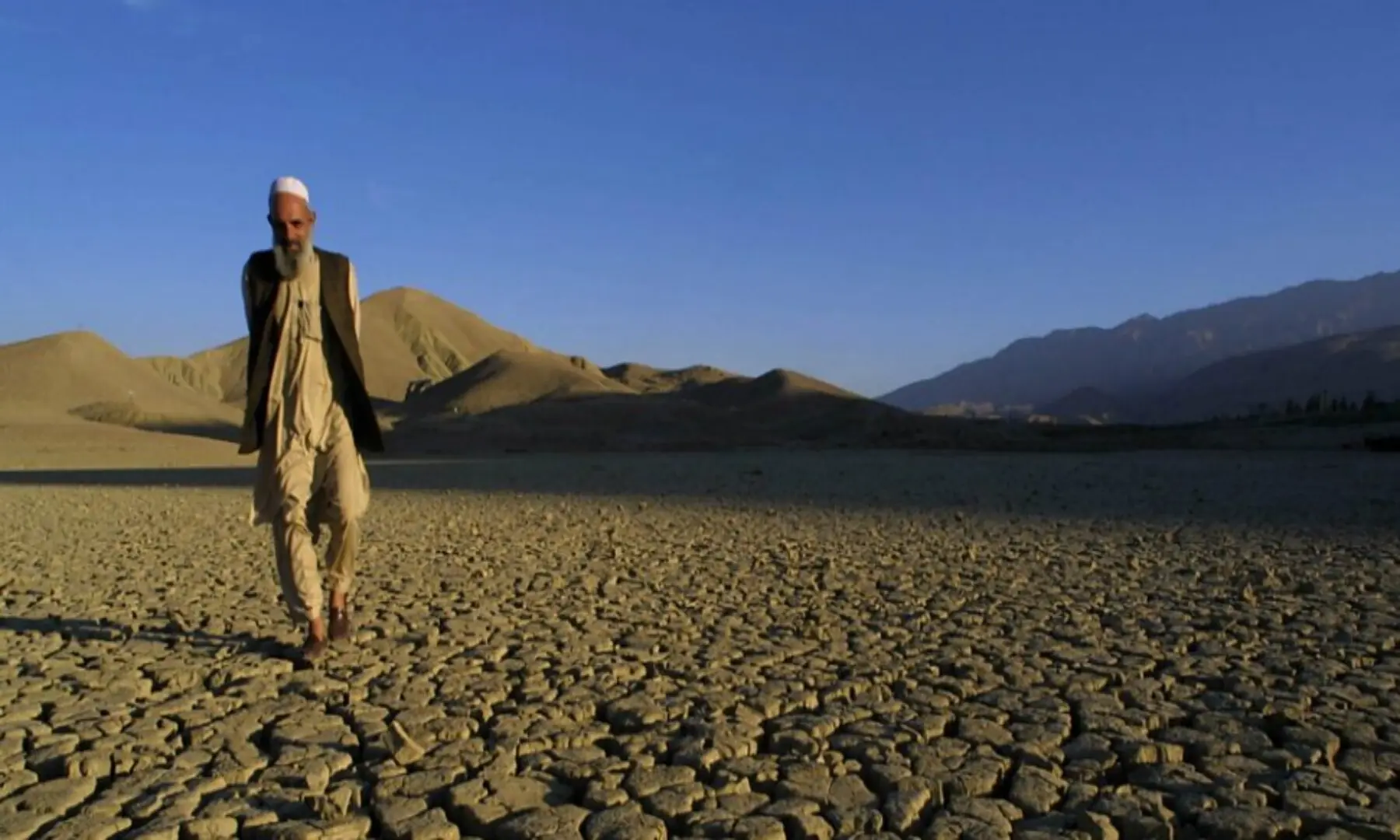
Behind people’s daily struggles lies a deeper structural crisis rooted in geography, climate and policy failure. Despite covering nearly 44 per cent of Pakistan’s landmass, Balochistan receives less than 200mm of annual rainfall, according to the Pakistan Meteorological Department. Data from the Pakistan Council of Research in Water Resources (PCRWR) shows that agriculture depends on groundwater for over 90 per cent of its needs, while only five per cent of farmland is connected to canal irrigation.

In Quetta, groundwater levels are falling by two to five metres annually, driven by unchecked extraction, including more than 30,000 illegal tube wells, per the Balochistan Agriculture Department. Moreover, a study by the International Union for Conservation of Nature (IUCN) shows that the water table has dropped from about 50 metres in 2,000 to over 150 metres by 2023, posing a serious threat to agriculture and livelihoods.
An issue long ignored
In September last year, Commissioner of Quetta Division Shahzaib Khan Kakar and Deputy Commissioner of Quetta Captain (Retd) Mehrullah Badini warned that the water shortage in the provincial capital was worsening with each passing day, urging joint action by the government and citizens. “We are going to announce a water emergency in Quetta,” they cautioned.

For residents, the problem is neither new nor unheard of. Jahangir said people living on his street have repeatedly submitted applications to elected representatives for pipeline installation, but their complaints were ignored, and no action was taken.
Fareed Bugti, a social activist living in the Nawa Kili Teachers Colony of Quetta, told Dawn that his neighbourhood is also deprived of basic facilities.
“The Water and Sanitation Authority (Wasa) installed a water pipeline in my area 10 years ago, but supply from these pipelines has not been restored to date,” Bugti said.
According to Bugti, the population of Nawa Kili has exceeded 200,000, yet the area relies on just two government-owned tube wells, which serve only Mandokhelabad and Pashtunistan Chowk.
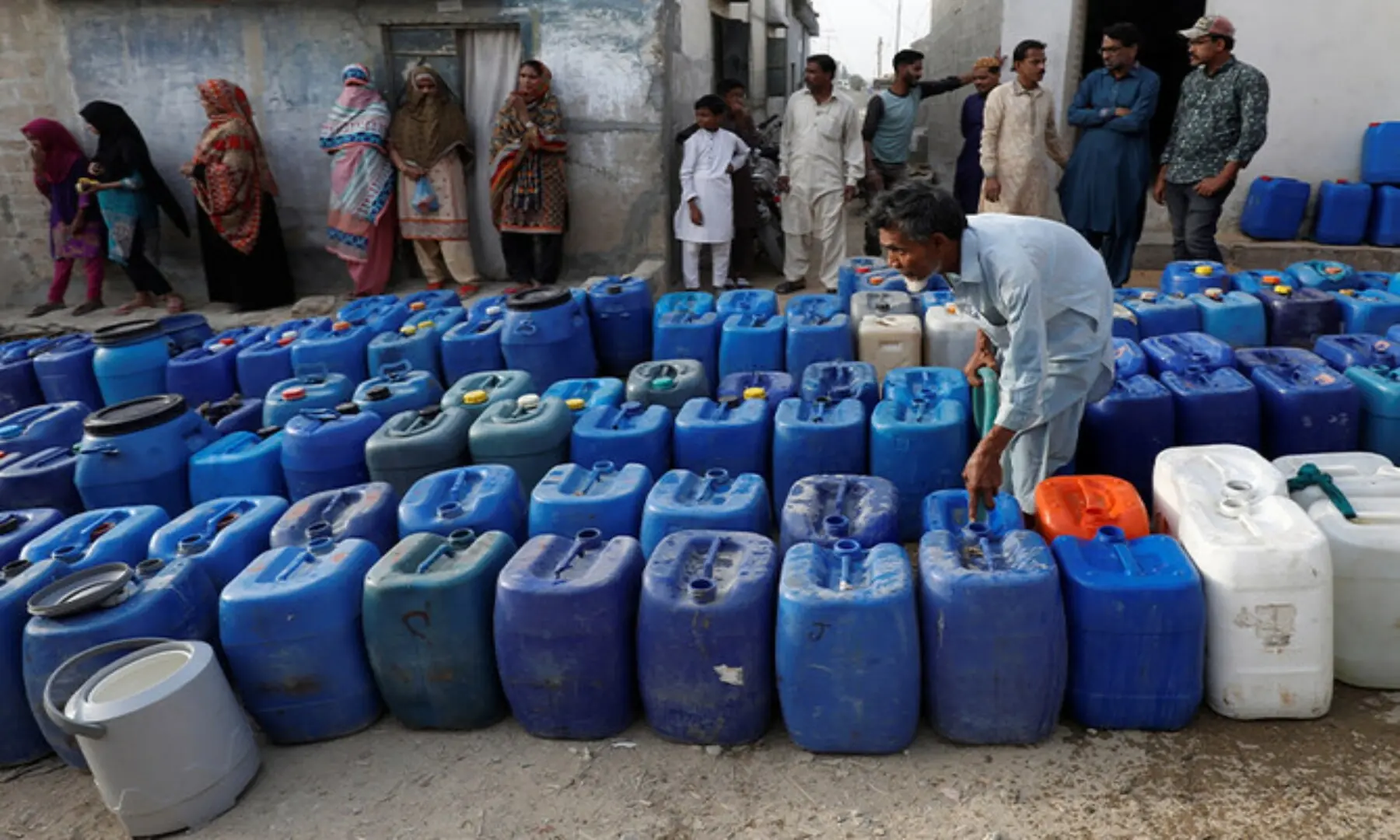
“Citizens have installed hundreds of tube wells themselves without obtaining a no-objection certificate (NOC) from the local administration, due to which the groundwater level is decreasing day by day,“ he said. “And areas where there are no tube wells, people are forced to depend entirely on private tankers.”
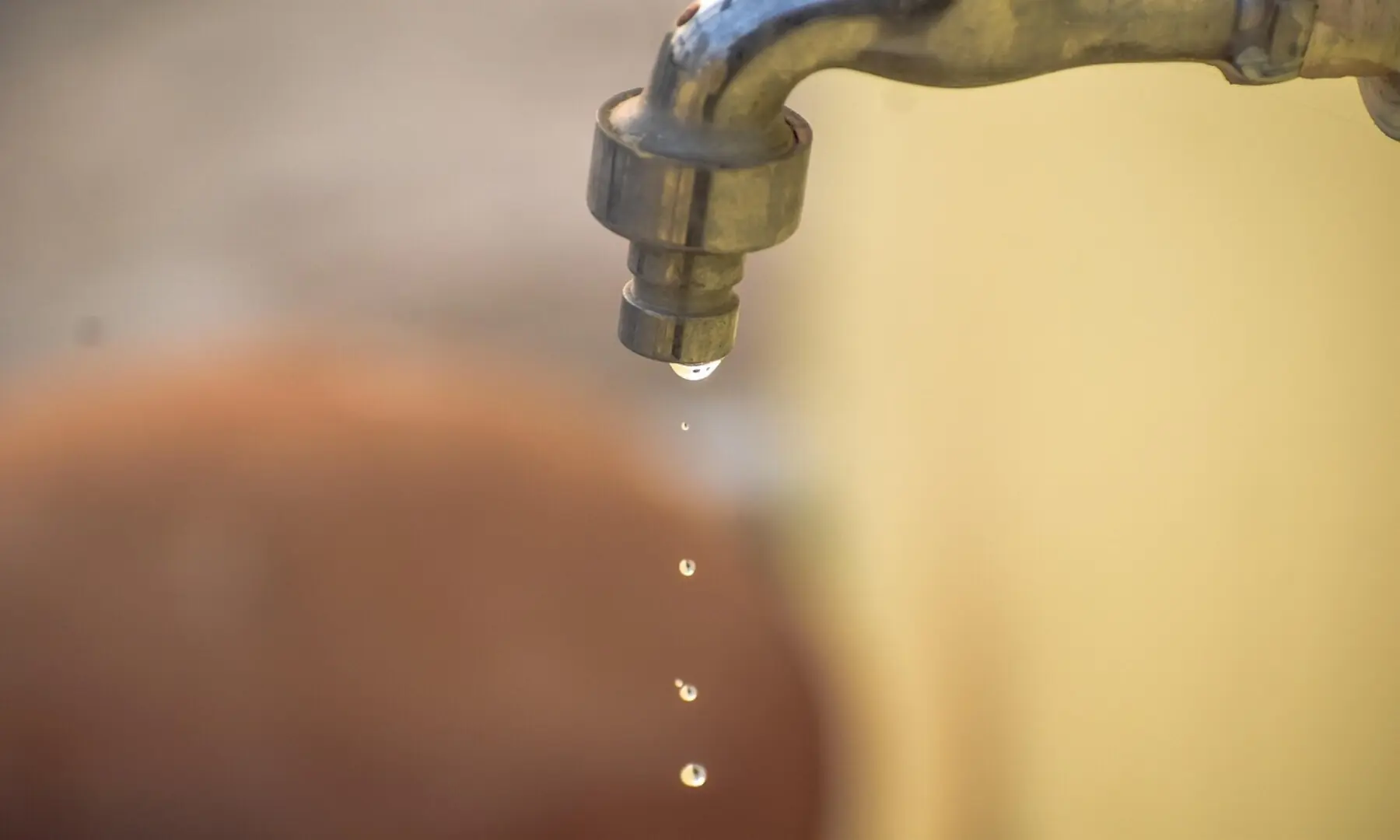
Even where water is supplied, it is irregular. In some localities, residents receive water only once a day for a few hours, while others get a supply once a week.
Uneven relief across the city
While some areas have seen limited intervention, relief remains uneven and fragile. Shahryar Kasi, a resident of Shaldara on Kasi Road, said water shortages in the area were once severe. “Wasa used to supply water after a week or 10 days, and even that would stop within minutes,” he said.
He added that during the tenure of the previous government, a tube well was installed on Kasi Road, easing shortages in the surrounding areas. “Now we get water once a day, which has provided clear relief,” he added.
The situation, however, has not improved uniformly throughout the city, with many areas receiving water only once a week.
Khair Muhammad Dehwar, a resident of Kalat Street in the Jail Road area, said water supply deteriorated after Balochistan faced a prolonged drought from 1998 to 2006.
“Some tube wells installed by the government were damaged, but they never got repaired,” he said, adding that Wasa later refused to take over certain wells, citing insufficient groundwater.
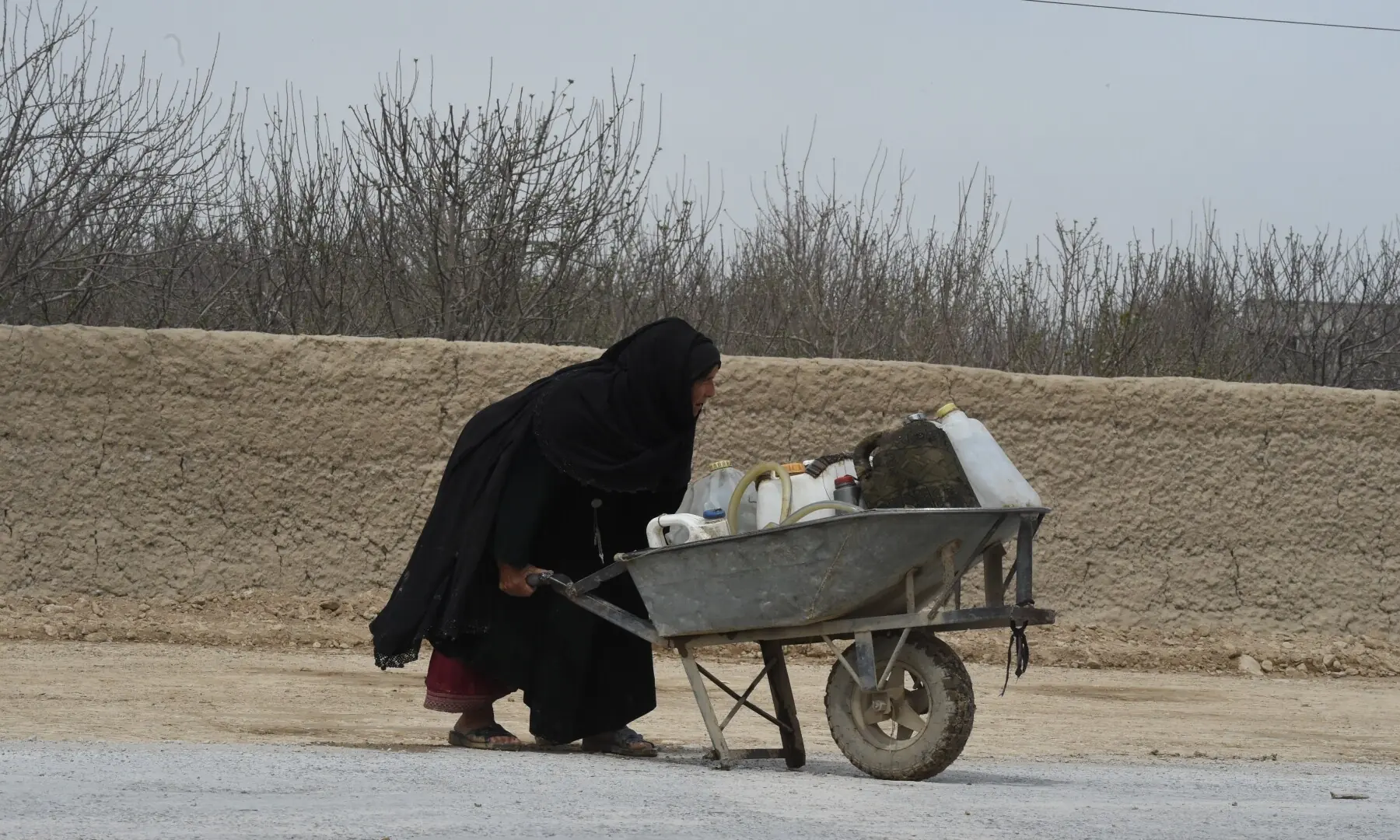
“Wasa provides water once a week for half an hour or an hour, but due to low pressure, it does not reach houses at the end of the streets,” Dehwar said. “As a result, about 60 per cent of households have to order private tankers.”
In Pashtunabad, resident Rehmatullah Durrani said water is supplied for about an hour a day through a tube well installed at a school. “If it develops a fault and is not repaired, residents are forced to call tankers,” he said.
‘Water reaches nearby streets, not ours’
In several neighbourhoods, even state-led interventions have failed to deliver equitable access. Umair Parkani, a resident of Killi Bangulzai in Quetta Saryab district, said his neighbourhood has relied on private tankers for years despite elected representatives from his area making repeated promises.
A tube well installed during the previous government failed to supply water to the entire area due to insufficient groundwater. Although two damaged tube wells were later repaired, Parkani said water still does not reach his house. “It reaches only a few nearby streets. People living farther away still have no option but tankers.”
Others have to keep paying the water bill despite their houses being largely deprived of water.
Mansoor Ahmed, a retired banker living in the Smungli Housing Scheme of the Quetta Development Authority (QDA), said he spends thousands of rupees monthly to purchase water from tankers. Like others, he too has a water supply connection in his house, but receives water for just less than an hour on alternate days. Yet, he has to pay for the whole month.

“Even then, I keep paying the water bill for a full month,” Ahmed told Dawn, adding that the situation gets even worse during the summer months.
“People living in the area have no other option but to purchase water from the private tanker mafia,” he lamented.
‘Serious act of administrative negligence’
Concern has also reached the judiciary. On October 15, the Balochistan High Court (BHC) expressed strong disappointment over the severe shortage of drinking water in Hazara Town and surrounding areas, terming the deprivation of such a basic necessity a “serious act of administrative negligence.”
A two-judge bench comprising Justice Muhammad Kamran Khan Mulakhail and Justice Gul Hassan Tareen heard a petition, ordering immediate action from Wasa, the Public Health Engineering Department (PHE) and Quetta Electric Supply Company (Qesco). The court observed that residents were facing extreme difficulties due to poor inter-departmental coordination and funding delays.
Residents of Hazara Town, appearing before the court, claimed that a private water supply mafia was illegally selling water through Wasa pipelines. They claimed that citizens were being charged Rs30,000-40,000 for illegal connections and monthly fees of Rs2,500-3,000.
The court ordered the cancellation of illegal contracts and directed authorities to ensure an uninterrupted electricity supply to operational tube wells.
Despite the court’s orders, citizens said the situation could hardly improve.
‘Planning and regulation failure’
Experts say the crisis reflects long-standing failures in planning and regulation. Dr Munir Ahmed Babar, Professor at US-Pakistan Centre for Advanced Studies in Water (USPCAS-W) at Mehran University of Engineering and Technology, Jamshoro, told Dawn that Quetta’s continued reliance on tube wells was fundamentally unsustainable.
“Quetta depends almost completely on groundwater, and that groundwater is going down by around one to 1.5 meters every year,“ he said. “This means that more water is being pumped out than nature can refill, while continuing to install tube wells — even solar-powered ones — is not sustainable.”
Dr Babar compared groundwater to a bank account. “Quetta keeps withdrawing without making deposits,“ he said, adding that with very low rainfall and almost no natural recharge, this approach will lead to dry wells, land subsidence, agricultural collapse and worsening drinking water shortages.
“Sustainability is only possible if new tube wells are restricted or banned, illegal wells sealed, groundwater pumping is measured and priced, recharge dams are built, and rainwater harvesting is introduced.
“Without regulation and recharge, Quetta is moving towards water exhaustion,“ he said.
Speaking about why alternative long-term water sources were not developed in the city earlier, he said, “Quetta did not fail because solutions were unknown. It failed because of weak governance, lack of long-term planning, political interests, and dependence on groundwater, because it was cheap and easy,“ he said.
He added that urgent regulatory steps are needed to protect groundwater and ensure fair access. “Every tube well must be registered and metered, tanker businesses regulated, illegal extraction criminalised and recharge infrastructure prioritised. Quetta’s water crisis is man-made, and only governance reform combined with conservation and recharge can reverse it.”
‘Arid climate, low annual precipitation main reasons’
Wasa Managing Director Mujeebur Rehman Kakar said the authority supplies water to just 51 per cent of Quetta’s population, which makes about 1.275 million people.
“We have 544 tube wells, of which 387 are functional,” he told Dawn, adding that around 1,000 may be unauthorised.
He cited arid climate, low rainfall, poor geology, droughts, rapid urbanisation and weak monitoring as major contributors to the crisis.
PHE Secretary Muhammad Hashim Ghilzai said Quetta requires 60 million gallons per day but receives only 31.575 million gallons.
He added that the Mangi Dam project, expected to be completed in March 2026, would initially supply 8.1 million gallons daily.
‘Situation needs dedication, time and proper planning without delay’
As pressure mounts to move beyond short-term fixes, officials say resolving Quetta’s water crisis will require sustained political will, strict enforcement and long-term planning rather than ad hoc measures.
Deputy Commissioner Quetta Captain (Retd) Badini said resolving the crisis would require sustained effort, expert input and strict enforcement.
“We are keeping an eye on the installation of illegal tube-wells,” Badini said, adding that the use of potable water for car-washing at homes and workshops had also been banned. He said efforts were underway to supply treated wastewater for irrigation, plantations and roadside trees.
“No one uses fresh water for irrigation, providing water for roadside trees and for lawns in the houses,” he said, adding that a drip system had been adopted for roadside plantations. He pointed to countries that avoid using groundwater, relying instead on rain, snowfall, rivers, lakes and dams to preserve underground reserves for future generations.
Badini stressed the urgent need to raise awareness among farmers and other segments of society about conserving groundwater. “We have left nothing underground for the next generation,” he said, noting how unrestricted solar-powered pumping had accelerated depletion.
The president of the Quetta Press Club, Irfan Saeed, also expressed serious concern over the crisis, questioning what future generations would inherit. Recalling his childhood, he said groundwater was once available at depths of just 15 to 20 feet and rose to 10 feet after rainfall.
“Water is life, and we are rapidly depriving it,” he said, urging the construction of dams to store rain and floodwater for future use.
Header image: Women in Quetta push wheelbarrows loaded with water bottles amid a severe water crisis. — Banaras Khan Yousafzai