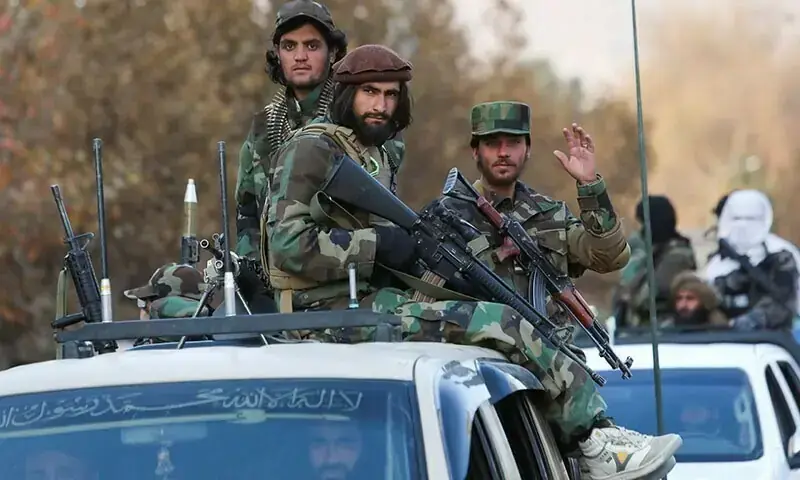

WHILE Pakistan has suffered the most from terrorist groups finding refuge in Afghanistan, and the Afghan Taliban have done practically nothing to stop these outfits from conducting cross-border attacks, the world is now waking up to the seriousness of the threat.
At a meeting of the ISIL and Al Qaeda Sanctions Committee held recently at the UN Security Council, Denmark, in its position as the current chair of the committee, said that the banned TTP posed a “serious threat” to Central and South Asia, while pointing out that the terrorist group received “logistical and substantial support” from the Afghan authorities, namely the Taliban. The Danish representative also mentioned the frequent cross-border attacks that TTP terrorists have conducted against Pakistan, while alerting the international community to the threat that IS-K — also based in Afghanistan but opposed to its rulers — posed to the region.
The Pakistani representative used the forum to criticise both the Taliban and their newfound ally, India, when he observed that terrorist groups, including the TTP and BLA, were thriving “under the patronage of their hosts”, and were backed by “our principal adversary and net destabiliser in the region”.
While the Taliban are often dismissive of Pakistan’s concerns in this regard, it will be hard for them to brush aside the issues raised by the UN body. The sanctions committee has reaffirmed what Pakistan has been saying for long: that the Taliban are supporting the TTP, and that terrorist groups in Afghanistan can destabilise the entire region. The Afghan Taliban’s responses to these grave concerns have been ambiguous, from stating that the TTP are Pakistan’s problem, to claiming they are hosting Pakistani ‘refugees’, to saying that no TTP terrorist is based on their territory. As is evident, the international community is not buying the Taliban’s explanations.

Instead of displaying obduracy over the matter, the Kabul regime needs to work constructively with Pakistan to address the problem. The last round of peace talks held in Istanbul earlier this month ended inconclusively, though the ceasefire between both states has held. Though it would be overly idealistic to expect the Taliban to take strong action against the TTP — both groups are from the same ideological stock, and have fought together in Afghanistan — Pakistan’s demand that Kabul stop cross-border attacks is entirely doable.

The alternative to the Taliban’s dithering and denialism would be more conflict, which is not in the interest of either country. The Pakistani state, therefore, while taking a firm stand against cross-border terrorism and internal security, must not let bilateral and people-to-people ties nosedive further.
If ties with Kabul sour even more, inimical actors in the region will be ready to exploit these differences, which will only add to Pakistan’s security dilemmas.

Published in Dawn, November 22nd, 2025