

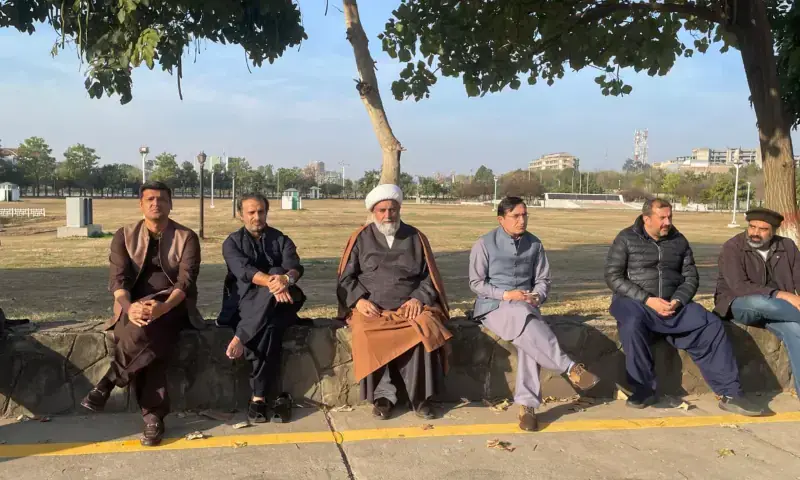

THE sit-in by the PTI and its allies, under the TTAP banner, over the health of their incarcerated leader Imran Khan can be seen as both a legitimate exercise in democratic agitation and a test of whether protest alone will yield meaningful political outcomes.
No doubt, the right to protest is constitutionally protected and the opposition’s concerns that their leader receive timely and specialised medical care is warranted. Yet, even as it encamps outside Parliament House, a harder truth confronts the opposition. Protest is a tactic — one that politicians, including Mr Khan, have employed in the past with considerable success.
But protest alone is not a strategy. It can certainly draw attention and mobilise support but it is not a substitute for sustained political engagement. Nor can it replace the arduous work of policy articulation and alliance-building that is required to convert street power into material political gains.
Some of the PTI’s grievances carry weight. Concerns about due process and prison conditions resonate with many citizens who feel alienated from the system. The government should not ignore these sentiments. Democratic maturity requires listening, even to one’s fiercest critics — something that our politicians have little appetite for. It also requires restraint by the government, as heavy-handed responses will only deepen polarisation and reinforce the opposition’s narrative of victimhood. Fortunately, there have been recent signs that dialogue is not entirely doomed. For instance, a meeting earlier between the prime minister and KP chief minister suggested that channels of communication, however fragile, remain open, and that it is possible for political opponents to engage on issues that demand cooperation.

This should not be underestimated and the opposition must draw the right lesson. Earlier, the opposition’s dramatic confrontations yielded results only when extra-parliamentary forces tilted the balance. Today, that dynamic is not in the opposition’s favour. In such a landscape, agitation without political engagement can become an exercise in futility. Without the magnetic presence of Mr Khan on the streets and without institutional fissures to exploit, protest on its own will not dislodge a government that retains its parliamentary strength. Such a situation does not mean retreat but rather recalibration. For instance, the opposition would need to frame clear, achievable demands not as ultimatums but constitutional rights.

In the long term, however, the challenge is deeper. What is the PTI’s policy alternative on the economy or counterterrorism or social welfare? What alliances can it build across ideological lines? How does it envision institutional reform beyond personalised politics? A movement always in protest mode risks hollowing out its own capacity to remain relevant. For its part, the government must recognise that exclusion breeds instability. By addressing legitimate concerns, it can lower political temperatures and boost democratic norms.
Published in Dawn, February 15th, 2026