

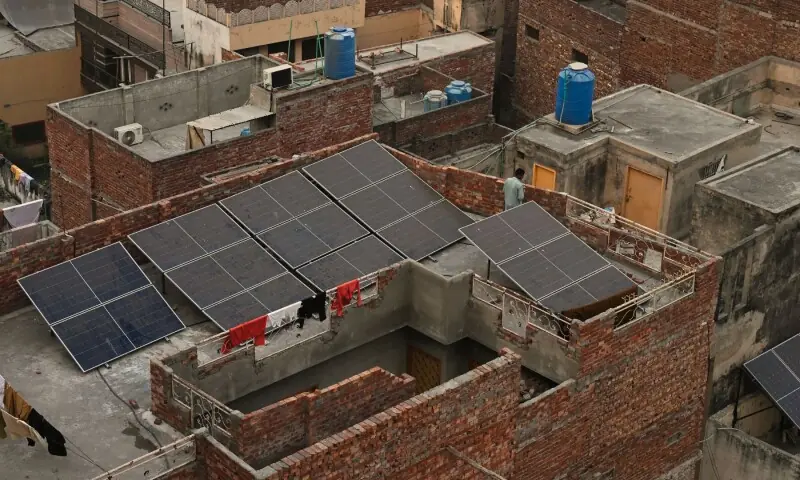
In a quiet Rawalpindi neighbourhood, where the power grid often dictates the rhythm of life, one family has transitioned from stopgap solutions to a more sun-powered reality. Their journey into solar energy was not just a financial calculation, but a response to a two-decade fight with an unreliable power supply.
“It was one hour off and one hour on,” recalls Rubab, a 40-year-old housewife and resident of the Marir Hassan neighbourhood. After struggling with frail UPS batteries for years, she finally invested in solar panels about a year and a half ago — at a high personal cost.
“I sold my gold to buy these solar panels for our home,” she tells Dawn. “Women are expected to make these sacrifices for the household. Even my sister had to install solar on installments, that is the only way families like ours can afford it.”
The decision to shift to solar, she recounts, was both hers and her husband’s, influenced by relatives who had already made the transition. Their purchase, however, was isolated from their understanding of the technical system they had scrambled to secure.

A revolution on the rooftops
Rubab, who manages home appliances all day, is a primary energy user in her household. Yet she remains physically and intellectually distant from the hardware and its specifications.

“I have never been a part of any interaction with the technicians since we got solar for our home. All the interactions are done by my husband. The male members in our family do not like us indulging in such issues; these are thought to be male-centric matters,” she shares.
This exclusion is particularly striking because Rubab is, in practice, the household’s most sophisticated energy manager. She has learned to read the weather and adjust consumption accordingly.

“All I know is that when there is plenty of sunlight, I can use the appliances properly,” she explains. “If it is cloudy outside, I instantly shut the fridge and TV, and do not let my kids switch them on that day.”
Despite navigating solar power through daily practice, Rubab barely knows how to wash the solar plates or take care of the equipment, often waiting for her husband to return home to deal with technical issues.
Pakistan is currently undergoing a rapid shift toward household solar use, driven by tariff hikes and persistent outages. According to a recent study by the Policy Research Institute for Equitable Development (PRIED), roughly 50 gigawatts (GW) of solar panels have been imported from China in the last five years, with about 33 GW of capacity already installed across the country.
The residential sector alone accounts for about 16.66 GW of this capacity, making homes the largest contributors yet to solar use in the country.
The data is staggering: 77 per cent of solar adopters predominantly rely on solar for their consumption, with the grid as a supplement. This transition is reshaping how families secure electricity, but it is doing so in a way that risks leaving out nearly half the population.
The ‘male-to-male’ gate
Unfortunately, like Rubab, many women have had to watch the solar revolution from the sidelines, for which they have made their share — or often more — of the sacrifices.
Zahida, a 57-year-old retired government teacher and resident of Rawalpindi’s PWD Housing Society, recalls how she was never a partner in the transition to solar in her house, which was born of necessity. “My husband decided to do it,” she says.
Despite her educational background, Zahida’s involvement in the process remained painfully minimal. She laments that when it comes to solar, technical information is often gated by “male-to-male” communication — an experience that highlights a persistent gender gap.
Solar technology, Zahida tells Dawn, was first explained to the men of the family, leaving her to receive only secondary information through her husband. “Men alone understand these tasks, and because technicians are also men, it is easier for men to explain the same to other men,” she says.
The consequences of this dependency become most apparent during emergencies. During recent floods and heavy rains in Rawalpindi and Islamabad, Zahida’s solar panels developed a fault while her husband was unable to reach home, stuck in rising water at Sawan Bridge. Despite Zahida being there to facilitate the repair, the technician refused to engage with her only because she was a woman.
Yet, Zahida remains firm that the hurdle is not intellectual but instructional. “It is no rocket science,” she asserts, confident that if women were taught the right way, they would be just as capable as men.
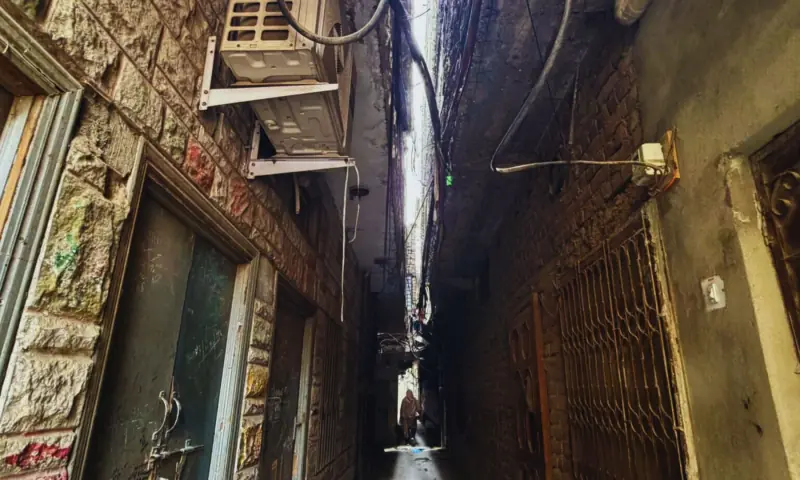
Instead, women find themselves stuck in a cycle of dependency — be it a husband, son, father, or brother. This exclusion is not merely a household quirk but a reflection of broader societal expectations and sociocultural constraints that limit women’s access to specialised knowledge.
In the existing social landscape, technical decision-making is often assumed to rest primarily with men, influenced by patriarchal structures, leading to a narrow definition of “women’s sphere of competence” and often relegating them to the “aesthetic” side of technology.
And this isn‘t something that women ‘just feel’.
Muhammad Sajid and Muhammad Faisal, experienced installers for Ningbo Green Light Energy, have noticed a clear difference in the approach male and female clients take.
“Men are generally more critical and analytically better in interactions,” observes Sajid. Faisal adds that women are often perceived as being “only focused on the placement of the inverter … making sure it is aesthetically placed”.
Both generally perceive the overall management of the system as “a man’s job”.
Linking lines and labour
This belief is not just limited to individuals; instead, it has slowly seeped into the industry as well. While the technology is modern, the labour structure remains sharply divided by gender.
At Ningbo Green Light Energy’s head office in Lahore, women are aplenty in the human resources and design departments. In the field, though, they are elusive, says Sajid. The reason, he says, is simple: physical labour.
“Lifting the panels requires physical strength,” he states as a matter of fact.
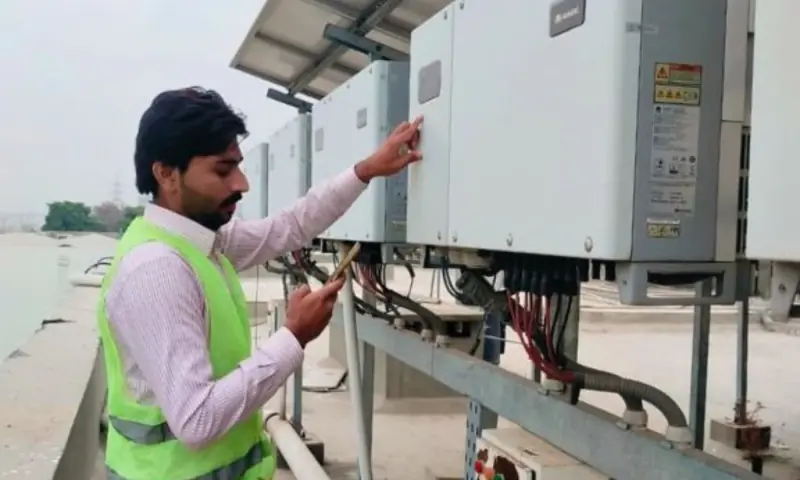
Sajid’s perspective, like that of several other members of our society, is now becoming outdated as a narrow interpretation of capability and stands in stark contrast to the ground reality of women’s contribution to the Pakistani economy.
Across the country, women shoulder some of the most physically demanding and undervalued labour — agriculture, brickworks, livestock rearing, and fisheries are some workplaces where gender never comes in the way of getting the job done. Yet, women’s labour remains largely invisible, underpaid, and unsupported.
To suggest they lack the strength for tasks like lifting solar panels overlooks the millions of women who already perform more physically demanding duties every day. The barrier to entry appears to be less about physical limitations and more about social gatekeeping.
Despite these hurdles, there are women in our localities and neighbourhoods who are shattering these norms and simultaneously proving that they are only the consequence of class and money. Sahira, a widow and resident of Bahria Town Rawalpindi, is one such woman.
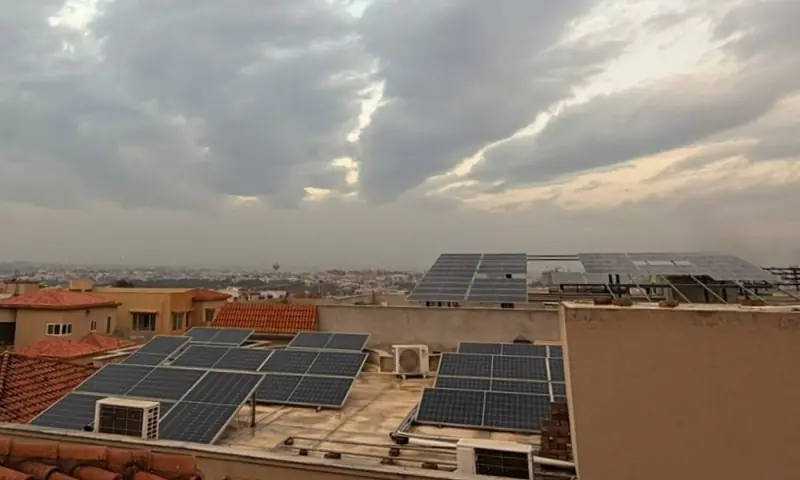
A business owner, she exercises complete autonomy in the energy transition at her home. But before that, she undertook rigorous technical research on her own — looking up information on the type of silicon used in the solar panel, its efficiency, cost, and more.
Her financial independence was the key to her agency; she was the only one dealing with the contract. “Based on the knowledge I gained and the research I did, I successfully assisted several male-led households in the installation of solar systems,” she tells Dawn.
Sahira’s story shows that when financial and technical barriers are overcome, women can seamlessly transition into the role of a primary technical analyst.
Power and patriarchy
Pakistan’s rapid household solarisation is often celebrated as a quiet revolution — panels glinting on rooftops, bills shrinking, and households stepping away from a faltering grid. But beneath this hopeful imagery lies a harder, less comfortable question: who is this transition really empowering?
At its heart, the push for solarisation across the country is more than a technological change. It is a question of energy equity, touching on access, affordability, and reliability, while also raising crucial considerations of gender.
Consider the uneven landscape of choice in household energy. A woman from a wealthier, educated household — with a larger home, social networks, and ready access to information — can actively compare solar systems, negotiate with installers, and troubleshoot issues when they arise. For her, solar adoption is an empowered decision.
In contrast, women from low- to middle-income households often encounter solar as a last resort rather than a conscious choice. Even when the technology is physically present, energy inequity persists if users lack the technical knowledge to effectively manage it.
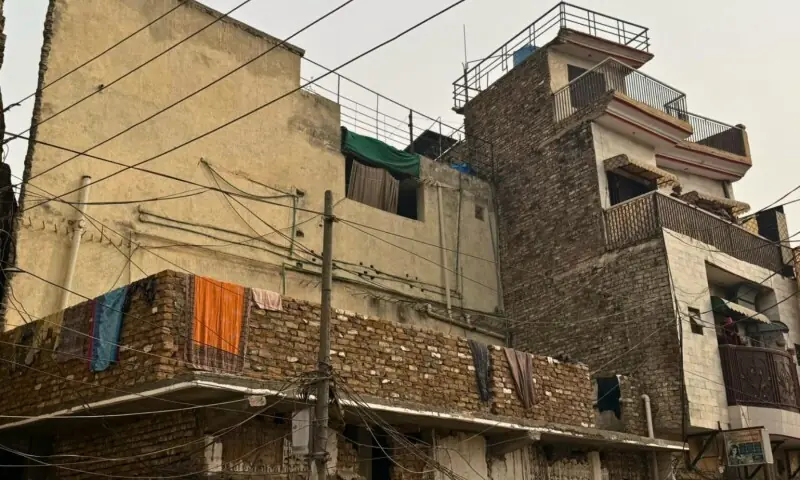
These decisions — whether powered by choice or compulsion — are not just influenced by accessibility or affordability; they are also shaped by patriarchal structures that restrict women’s opportunities. Sociocultural norms intersect with economic constraints to amplify both the burden of unreliable energy and the barriers to equitable participation, leaving women disproportionately affected.
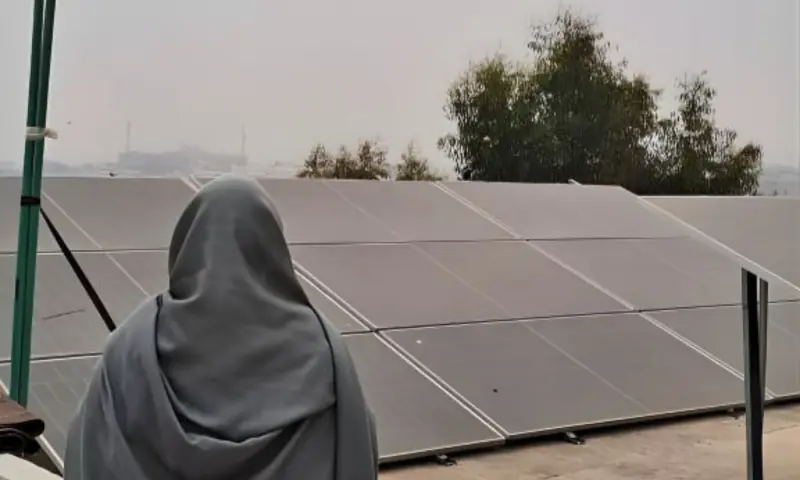
This is why women like Rubab and Zahida, both of whom are in charge of the day-to-day management of household chores, stand several feet away from the solar system installed on their rooftops. A foreign object of curiosity, one that remains alien to them.
In this sense, solar has not eliminated vulnerability — it has merely shifted it. When information is designed for men, framed in jargon, and delivered with the assumption of prior technical literacy restricted to a particular gender, the outcome resembles a neutral market failure.
Energy inequity, therefore, is not only about the affordability, access and reliability but also about who understands the system, who controls it, and who is left to cope when it fails.
According to Energia, an international network on gender and sustainability, women hold just 11pc of ministerial positions in energy-related sectors across the globe, while only 22pc represent the energy workforce.
In Pakistan, too, these numbers are reflected aptly, where women are expected to manage energy scarcity but are excluded from decisions on affordability, design, financing, and deployment. Their labour is central, their voices peripheral. Equity demands access not only to technology, but to knowledge, decision-making, and ownership.
As the country moves toward a more diversified and modern economy, it must confront the myth of energy as “male territory”. The strength required for the country’s future does not reside solely in physical labour or technical masculinity, but in the untapped potential of its entire workforce.
Policy blind spots
Pakistan’s energy governance, Dr Sharmila Farooqui of the PPP argues, remains largely “gender blind”.
“The barriers are structural and social,” she argues, referring to women’s limited control over assets, credit, and financial decision-making. Without addressing these constraints, the lawmaker points out, solar risks becoming yet another technology that widens inequality under the guise of progress.
She highlights a critical gap: Pakistan lacks a comprehensive definition of energy poverty — one that accounts for affordability, reliability, and time poverty. In its absence, policy remains focused on supply metrics rather than lived experience.
Farooqui stresses the charting of a gender-responsive framework that supports women as solar entrepreneurs, technicians, and community leaders. “Sindh’s initiative to provide solar panels directly to women offers a glimpse of what is possible. Registering energy assets in women’s names not only improves access but can shift household power dynamics, strengthening dignity and autonomy.”
From the private sector, Hasnat Khan of Ningbo Green Light Energy echoes the need for structural reform. He calls for mandatory inclusion of women during consultations and system handovers; basic solar awareness and training sessions for female users; targeted subsidies and low-interest loans for female-headed households; and gender-disaggregated data to identify gaps in the energy-development nexus.
“These are not add-ons. They are prerequisites for equity.”
Without these interventions, the gender dimension of the fossil fuel economy will simply reproduce itself within the renewable sector. Solar will remain available, yet inequitable.
To visualise the difference, imagine the solar transition as a library. The shelves are full, the books plentiful — but they are written in a language only half the population is taught to read. Energy vulnerability is being inside the library, yet unable to read the manuals when a fire breaks out, because no one taught you the language.
A gender-just transition is the systemic effort not only to fill these shelves, but to ensure everyone is taught to read and has the authority to help manage the library.
Header image: Sahira at her rooftop with her solar panels. — all photos provided by author