


Fifty years of brokering peace for others, can the ‘Islamabad Talks’ mark a turning point for Pakistan’s diplomacy?
KARACHI:
For a country long typecast as a source of regional instability, Pakistan pulled off something for the books.

After almost six weeks of conflict between the United States, Israel, and Iran, it was Islamabad that brokered a two-week ceasefire – maintaining a careful balancing act throughout, avoiding alignment with either side while quietly working to open channels for de-escalation.

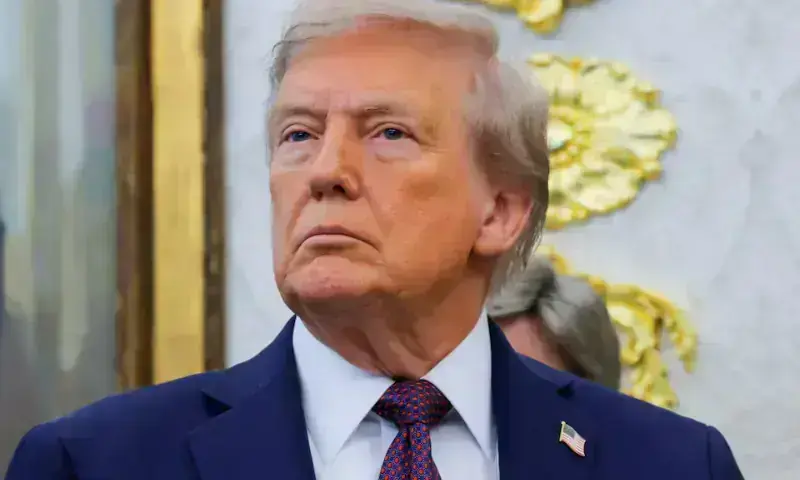
With less than two hours before US President Donald Trump’s deadline for Tehran to reopen the Strait of Hormuz, who warned “a whole civilisation will die tonight, never to be brought back again”, Prime Minister Shehbaz Sharif announced that both sides had agreed to an immediate ceasefire.
The praise that followed was swift and global, with world leaders lined up to congratulate Pakistan.

The Malaysian prime minister called Islamabad’s efforts “tireless and courageous” while Kazakhstan’s president attributed the agreement directly to the mediation of Prime Minister Shehbaz and Chief of Defence Forces and Chief of Army Staff Field Marshal Asim Munir.
However, for those who have watched Pakistan’s diplomatic history closely, it is not the first time Pakistan has found itself at the centre of a geopolitical breakthrough – and that pattern, as much as the ceasefire itself, is worth examining.
We’ve been here before
“Pakistan’s peace initiative will go down in diplomatic history as a milestone,” said Masood Khalid, former ambassador of Pakistan to China. “The international community is fully supportive of Pakistan’s peace efforts,” he stated.
He added, “Pakistan wants the two parties to realise the cost of their failure to reach a modus vivendi” but said that regardless, Pakistan would not be a loser “as it has made sincere efforts to provide a platform for Iran and the US to resolve their issues.”
However, the former ambassador remains measured regarding what comes next.
“As regards the future trajectory, that depends on the US and Iran to find a middle ground, which is no doubt challenging, but still doable. Flexibility, maturity and rationality is needed in these talks to avoid a future crisis from erupting,” he noted.
Meanwhile, major general (retired) Inam ul Haque urges restraint in how the moment is interpreted.
“We should not be too early to jump to conclusions,” he said. “We should wait for the process to run its full course and then make an opinion as to where it is leading,” he stated before the talks ended without an agreement on Sunday.
Responding to whose diplomatic achievement it was, he remained cautious.
“We should not give verdicts like whose big diplomatic achievement this is. It is the diplomatic achievement for peace, for Pakistan, for the US, for Iran, for all the stakeholders,” Haque maintained.
The quiet facilitator
Brokering peace in a time of heightened global tensions is, in many ways, a familiar role for Pakistan.
The country has a quiet but consequential history of making itself indispensable at moments when the world’s great powers cannot, or will not, talk to each other directly.
One such example was in 1971, when Washington and Beijing had not spoken in over two decades.
It was through Islamabad that the first signals were passed – Pakistan’s back channels to China gave then-US secretary of state Henry Kissinger a secret route to Beijing. His covert flight, routed through Islamabad, made Nixon’s historic 1972 visit to China possible.
This led to Nixon’s famous handshake with Mao Zedong and the broader detente between the two countries, accompanied with the US’ recognition of communist China.
Pakistan hadn’t just facilitated a meeting, it had helped rewire the global order.
Read More: One message tipped the scales
According to Ambassador Khalid, “In 1971, Pakistan played a seminal role in bringing about a rapprochement between the USA and China, and that changed global politics.” He added, “Chinese leaders even today acknowledge our contribution. American leaders like Dr Kissinger also acknowledged our role.”
Major general Haque went further: “Pakistan was instrumental in patching up between China and the US in the 1970s. As far as our balancing act between China and the US is concerned, our foreign office and our establishment is very experienced in doing that. We have been walking this tight diplomatic road for a long time and we have been doing it very successfully.”
A decade and a half after aiding the US-China rapprochement, Pakistan was again at the centre of history.
The 1988 Geneva Accords, which ended the Soviet occupation of Afghanistan, were made possible in large part by Pakistan’s role as a key conduit for the Afghan mujahideen and key interlocutor between Washington and the Afghan factions.
The accords, a bilateral agreement between Afghanistan and Pakistan, included the US and the Soviet Union as guarantors. It laid out the terms and timeline for the return of refugees and the withdrawal of Soviet forces from Afghanistan.
Although Afghan unrest continued after the Soviet withdrawal, Pakistan, through strategic maneuvering of its diplomatic relationships, had managed to bring together the US and Soviet Union during the tense Cold War period, with both powers remaining guarantors of non-interference and non-intervention.
The cost Pakistan paid for that role was concrete and lasting.
Pakistan’s economy was burdened by feeding millions of Afghan refugees for nearly a decade, while the country absorbed the narcotics trade and arms factionalism that the war had seeded across its western border – consequences that would define Pakistani society for a generation.
Then came Doha in 2020, when Pakistan was again quietly instrumental in bringing the Taliban to the table, facilitating the agreement that was celebrated internationally as a landmark diplomatic achievement.
The Doha Accords, known also as the Agreement for Bringing Peace to Afghanistan, saw Pakistan leverage its relationship with Washington and its influence with Taliban leadership to help end the long-running war.
The agreement laid out fighting restrictions for both parties as well as the withdrawal of all NATO forces from Afghanistan in return for counter-terrorism commitments from the Taliban.
“Be it the Geneva Accords or the Doha Accords, Pakistan has shown its commitment to peace and its capacity to deliver,” said Ambassador Khalid.
Also Read: How Pakistan brokered a two-week ceasefire deal between US, Iran?
Pakistan’s former permanent representative to the United Nations Dr Maleeha Lodhi, in a 2021 interview, also credited Islamabad for its role in the negotiation process.
She stated that Pakistan kept the channel of communication open with the Taliban, adding, “If we hadn’t, Pakistan would not have been able to play the constructive role it played in helping in the sequence of events that led to the Doha agreement between the US and the Taliban.”
The commitments of the accords, however, did not hold. Part of the Doha pact was an assurance that Afghanistan would not allow any terrorist group to use its soil to attack a foreign country, yet in the years that followed, the Tehreek-e-Taliban Pakistan grew stronger, not weaker, operating from Afghan territory with training camps across Kunar, Nangarhar and Khost.
Pakistan had helped broker a deal whose blowback landed squarely on itself.
The dividend question
Three moments, three generations, a strikingly consistent pattern – and a question that refuses to go away: what has Pakistan actually walked away with?
The Geneva Accords left Pakistan managing millions of Afghan refugees and a narco-arms economy that would haunt it for decades.
Doha produced neither security nor economic reward, only a more emboldened Taliban on its border and a deepening insurgency at home.
By 2025, Pakistan was experiencing six times as many terrorist incidents as it did in 2020, the year the Doha Accords were signed.
Nixon’s opening to China also reshaped the world, but Pakistan remained on the margins of what followed.
According to Khalid, “Whether Pakistan reaped strategic dividends or not is debatable.” “I don’t think it can be gauged in net loss or gain, it depended on the obtaining situation and geopolitical dynamics of the time,” he said.
In the current context, he argued, the measure should be different. “The biggest dividend would be if Pakistan’s peace efforts are crowned with success. Pakistan is not a party in this conflict. Pakistan is a facilitator, mediator, and an honest broker.”
Haque, meanwhile, rejected the premise of the question: “I don’t agree that Pakistan could not reap the strategic dividends of earlier diplomatic achievements,” he said, adiing, “The mere fact that you are acknowledged as a big player which is influential at the global stage, that is important.”
He also draws a pointed analogy: “When Norway goes for mediation on the Afghanistan issue, it doesn’t expect any diplomatic dividends or windfalls.” For Haque, the recognition itself is the reward.
“Pakistan is one of 200 United Nations members singly handling a very complex issue on which global peace is dependent. The mere fact that Pakistan is in the limelight for the right reasons globally; that is a great achievement,” he maintained.
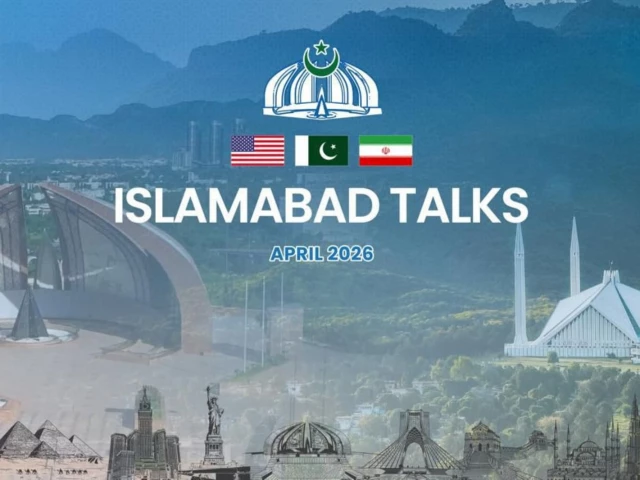
The “Islamabad Talks”
What makes Pakistan’s brokering between Tehran and Washington different from its past endeavours is not just what Pakistan did – it is what everyone else didn’t.
Major powers including Russia, China, the European Union, Egypt, and Turkiye had resigned to fate and taken a backseat, leaving a vacuum that Islamabad chose to fill. In previous episodes, Pakistan was a corridor through which great powers moved. This time, it moved on its own.
That movement did not happen overnight.
Two turning points had rebuilt Pakistan’s trust with Washington in the years prior: the capture of a suspect linked to the 2021 Kabul airport bombing, which prompted public thanks from President Trump, and the four-day war with India in May of 2025, which analysts said gave Pakistan’s military leadership a significant boost in diplomatic credentials.
By the time the Iran war began, CDF Munir, whom Trump had taken to calling his “favourite field marshal“, had become the only serving military chief at the World Economic Forum in Davos, and had spoken with Vice President JD Vance multiple times since hostilities began.
The groundwork for Pakistan’s emergence as a key channel for peace was, thus, laid carefully.
Before the “Islamabad Talks” even began, Islamabad had hosted a quadrilateral foreign ministers’ meeting with representatives from Turkiye, Saudi Arabia, and Egypt, building a regional coalition behind its mediation efforts rather than simply offering itself as a venue.
The role itself had also changed in kind.
Islamabad transitioned from crisis mediator to host of high-stakes negotiations, with Vance travelling alongside senior envoys Jared Kushner and Steve Witkoff, and Iran sending Parliament Speaker Ghalibaf and Foreign Minister Abbas Araghchi to negotiate on Pakistani soil.
What followed were the highest-level direct talks between the US and Iran since the 1979 Islamic Revolution – 21 hours of negotiations that the world watched. However, they ended without a deal.
Vance departed, crediting Pakistan directly, saying, “whatever shortcomings of the negotiation, it wasn’t because of the Pakistanis who did an amazing job and really tried to help us and the Iranians bridge the gap and get to a deal.”
Foreign Minister and Deputy Prime Minister Ishaq Dar, in the aftermath of the talks, urged both sides to uphold the ceasefire and maintain the talks’ positive spirit. “Pakistan has been and will continue to play its role to facilitate engagement and dialogue,” he said.
It was a sentence Pakistan has, in different words, said before; after Geneva, after Doha, after 1971.
What Pakistan has consistently demonstrated is its ability to bring adversaries to the table.
Where it has struggled, over decades of quiet diplomacy, is sustaining influence once the talks move beyond the room.
That, perhaps, is the question the “Islamabad Talks” leave behind: not whether Pakistan can convene dialogue, but whether it can shape what endures after it.