
• PM defends ‘difficult decision’ on fuel prices, says global oil market ‘not in Pakistan’s hands’
• Public, private workplaces to shift half their staff to ‘work from home’; won’t apply to essential services such as banks, hospitals, agricultural or industrial sectors
• All schools, colleges to stay closed for two weeks; higher education institutes to shift classes online
• Special cabinet committee reviews fuel stocks, assesses national preparedness
• Punjab, Khyber Pakhtunkhwa and Balochistan also announce measures; Sindh cabinet meets today
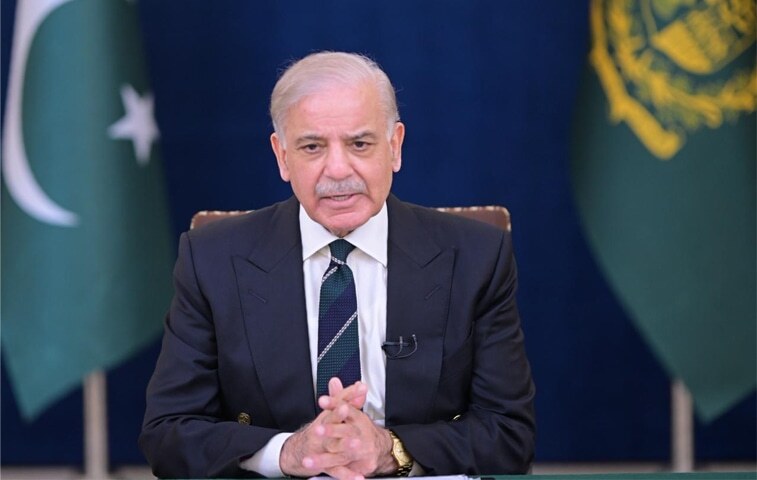
ISLAMABAD / LAHORE / PESHAWAR: Prime Minister Shehbaz Sharif announced unprecedented austerity measures to cope with the situation that emerged due to the US-Israel war on Iran, which has led to a global oil crisis affecting various countries, including Pakistan, as three provinces with the exception of Sindh have taken their own set of steps to deal with the situation.
In his address to the nation on Monday night, the premier unveiled the government’s contingency plan, saying it was being enforced to utilise the available reserves of oil in a judicious manner as, due to the prevailing war in the Gulf, oil prices would increase further in the international market in the coming days.
Among these measures, the premier announced four working days for all government offices — Monday to Thursday.

The additional holiday will not, however, be availed by banks. It won’t apply to the agriculture and industrial sectors, or essential services such as hospitals and ambulance services.

All schools and colleges in the country will remain closed for the next two weeks, while all other educational institutions working under the Higher Education Commission (HEC) will continue their learning programmes online.
It will be mandatory for all public and private firms to ensure that 50 per cent of their staff work from home. However, the work-from-home provision for 50pc staff will not apply to agriculture and industrial sectors, as well as those affiliated with essential services.

The PM announced that all government and official vehicles would receive 50pc less fuel for the next two months. However, the restriction will not apply to ambulances and public transport vehicles.
He also announced that 60pc of government and official vehicles would not be used for the next two months.
The premier said no federal ministers, advisers or special assistants would receive their salary for the next two months. However, this seemed to fly in the face of the government’s earlier claim that no federal cabinet member was receiving a salary and they were all working on an “honorary basis”.
PM Shehbaz also announced a 25pc cut in the salaries of all parliamentarians.
All government officials in grade 20 and above — who make more than Rs300,000 per month — would face a two-day salary cut “to provide relief to the public”. In addition, expenditure of government institutions and departments will also be slashed by 20pc.
There will be a complete ban on foreign visits by all federal and provincial ministers, advisers, special assistants and government officials.
“The restriction will also apply to the prime minister, chief ministers and governors, while those visits that will be essential for national interest will be made,” he said.
All government meetings will be held online to avoid unnecessary fuel consumption, and there will be a complete ban on official Iftar-dinners and receptions, and all government functions, conferences and seminars will be held in government-owned venues, instead of local hotels.
‘Difficult’ decision
PM Shehbaz said due to the situation in the Middle East, the global price of oil had jumped to more than $100 per barrel. “If things keep progressing in this manner, then the prices will get out of hand.”
He said Pakistan depended on oil and gas coming from the Gulf. “Keeping this reality in mind, the government took difficult decisions for the country’s economy,” he said.
The PM said it needed to be acknowledged that the global price of oil was not in Pakistan’s hands. He said the decision to raise the price of petroleum products was a “difficult” one.
He also condemned the US-Israeli attacks on Iran that resulted in the assassination of Supreme Leader Ayatollah Ali Khamenei. At the same time, he also condemned Iran’s retaliatory attacks on friendly countries — namely Saudi Arabia, Qatar, the UAE, Turkiye, Oman, Kuwait, Bahrain and Azerbaijan.
The austerity measures were announced after PM Shehbaz chaired a high-level meeting on the economy, in the backdrop of the Gulf war.
Earlier, a special cabinet committee formed by the PM reviewed fuel stocks and continued its daily review of developments in the energy sector and assessed national preparedness measures in light of the evolving regional situation.
The committee noted with satisfaction that petroleum product stocks remained at comfortable levels and supply chains were functioning smoothly, with multiple cargoes and import arrangements in place to ensure continuity of supply in the coming weeks.
Punjab
The Punjab government has announced the closure of all public and private schools, colleges and universities from March 10 to 31, with an option for online classes, and implemented a work-from-home policy in government offices, besides taking austerity steps.
Examinations, however, will be conducted according to the existing schedule and educational institutions are allowed to conduct online classes during this period.
Punjab CM Maryam Nawaz announced in a post on X that provincial ministers would not be provided free petrol until the end of the “petroleum crisis”. The petrol and diesel allowance for official vehicles has been reduced by 50pc.
A restriction has also been imposed on the use of protocol vehicles for provincial ministers and senior government officials, the post said, adding that just one extra vehicle would accompany them during their commute for security purposes.
The post further stated that a “work-from-home” model was being implemented at government offices, under which only necessary staff would come to the office.
It was also clarified in the post that the “movement of only support staff is being stopped under the work-from-home policy and work at offices will not stop”.
The post further stated that the provision of e-business services and those provided under the ‘Maryam Ke Dastak’ initiative would continue.
The provincial government also decided to hold online meetings and employ the facility of teleconferencing for official work, and prohibit official outdoor activities.
The Horse and Cattle Show 2026, which was scheduled to begin on March 28, was also being postponed. She also directed officials to “strictly monitor transport fares in all districts” and take legal action against those collecting excessive fares. She also appealed to the people to avoid late-night shopping.
Khyber Paktunkhwa
The KP government has decided to cut the allowance for official vehicles by 25pc for two months.
According to a statement, the provincial cabinet met and approved the “Fuel Conservation and Responsible Governance Initiative”.
It quoted Special Assistant to the Chief Minister on Information and Public Relations Shafi Jan as saying that the reduction would not apply to police, rescue and law enforcement personnel.
It was also decided to introduce a “50pc work-from-home policy” for government departments, Mr Jan said. He added that all government meetings would be conducted virtually.
He said that it was also proposed to keep educational institutions closed on Fridays every week and prioritise virtual learning.
The cabinet also decided to curtail the use of VIP protocol vehicles and helicopters.
He further said that the government would continue to monitor the situation at fuel stations and “take strict action against hoarding”.
“Supply of diesel to farmers for wheat harvesting will be ensured,” Mr Jan said, vowing that the government aimed to implement the policies to protect the economy “without burdening the people”.
Balochistan
Likewise, the Balochistan government has decided to temporarily close all government and private educational institutions across the province with immediate effect.
An official notification read that all educational institutions across Balochistan would remain closed from March 9 to March 23.
It added that the step had been taken to facilitate the public while considering potential issues related to transportation and movement.
However, the provincial education department clarified that the ongoing admission campaign, the digital census of schools, and any examinations scheduled as per the timetable would continue.
Sindh yet to decide
Meanwhile in Sindh, as the provincial cabinet meets today (Tuesday) to consider similar measures, ministers Saeed Ghani and Jam Ikramullah Dharejo said the government would consult the business community across the province, including Karachi, before engaging the federal government on implementing early market closure timings and energy conservation programmes.
Saleem Shahid in Quetta also contributed to this report
Salient features of proposed austerity measures
Centre
• 60pc of govt vehicles ‘grounded’; no foreign tours for govt officials, including PM and CMs, unless essential for national interest
• Private employees may face longer working hours as offices to operate on half strength for four days a week
• Speed limits on motorways, highways lowered
• Complete ban on official Iftar-dinners and receptions
• Private weddings, other functions to be capped at 200 guests, one-dish meals only
Punjab
• Officials allowed only one protocol vehicle allowed for essential security
• Petroleum monitoring committees established in every district
• Examinations will be conducted according to existing schedule
• Horse and Cattle Show 2026 postponed
• Seminars and conferences will be hosted on govt premises, not hotels
Khyber Pakhtunkhwa
• KP announces 50pc work from home for govt departments
• Cuts fuel allowance for official vehicles by 25pc; rescue and law enforcement exempt
• Procurement of non-essential furniture and equipment restricted
Balochistan
• All educational institutes to be closed until March 23
• Ongoing admissions, examinations to continue
Sindh
• Will consult business community before implementing early market closure
Published in Dawn, March 10th, 2026