Pakistan is writing off the Afghan Taliban, with no positive expectations left: Khawaja Asif

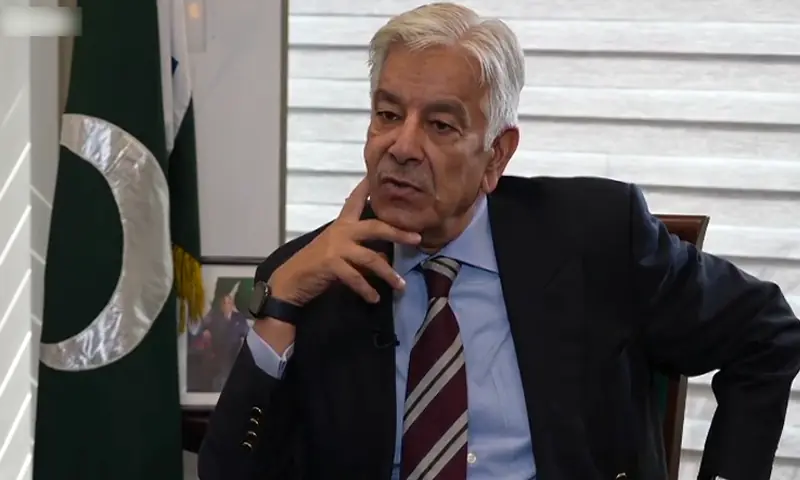

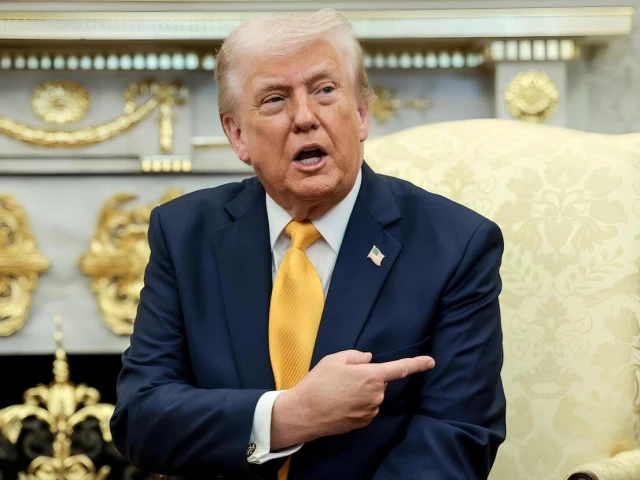
Defence Minister Khawaja Asif on Tuesday said Pakistan was writing off the Afghan Taliban and had no further positive expectations from the group, amid consistently tense relations that show no sign of abating.
Earlier today, Zabiullah Mujahid, the spokesman for the Taliban regime in Afghanistan, claimed that Pakistan had carried out overnight strikes in the neighbouring country. In a post on social media platform X, he said that Pakistan had “bombed” Khost province and carried out air strikes in Kunar and Paktika provinces. The military spokesperson rejected the allegations.
Asked in an interview on Geo News show ‘Aaj Shahzeb Khanzada Kay Sath’ about whether Pakistan was denying carrying out any strikes or civilian casualties during the alleged strikes, the defence minister replied: “Both things are non-existent at this time. We do react and retaliate, but [targeting] civilians is not at all our manner. We have a disciplined force that has traditions and a code of conduct; we are not a ragtag group like the Taliban, who neither have a code of conduct nor religion nor traditions.”
Asif questioned what the Taliban had managed to achieve in 20 years, apart from retaking Kabul, and admitted that people would mock him for his social media post at the time welcoming them.

“But you know, hope should always be present unless all limits are crossed. But today, we are completely writing them off and we have no good hope from them.”

A question about the Taliban’s stated intent to retaliate as per Islam law irked the defence minister, who asked which Islamic law do the Afghan Taliban follow that dictates them to live in their neighbour’s home for decades and then spill blood.
“Is this some self-invented Shariah of their own? This is not the Shariah of the Holy Prophet (Peace Be Upon Him).”

Asked when Pakistan would retaliate, Asif said Pakistan’s well-wishers, such as Turkey, Iran, and Qatar, wanted regional peace since everyone would benefit from it, and opportunities for employment would open up for all, including the Afghan people.
“They are the enemies of their own Afghan people; they were already the enemies of Pakistan and have now become defined enemies.”
He added that the Afghan Taliban were more than welcome to pursue and open up trade with India through whichever route they wanted, adding that Pakistan did not care for it.
“All these goods are ultimately sold in our market.”
Pushed for a response on the Taliban’s threat, the defence minister downplayed it as merely words and said it was meaningless to take them seriously or trust them. “There will be no greater idiocy than trusting them,” he added.
Asif maintained that Pakistan had pursued cordial relations, adding that he himself welcomed the Afghan Taliban on retaking Kabul, with frequent visits to Afghanistan, but “I don’t think we have gained any dividends or successes or changes in their behaviour from these visits; there has been no change in their attitude.”
The defence minister reiterated that the Afghan Taliban were ultimately destroying their own country.
He expressed belief that the situation would ultimately escalate to a level where regional neighbours desiring peace would intervene.
“It won’t take long; otherwise, they will be isolated and their total isolation will ultimately result in a collapse,” he added.
Pakistan’s bilateral relations with Afghanistan have come under strain in recent times as the banned terrorist Tehreek-i-Taliban Pakistan (TTP) group remains the main point of contention between the two countries.
Pakistan has demanded that the rulers in Kabul take action to stop cross-border terrorism, but the Afghan Taliban deny Islamabad’s allegations of terrorists being allowed to use Afghan soil to carry out attacks in Pakistan.
During a process of dialogue, which followed border clashes between the two countries in October, the two sides had met in an effort to work on mechanisms for lasting peace and stability between the two countries.
On October 25, the second round of talks between the two sides began in Istanbul. Information Minister Attaullah Tarar then announced that the talks “failed to bring about any workable solution”.
However, mediators Turkiye and Qatar had intervened and managed to salvage the dialogue process with an October 31 joint statement released by Ankara stating that “further modalities of the implementation will be discussed and decided” during a principal-level meeting in Istanbul in November.
On November 7, however, after the third round of talks, Defence Minister Khawaja Asif said that talks addressing cross-border terrorism were “over” and “entered an indefinite phase” as negotiators failed to bridge big differences between the two sides.
Following the failure of the talks, the Afghan Taliban suspended trade ties with Islamabad. Pakistan had already closed its border for trade soon after the October clashes.
Subsequently, Turkiye announced that its top officials would visit Pakistan to discuss tensions between Islamabad and Kabul. Pakistan welcomed Turkiye’s and Doha’s “sincere efforts” on Nov 14, but the delegation’s arrival is still awaited, amid reports of complexities in the process.
Last week, the Foreign Office said that the resumption of trade with Afghanistan depended on the Taliban regime ending cross-border terrorism, and also linked the fate of key regional energy projects to Kabul halting its support for terrorist groups.