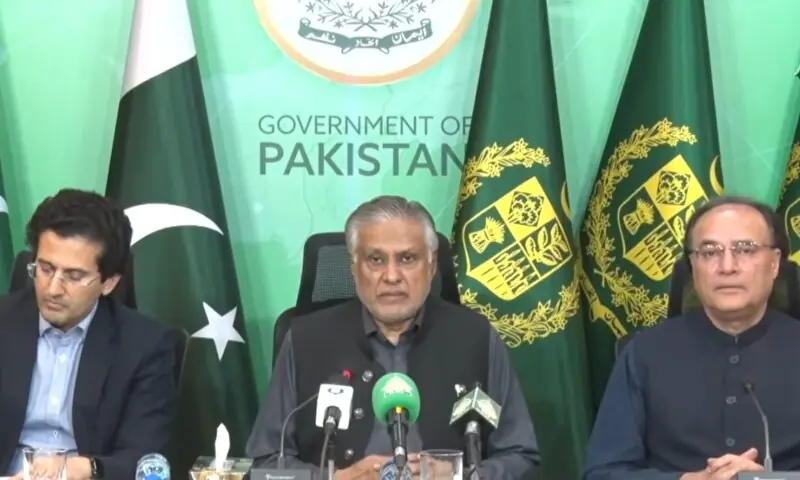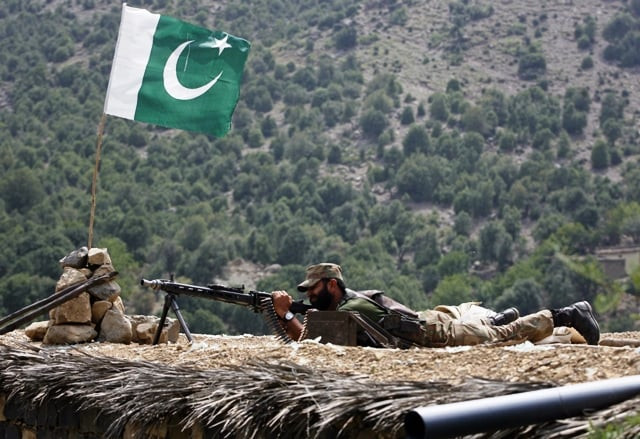

Tarar says 205 tanks, armoured vehicles and artillery guns have also been destroyed during the operation
Information Minister Attaullah Tarar said on Friday that 527 Afghan Taliban operatives have been killed and more than 755 injured during the ongoing Operation Ghazab Lil Haq, launched in response to “unprovoked action” from across the Afghan border.
‘Operation Ghazab Lil Haq‘ was launched late on Thursday after renewed clashes along the Pakistan-Afghanistan border, when Afghan Taliban forces fired on multiple locations, prompting swift military retaliation. The neighbours have clashed along the frontier since last week, when Afghanistan launched a border offensive in response to Pakistani air strikes.
Islamabad said its February air strikes that sparked the escalation were targeting terrorists. Islamabad accuses Afghanistan of failing to act against terrorist groups that carry out attacks in Pakistan, which the Taliban government rejects. The border fighting has hit multiple Afghan provinces. The violence of recent days is the worst since the October fighting killed more than 70 people on both sides, with land borders between the neighbours largely shut since.

Providing a summary of the Afghan Taliban regime’s losses as of 4pm today, the information minister said 237 check posts had been destroyed and 38 others captured by Pakistani security forces.

“Two hundred and five tanks, armoured vehicles and artillery guns have also been destroyed during the operation,” he said.
The minister added that 62 locations across Afghanistan were effectively targeted by air strikes.

✅Operation Ghazb lil Haq
✅Update 1600 hours 6 March✅Summary of Afghan Taliban losses
▪️527 Killed,
▪️755+ Injured
▪️237 Check posts destroyed
▪️38 Posts captured & destroyed
▪️205 tanks, armoured vehicles, artillery guns destroyed
▪️62 locations across Afghanistan…— Attaullah Tarar (@TararAttaullah) March 6, 2026
Meanwhile,state-run Radio Pakistan reported that the ground and air operations of the Pakistan Armed Forces were effectively underway against the Afghan Taliban and Fitna-al-Khwarij.
According to security sources, the Pakistan Army destroyed several posts with heavy artillery fire in Kurram sector along the Pak-Afghan border in a successful operation against the Afghan Taliban.
آپریشن غضب للحق جاری / کرم سیکٹر
افغان طالبان اور فتنہ الخوارج کیخلاف افواج پاکستان کی زمینی اور فضائی موثرکارروائیاں جاری ، سیکیورٹی ذرائع
پاک افغان بارڈر پرکرم سیکٹر میں پاک فوج کی افغان طالبان کے خلاف کامیاب کارروائی، متعدد پوسٹیں تباہ کردیں، سیکیورٹی ذرائع
پاک فوج نے… pic.twitter.com/Io9nDkLiyt
— PTV News (@PTVNewsOfficial) March 6, 2026
Read More: ‘No halt to Ghazab Lil Haq without guarantees’
The military also destroyed terrorist hideouts adjacent to Zhob and Qila Saifullah sectors.
“According to the security sources, Afghan Taliban were forced to flee their posts during the effective operation by the Pakistan Army,” the report said.
*🚨🚨* *Operation Ghazab Lil Haq*
*🚨🚨 آپریشن غضب للحق/ ژوب سیکٹر اور قلعہ سیف اللہ سیکٹر*
افغان طالبان کی بلا اشتعال جارحیت کیخلاف پاک فوج کا مؤثر اور فیصلہ کن کاروائیاں جاری، *سیکیورٹی ذرائع*
پاک فوج نے بھرپور کاروائی کرتے ہوئے پاک افغان سرحد پر *ژوب سیکٹر اور قلعہ سیف… pic.twitter.com/y6NnucmwMl
— PTV News (@PTVNewsOfficial) March 6, 2026
Talking to journalists from Khyber-Pakhtunkhwa in Rawalpindi a day ago, security officials maintained that Pakistan had no issue with Afghanistan or its people, but noted that the Afghan Taliban regime had become a “proxy master” facilitating multiple terrorist groups, posing a threat to regional peace and stability.
They said the Afghan Taliban leadership would have to choose between maintaining relations with Pakistan or continuing support for terrorist groups.
They described Operation Ghazab Lil Haq as a continuation of Pakistan’s broader war against terrorism, adding that it would continue until there were credible assurances and practical steps from Afghan Taliban regime to end terrorists’ patronage.
The latest escalation in tensions between the two countries follows a series of tit-for-tat actions over the past year.
Pakistan earlier carried out air strikes targeting camps of the Tehreek-e-Taliban Pakistan (TTP) and Islamic State Khorasan Province inside Afghanistan after a wave of attacks in Pakistan, including a suicide bombing in Islamabad.
Pakistani security sources said more than 80 terrorists were killed in those strikes. The strikes prompted attacks by Afghanistan along the border, leading to the breakout of the latest round of open conflict.
Islamabad has long maintained that TTP leaders operate from Afghan territory, an allegation that Kabul has repeatedly denied.
Tensions also surged after a series of explosions in Kabul on October 9 last year. Taliban forces subsequently targeted areas along Pakistan’s border, prompting Islamabad to respond with cross-border shelling. The exchanges caused casualties and infrastructure damage on both sides and led to the suspension of trade after border crossings were closed on October 12, 2025.