
• Staff safe as neighbourhood housing Pakistan embassy comes under heavy bombardment
• Tabriz, Bandar Abbas, Mashhad, Birjand hit; Iran retaliates with strikes on Tel Aviv, Haifa
• NYT says most personnel forced to ‘work remotely’ as US bases in Gulf rendered uninhabitable
• In series of extraordinary claims, Trump circumspect about US involvement with Nato, says Iran let 10 tankers thru Hormuz ‘as a gift’
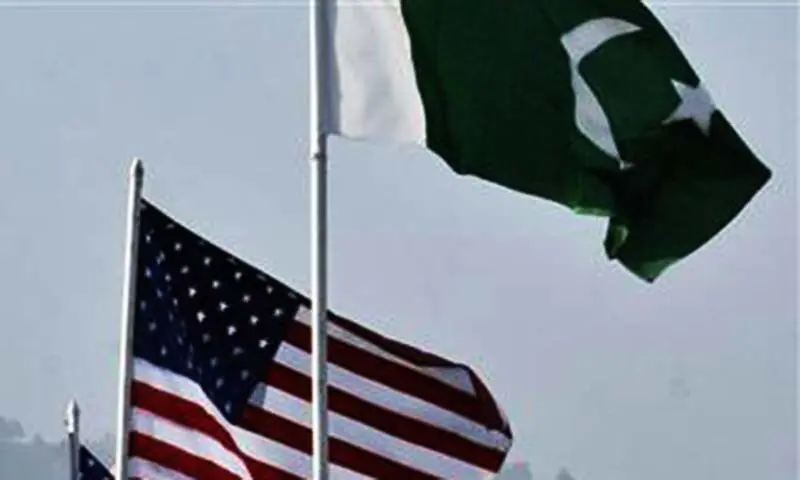
TEHRAN / WASHINGTON: Amid diplomatic overtures and backchannel attempts to de-escalate tensions in the Middle East, the US-Israel offensive against Iran continues unabated, with the neighbourhood housing the Pakistan embassy in Tehran among those being targeted by air strikes.
Warplanes could be heard overhead in northern districts of Tehran after dark, and shortly thereafter several loud explosions rang out.
Reports suggested that the neighbourhoods of Fatimid and Pasdaran — which house Islamabad’s embassy and Pakistan House — were heavily bombed.

However, these buildings were not targeted. The embassy had already shifted away from the Iranian capital since the start of the war, with staff only returning briefly for the Pakistan Day ceremony on March 23, a diplomatic source told Dawn.

Iranian media reported US-Israeli attacks in the central cities of Isfahan and Shiraz, in Bandar Abbas in the south and Tabriz in the northwest, but also Mashhad and Birjand, towards the Afghan border in an area largely spared until now.
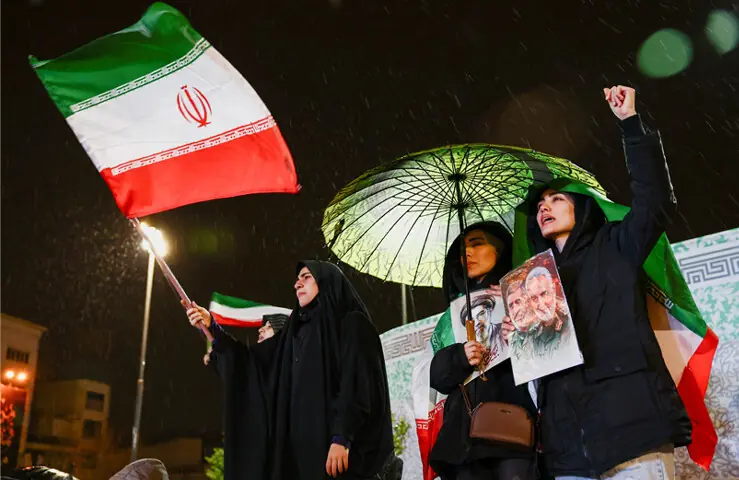
On Thursday, Iran launched multiple waves of its own missiles at Israel, striking Tel Aviv, Haifa and other areas.

At least one ballistic missile hit Tel Aviv, according to the military, while others carried cluster munitions that dispersed smaller explosives, damaging homes and cars.
On Thursday, Israel also claimed the assassination of Iran’s naval chief Alireza Tangsiri and several senior officers, but there was no confirmation of this from Tehran until going to press.
Meanwhile, at least two people killed by debris from an Iranian ballistic missile intercepted near Abu Dhabi, and drones fired at both Saudi Arabia and Kuwait.
US bases emptied
The New York Times reported that as a result of Iranian retaliatory bombing, many American troops had been forced to relocate to hotels and office spaces throughout the region.
Many of the 13 military bases in the region used by American troops are all but uninhabitable, with the ones in Kuwait, which is next door to Iran, suffering perhaps the most damage.
In Qatar, Iran struck Al Udeid Air Base, the regional air headquarters of US Central Command, damaging an early-warning radar system. In Bahrain, a one-way Iranian attack drone struck communications equipment at the headquarters of the US Fifth Fleet. At Prince Sultan Air Base in Saudi Arabia, Iranian missiles and drones damaged communications equipment and several refueling tankers.
“So now much of the land-based military is, in essence, fighting the war while working remotely, with the exception of fighter pilots and crews operating and maintaining warplanes and conducting strikes,” the NYT reported.
Although the Pentagon claimed this was not stopping the US from carrying out its operations, the relocation of troops to makeshift sites raises questions about the Trump administration’s preparations for the war.
There were close to 40,000 US troops in the region when the war started, and Central Command has dispersed thousands of them, some to as far away as Europe, American military officials said. But many have remained in the Middle East, although not on their original bases, NYT quoted military officials as saying.
Trump’s meandering claims
Meanwhile, following his first cabinet meeting since the war began, US President Donald Trump made a number of statements, first describing the Iranians as “great negotiators”, but later saying he was not sure he was “willing to make a deal with them to end the war”.
He denied being “desperate” to make a deal with Iran, and veered between repeated threats to “obliterate” it, and claims Tehran was on the verge of capitulating.
Trump then claimed that Iran had allowed 10 oil tankers to pass through the strategic Strait of Hormuz as a “present” to show it was serious about negotiations to end the war.
Referring to his cryptic comments earlier this week about a “gift” from Tehran, Trump eight “big boats of oil” were allowed to transit the waterway earlier this week, followed by two others later on.
“They said to show you the fact that we’re real and solid and we’re there, we’re gonna let you have eight boats of oil. Eight big boats of oil,” he said, adding: “I think they were Pakistani flagged.”
Insisting that the US did not need the Strait of Hormuz because his country was not affected by its closure, he then pivoted to saying that taking control of Iran’s oil was an “option,” as the United States effectively did with Venezuela.
The US president also spent much of his time lambasting Nato and other allies for rejecting his appeals to help secure Hormuz, blasting the British aircraft carriers London eventually offered as “toys” compared to their US equivalents.
“I’ve done a great favor for the world. The world has not been reciprocal,” Trump said. “I believe that’s going to cost them dearly.”
When asked about the future of US involvement in Nato, he was circumspect, saying: “We’re always gonna be there. At least we were. I don’t know anymore, to be honest with you.”
However, he also underscored his desire for peace, recalling for the umpteenth time his role in negotiating a ceasefire between India and Pakistan last year.
“I wish it could have been resolved faster. I’ve solved other issues in a single day that had lingered for 32 years,” he said. “We stopped one that had already begun, involving India and Pakistan.”
He also recalled that “the Prime Minister of Pakistan, a truly fine gentleman, acknowledged that ‘President Trump resolved a situation that could have cost 10 million lives.’ These were complex, nuclear-level challenges, yet we acted swiftly.”
Published in Dawn, March 27th, 2026