
Since India’s decision to revoke Article 370 in 2019, which stripped Jammu and Kashmir of its semi-autonomous status, independent journalism in the region has faced mounting legal, administrative, and economic hurdles.
A recent research report titled A State of No Story: The Strategic Erasure of Independent Journalism in Jammu & Kashmir by researcher Shazia Ashraf sheds light on how these measures have drastically altered the region’s media environment.
Communication Shutdowns and Administrative Overhaul
The report details prolonged disruptions to communication channels, including internet and telecommunications blackouts that lasted for extended periods from August 2019. These shutdowns hampered the ability of newspapers, digital outlets, and journalists to operate effectively, severely restricting access to sources and information flow.

During this period, official government channels became the primary, if not sole, source of information for the public.

Following the reorganization of Jammu and Kashmir into two federally administered territories, control over media regulation shifted from local authorities to centrally appointed administrators. This transition diminished local oversight and increased government influence over media operations.
Introduction of the Jammu and Kashmir Media Policy

In 2020, the government introduced the Jammu and Kashmir Media Policy, marking a significant turning point in media regulation. Under this policy, government departments gained powers to monitor all forms of media print, electronic, and digital and to evaluate content for being “fake,” “anti-national,” or a threat to public order.
Authorities could suspend advertisements, revoke press licenses, or pursue legal action against outlets deemed problematic.
Legal Actions Against Journalists
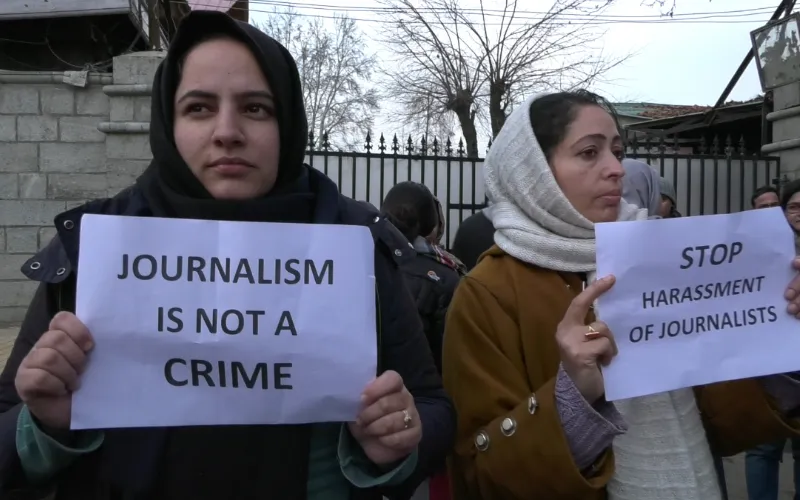
The report documents numerous instances of journalists facing legal trouble, detention, and questioning under laws such as the Unlawful Activities (Prevention) Act and the Jammu and Kashmir Public Safety Act.
These laws grant prolonged detention periods and restrict bail access, creating a climate of fear among media personnel. Between 2019 and 2025, many journalists, including freelancers and staff reporters, experienced arrests, enforced travel bans, summons, and raids on their homes and workplaces.
Financial Strains and Media Closures
Economic pressures have further constricted independent media. The curtailment of government advertising a vital revenue source has led to financial instability within local outlets. As a consequence, numerous newspapers and digital platforms have shut down or scaled back their operations.
The report estimates that dozens of media organizations ceased functioning between 2016 and 2023, citing salary delays, job losses, and the shuttering of district-level reporting offices.
Impact on Journalists’ Lives and Safety
Beyond professional setbacks, journalists face significant psychological and social challenges. The threat of detention, constant surveillance, and repeated questioning have caused stress, anxiety, and feelings of isolation. Some journalists have left the profession altogether. The families of detained journalists also suffer financial hardships and social stigma. Travel restrictions, including passport bans, limit opportunities for international reporting, fellowships, and academic pursuits.
Restrictions on Foreign Media
Foreign journalists encounter visa denials, restricted access, and supervised reporting visits, which have curtailed international coverage of developments in Jammu and Kashmir. These restrictions have led to increased dependence on official sources and limited independent perspectives.
The report concludes that the combination of legal frameworks, economic controls, and administrative measures has fundamentally reshaped Jammu and Kashmir’s media landscape since 2019. These changes have significantly narrowed the space for independent journalism, restricting public access to diverse news and viewpoints.
The media environment in Jammu and Kashmir has undergone a profound transformation since 2019, with restrictions impacting journalists’ ability to operate freely and independently. As the region’s media landscape becomes more constrained, concerns grow over the erosion of press freedom and the suppression of diverse narratives in the region.