
Shafiqur Rahman, once marginal in Bangladeshi politics, now vies for PM as Jamaat chief
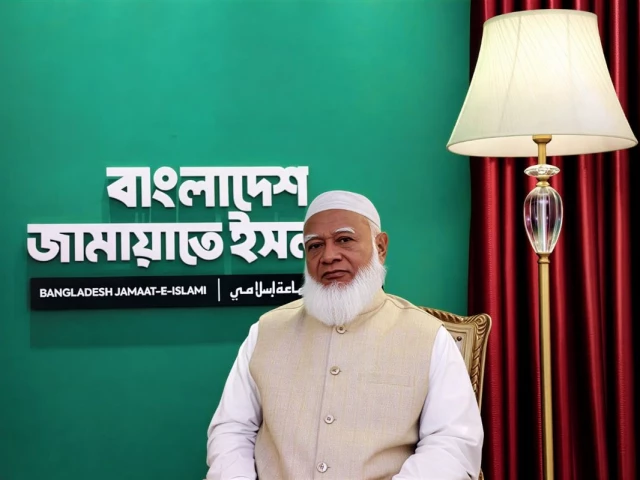
Jamaat-e-Islami Bangladesh Ameer Shafiqur Rahman poses for a photograph after an interview with Reuters in Dhaka, Bangladesh, December 31, 2025.PHOTO: Reuters
Shafiqur Rahman has long been on the margins of Bangladeshi politics, but his bearded face now appears on posters and billboards across Dhaka, urging voters to elect the country’s first Islamist-led government in a general election on Thursday.
The 67-year-old doctor and Jamaat-e-Islami party chief has risen from near obscurity to be a serious contender for prime minister after decades of being mostly known in Islamist circles. A Jamaat coalition is expected to mount a close challenge against frontrunner and former ally, the Bangladesh Nationalist Party.

Bangladesh votes on February 12 in its first national election since a Gen Z-led uprising toppled former prime minister Sheikh Hasina in 2024. Roughly 91% of the country’s 175 million people are Muslim, making it one of the world’s largest Muslim-majority nations. Islam is the state religion, though the constitution also enshrines secularism, and the population is predominantly Sunni.

Also Read: Bangladesh election tests India’s influence as China steps in
Opinion polls suggest the once-banned Jamaat, which opposed Bangladesh’s 1971 independence from Pakistan, is heading for its strongest performance yet, alarming moderates and minorities.
Under Hasina, authorities cracked down on religious groups, jailing top Jamaat leaders, sentencing some to death for 1971 war crimes, banning the party and driving it underground. Shafiqur was arrested in 2022 for allegedly assisting members of a banned militant outfit and jailed for 15 months.
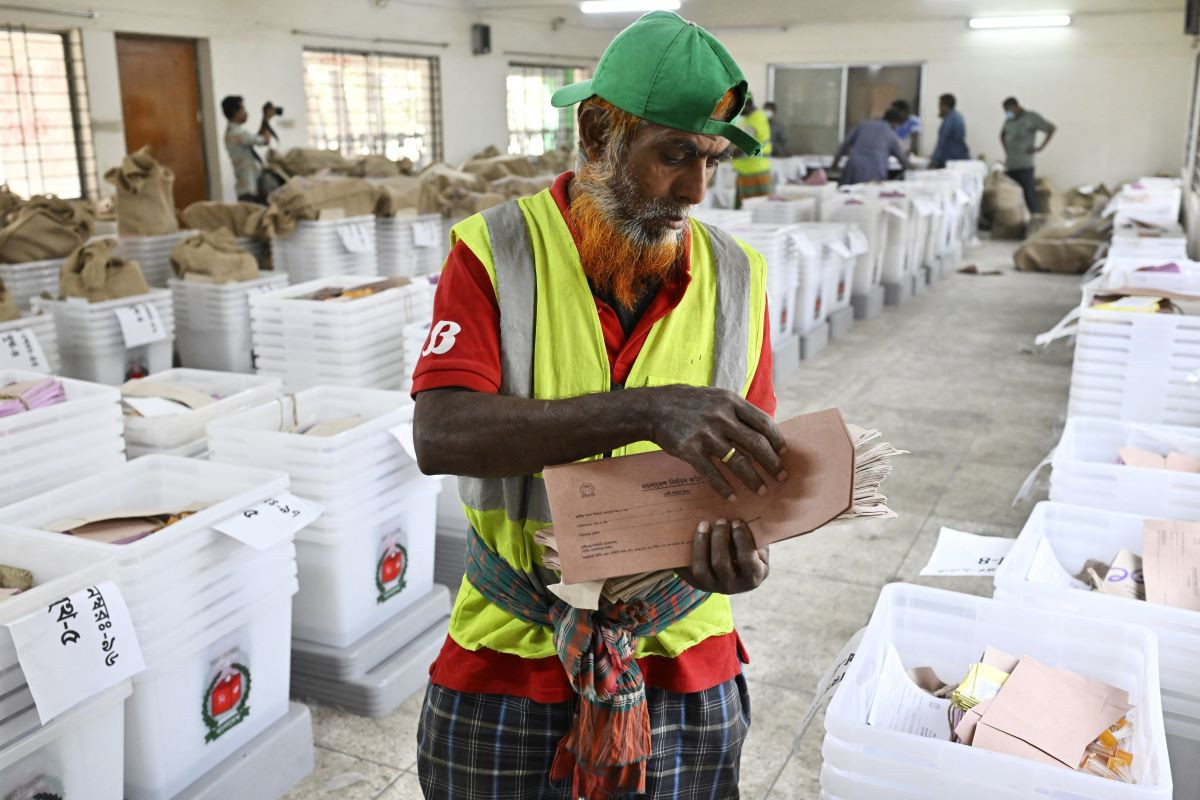
A man prepares envelopes for dispatch with ballot boxes ahead of the national election, in Dhaka, Bangladesh, February 10, 2026.PHOTO:REUTERS
But the 2024 uprising changed Jamaat and Shafiqur’s fortunes. Days after Hasina fled to India in August that year, an interim government led by Nobel laureate Muhammad Yunus eased curbs on the party, and a court in 2025 lifted the ban, allowing the party, long forced to meet discreetly, to re-emerge.
Jamaat quickly mobilised, launching charitable outreach and flood-relief work, with Shafiqur’s white beard and all-white attire making him a highly visible figure.
“We tried to raise our voice, but repeatedly it was suppressed,” Shafiqur told Reuters in December. “[After the uprising] we got a chance to come again to the surface.”
Family of doctors
Born in 1958 in the northeastern district of Moulvibazar, Shafiqur began his political life in a leftist student organisation before joining Islami Chhatra Shibir, Jamaat’s student wing. He formally joined Jamaat in 1984 and unsuccessfully contested national elections in 1996, 2001 and 2018. He became party chief in 2020.
His wife, Amina Begum, served in parliament in 2018 and is also a doctor, like their two daughters and a son. Shafiqur is the founding chair of a family-owned hospital in Sylhet. Many in Dhaka say they barely knew his full name during Hasina’s rule, a contrast to his main rival and BNP chief, Tarique Rahman, son of former premier Khaleda Zia and former president Ziaur Rahman. The two Rahmans are not related.
Jamaat describes its leader as humble and sincere, “who leads a modest, disciplined life grounded in simplicity and approachability”.
Capitalised on political vacuum
Analysts say Shafiqur capitalised on the political vacuum after the uprising.
“In the month after the uprising, there was no visible leader in Bangladesh. Tarique Rahman was in exile in London,” said Dhaka University professor Shafi Md Mostafa.
“[Shafiqur] Rahman travelled across the country, gained media attention, and, within barely two years, became a frontrunner,” he added.
On the campaign trail, Shafiqur’s speeches have resonated with some voters, presenting Jamaat as a clean, moral alternative guided by Islamic values. In December, the party allied with the Gen Z National Citizen Party, widening its appeal among younger and less-conservative voters.
Read More: Bangladesh poll campaign ends
Campaign posters inspired by Game of Thrones have popped up nationwide, showing Shafiqur with the line “Dadu is coming”, dadu meaning grandfather in Bengali.
Seen by some as a more moderate face of Jamaat, Shafiqur has tried to soften the party’s image by stressing governance, anti-corruption and social justice. He has also promised equal treatment for all religions.
However, he has drawn controversy over his views on women, and the party has not fielded a single female candidate. He said women should work no more than five hours a day to prioritise family responsibilities and recently posted on social media that pushing women out of the home in the name of modernity amounted to a “form of prostitution”.
The post sparked protests at several universities, and Jamaat claimed the account had been hacked.
Shafiqur says Jamaat is “moderate, we are flexible, we are reasonable. But our principles are based on Islamic values, Quranic values. The Quran is not only for Muslims, it is for the whole creation”.