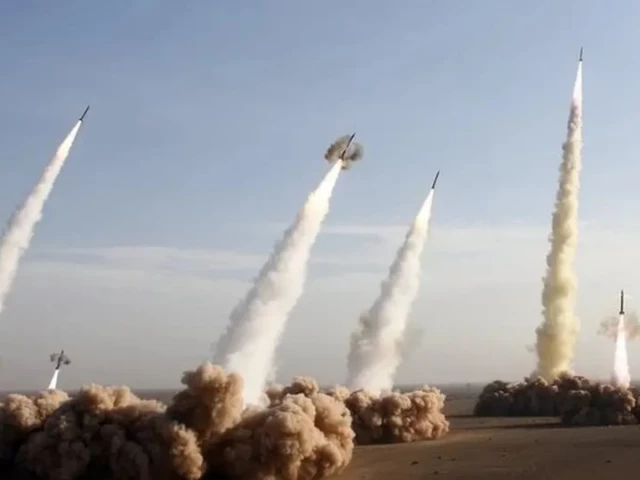

Iran fired two ballistic missiles at the US-UK military base Diego Garcia in the Indian Ocean, the semi-official Mehr news agency reported on Saturday.
The Wall Street Journal reported earlier that Iran had launched two intermediate-range ballistic missiles toward the base, but that they did not hit it.
Mehr said targeting the base was a “significant step … that shows that the range of Iran’s missiles is beyond what the enemy previously imagined”.
The White House, the British embassy in Washington, and the Ministry of Defence did not immediately respond to Reuters requests for comment.

The Israeli military struck Iran and Beirut on Saturday, as more than 2,000 people have been killed since the US and Israel attacked Iran on February 28, while Americans appear increasingly concerned at signs the war could expand further as it enters its fourth week.

Israel said it was attacking Hezbollah on Saturday in the Lebanese capital as it steps up airstrikes targeting the Iran-backed militia in the deadliest spillover from the war on Iran since Hezbollah fired on Israel in support of Tehran on March 2.
Israel also launched new attacks on Iran on Saturday, including on the capital Tehran, its military said.

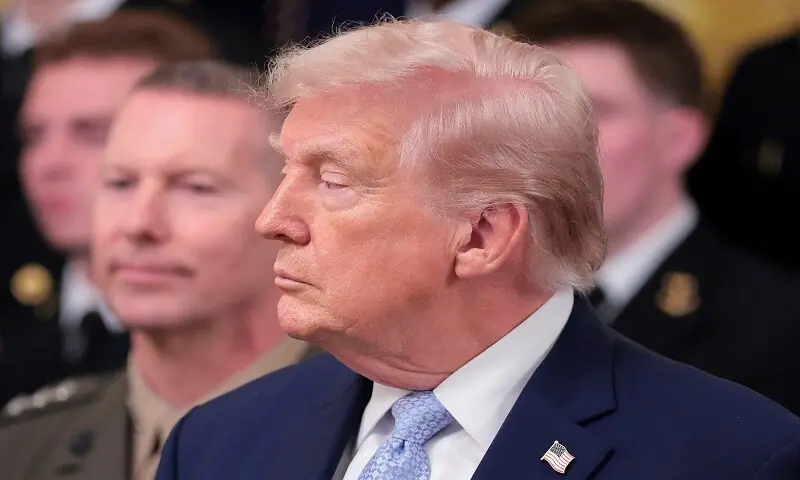
US President Donald Trump said on Friday that the United States was considering “winding down” military operations against Iran but was not seeking a ceasefire with the Islamic Republic.
He claimed that Operation Epic Fury could wind down in “four to six weeks,” with no comment on US ground troop involvement, as the White House remains opaque on timelines and objectives, according to Al Jazeera.
According to Al Jazeera, he said that he does not “want to do a ceasefire” with Iran. “You know you don’t do a ceasefire when you’re literally obliterating the other side,” Trump tells reporters.
Another wave of Iranian missiles launched towards Israel
Israel’s military has issued another missile attack warning – at least the fourth since early Saturday morning – calling on the public to move to shelters and remain there until the threat has passed, Al Jazeera reports.
The military said air defence systems are operating to intercept the missiles, which were launched from Iran a short while ago.
At least two people have been killed by shelling in a residential area in the village of Dastak in Kiashahr, in northern Iran, according to the governor of Gilan province, as reported by Al Jazeera.
According to Drop Site News, a spokesman of the Iranian Ministry of Petroleum dismissed the US decision to temporarily lift sanctions on Iranian oil at sea as a psychological trick.
“At present, Iran essentially has no crude oil left floating on water or surplus for supply in other international markets, and the statement by the US Treasury Secretary is merely aimed at giving hope to buyers and psychologically controlling the market.”
The price of Brent Crude has risen from about $70 to $113 since the war began.
Germany, France ready to help on Hormuz
Vital energy infrastructure in Iran and neighbouring Gulf states has also been attacked, and oil prices have jumped 50% since the war began, threatening global economic shock.
In the US, United Airlines said it would cut its scheduled flights by 5% in the second and third quarters, planning for prolonged higher oil prices.
The Strait of Hormuz, conduit for around a fifth of global oil and liquefied natural gas supplies, has been effectively closed to most shipping since the United States and Israel launched the war against Iran.
Trump on Friday called US allies “cowards” for declining to help open the strait while fighting continued.
Several allies, who were not consulted before the war, have pledged to join “appropriate efforts” to ensure safe passage through the strait, but Germany and France have said fighting must stop first. German Chancellor Friedrich Merz said he would speak to Trump this weekend.
Iran is ready to let Japanese-related vessels pass through the Strait of Hormuz, Kyodo News reported on Saturday, citing Iranian Foreign Minister Abbas Araqchi. Japan gets around 90% of its oil shipments via the Strait.
The Trump White House, in an effort to increase supply and lower prices, said it would waive sanctions for 30 days to allow the sale of 140 million barrels of Iranian oil stranded on tankers by the war. The administration had previously eased sanctions on a similar amount of sanctioned Russian oil.
The Israeli military said before its Saturday attacks it had issued evacuation warnings for seven neighbourhoods in the southern suburbs of Beirut, however, some of the evacuations were issued merely an hour before Israeli bombardment.
More than 1,000 people have been killed in Lebanon, and over 1 million displaced in the Israeli attacks.
US increasing military deployment
The US military is deploying thousands more Marines to the Middle East, officials told Reuters on Friday, as President Donald Trump accused NATO allies of cowardice over their reluctance to send forces to help open the Strait of Hormuz.
The narrow waterway, conduit for around a fifth of global oil and liquefied natural gas supplies, has been effectively closed to most shipping since the United States and Israel launched the war against Iran almost three weeks ago.
Read: Instability in Hormuz and our economic challenges
Vital energy infrastructure in both Iran and neighbouring Gulf states has also been attacked, and oil prices have jumped about 50% since the start of the war on February 28, threatening a global economic shock.
In an effort to increase supply and lower prices, the Trump administration said it would waive sanctions on Iran to allow the sale of 140 million barrels of oil that have been stranded on tankers since the war began. The administration had previously eased sanctions on a similar amount of Russian oil as well.
More than 2,000 people have been killed, mostly in Iran and Lebanon and many of them civilians, while Americans appear increasingly concerned at signs the war could expand further after local US oil prices increased.
Read more: Israel launches ground assault against Hezbollah
A new Reuters/Ipsos poll showed almost two-thirds of Americans believe Trump will order troops into a large-scale ground war, with only 7% supporting such a move.
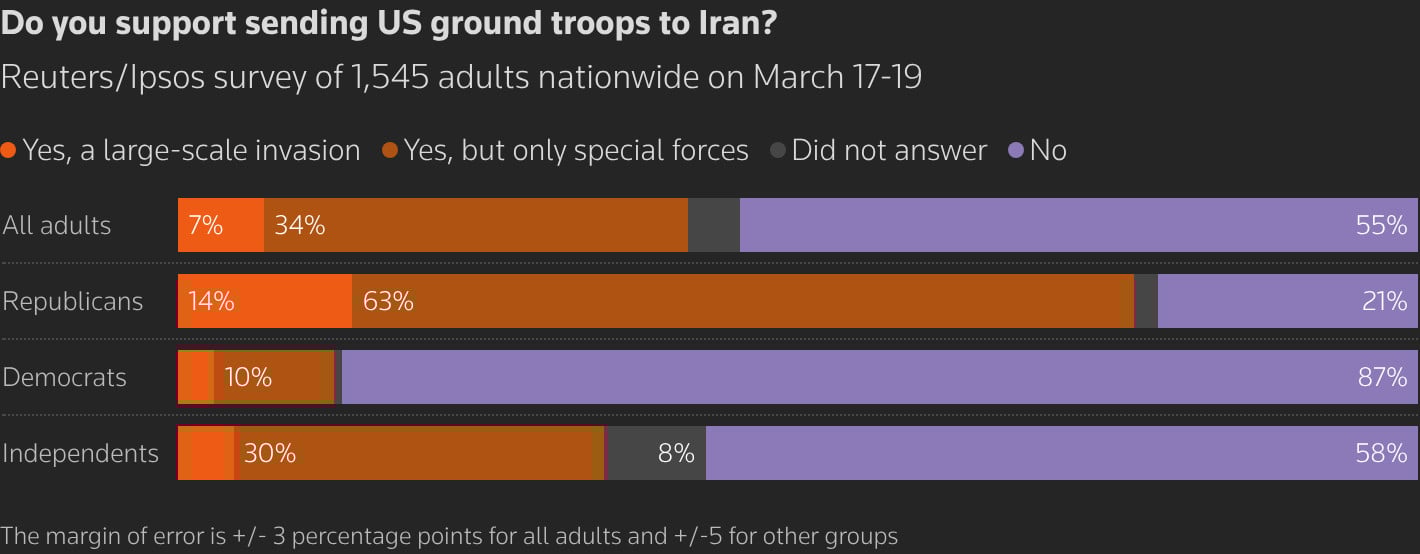
Stacked bar chart about sending ground troops to Iran
On Friday, Israel’s military said it carried out two large waves of air strikes on Tehran and central Iran, targeting weapons production facilities and sites storing ballistic missile launchers and components. Israel faced multiple waves of missile attacks from Iran, according to the Israeli military, triggering air raid sirens in Tel Aviv and Jerusalem, where explosions from interceptions were heard.
Fragments from an Iranian missile struck Jerusalem on Friday, landing just outside the Old City, which is sacred to Christians, Jews and Muslims, police said, releasing a photograph of the debris. There were no reports of injuries or casualties.
Kuwait’s state oil firm said its Mina Al-Ahmadi refinery had suffered multiple drone attacks that set some units alight, the latest energy facility hit by Iran in recent days.
Three US officials told Reuters that 2,500 Marines, along with the USS Boxer, an amphibious assault ship, and accompanying warships, would deploy to the region, although they did not say what their role would be.
Two officials said there had been no decision on whether to send troops into Iran itself. Sources have earlier told Reuters that possible targets could include Iran’s coast or Kharg Island oil export hub.
Trump said the United States was close to reaching its goals in the war, which include degrading Iran’s military and preventing it from developing a nuclear weapon, and may wind down its military effort.
Also read: How many countries have pushed back on Trump’s Hormuz ship demand?
The UK government authorised the US to use its bases in Britain to strike Iranian missile sites that are targeting ships in the Strait.
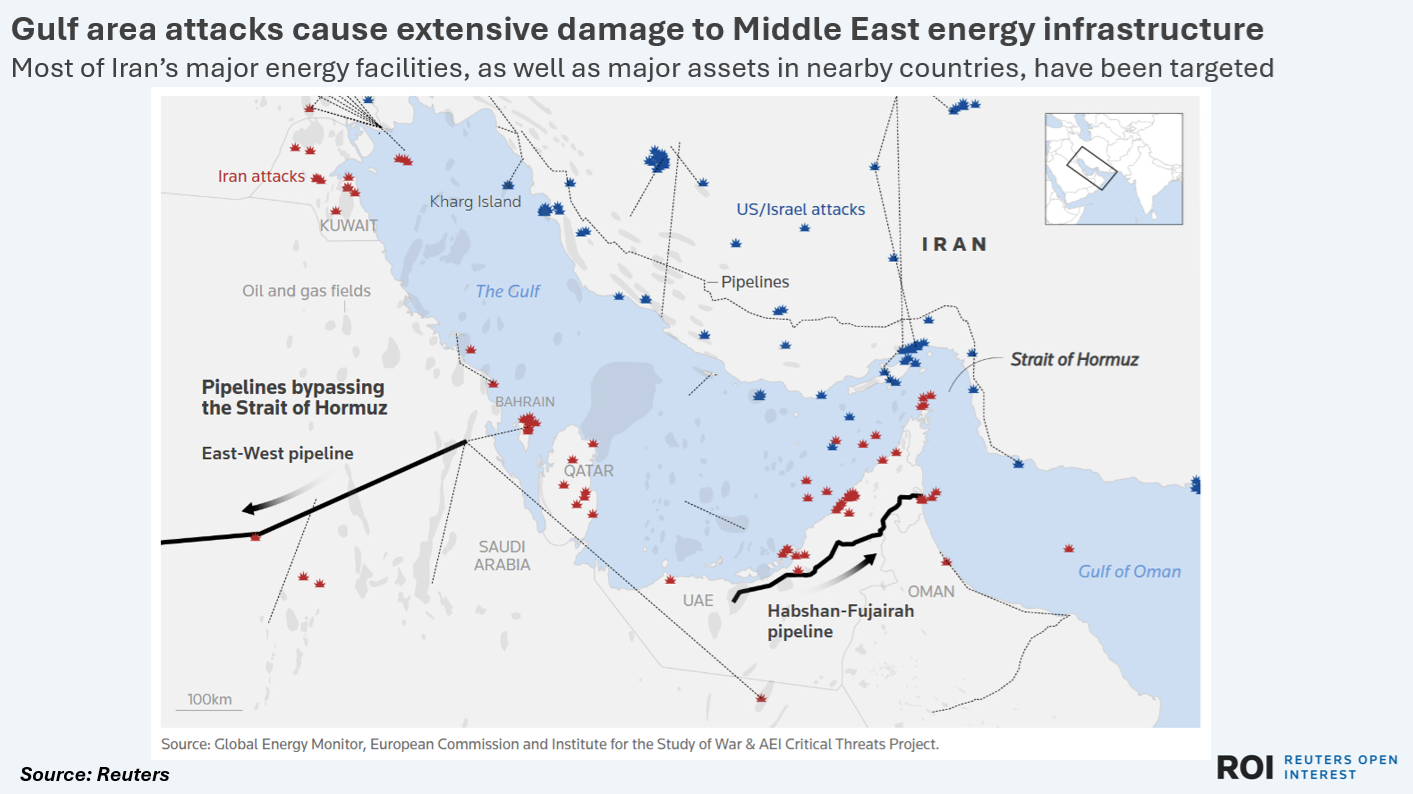 Most of Iran’s major energy facilities, as well as major assets in nearby countries, have been targeted.
Khamenei’s health in question
As Muslims around the region tried to celebrate Eidul Fitr, which ends the fasting month of Ramazan, and Iranians marked Nowruz, the Persian New Year, new Iranian Supreme Leader Mojtaba Khamenei issued a message of defiance.
Khamenei, who has not been seen in public since the Israeli attack that killed his father and predecessor Ayatollah Ali Khamenei on the war’s first day, said Iranians had responded with unity and resistance and “dealt a disorienting blow to the enemy”.
A US intelligence official, speaking on condition of anonymity, said the statement raises questions about Khamenei’s condition, as his father traditionally marked the New Year with a video address. The official said Khamenei’s extended absence raises questions about his condition and who is running the country.
US and Israeli officials say Iran can still hit back, even though weeks of bombing have severely weakened the government and depleted its stock of missiles and drones.
Iran’s Revolutionary Guards said they had attacked Haifa and Tel Aviv with multi-warhead missiles and used drones to attack weapons stocks at US bases, including Sheikh Isa air base in Bahrain. No comment was immediately available from US forces.
The semi-official Iranian news agency Tasnim said intelligence minister Esmail Ahmadi was killed, the latest of dozens of leading figures assassinated by Israel.
“We have nobody to talk to,” Trump said. “And you know what? We like it that way.”