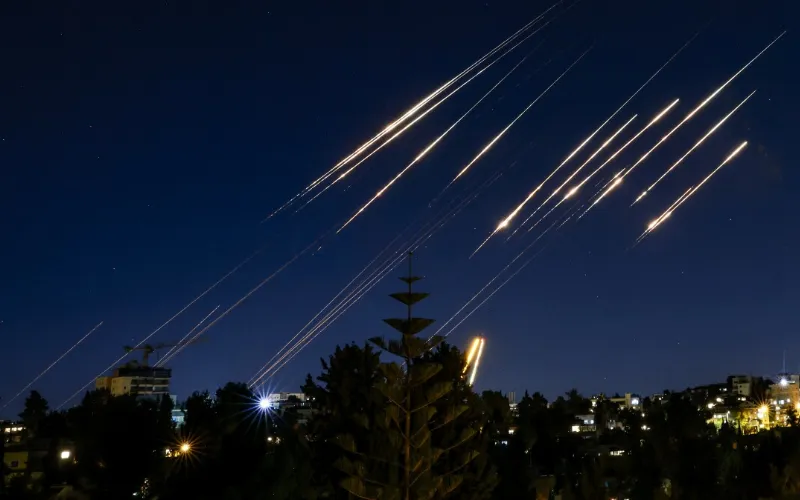

Explosions rock Tehran and Tel Aviv, US Congress divided over airstrikes, Hezbollah maintains war stance
Iran unleashed a ferocious missile offensive on Israel early Thursday, driving millions into bomb shelters as the US-Israel-Iran confrontation escalates into its sixth consecutive day.
The strikes came mere hours after a Congressional motion to curb the US air campaign was decisively blocked, leaving the President with extensive wartime authority.
Jerusalem reverberated with explosions as early warnings of Iranian missile fire rang out, though Israeli emergency services confirmed no immediate casualties.

🚨 BREAKING — #Israel:

New wave of Iranian ballistic missiles reportedly striking Tel Aviv.#TelAvivBlast https://t.co/Y86fBXA0cD
— أنيس منصور (@anesmansory) March 5, 2026

Concurrently, Iranian media outlet Tasnim reported multiple detonations in Tehran and confirmed activation of the country’s defensive missile systems.
Füzeler İsrail semalarında #TelAviv #TelAvivBlast
— Haber Perisi (@haberperisi_) March 5, 2026
In Washington, Republican senators thwarted a resolution designed to halt the aerial campaign and require Congressional authorization, effectively allowing President Trump to continue directing the war effort without constraint. The Senate voted 53-47 against advancing the motion, divided largely along party lines.
The conflict has also intensified in Lebanon, where Israeli airstrikes targeted Hezbollah positions in southern Beirut early Thursday. Smoke billowed over the city as local residents reported widespread panic.
Hezbollah leader Naim Qassem declared, “We are confronting aggression with unwavering resolve… surrender is not an option. This is an existential battle for our survival.”
Lebanese authorities reported that three civilians were killed in strikes along the Beirut airport highway, while the overall toll since Monday includes 72 fatalities, 437 injuries, and over 83,000 displaced individuals.
As tensions mount, Qatar has begun evacuating residents near the US embassy in Doha as a precautionary measure in response to Iran’s missile strikes.
The conflict, now spreading across multiple fronts in the Middle East, underscores the escalating volatility and the risk of a broader regional conflagration.