
Ten large Indian trade unions condemned the government’s rollout on Friday of new labour codes, the biggest such overhaul in decades, as a “deceptive fraud” against workers.
The unions, aligned with parties opposing Prime Minister Narendra Modi, demanded in a statement late on Friday that the laws be withdrawn ahead of nationwide protests they plan to hold on November 26 (Wednesday).
Modi’s government implemented the four labour codes, approved by parliament five years ago, as it seeks to simplify work rules, some dating to British colonial rule, and liberalise conditions for investment. It says the changes improve worker protections.
While the new rules offer social security and minimum-wage benefits, they also allow companies to hire and fire workers more easily.

Unions have strongly opposed the changes, organising multiple nationwide protests over the past five years.

The Labour Ministry did not immediately respond on Saturday to a Reuters request for comment on the union demands. The government has held over a dozen consultations with unions since June 2024, an internal ministry document on the labour codes shows.
The rules allow longer factory shifts and night work for women, while raising the threshold for firms that need prior approval for layoffs to 300 workers from 100, giving companies greater flexibility in workforce management.

The codes define gig and platform work for the first time, expanding legal and social protection to workers outside traditional employment structures.
The gig workforce has surged since the pandemic, with more than 23.5 million expected to be employed in the sector by 2030, up from around 10 million in 2024/25, according to government think tank NITI Aayog.
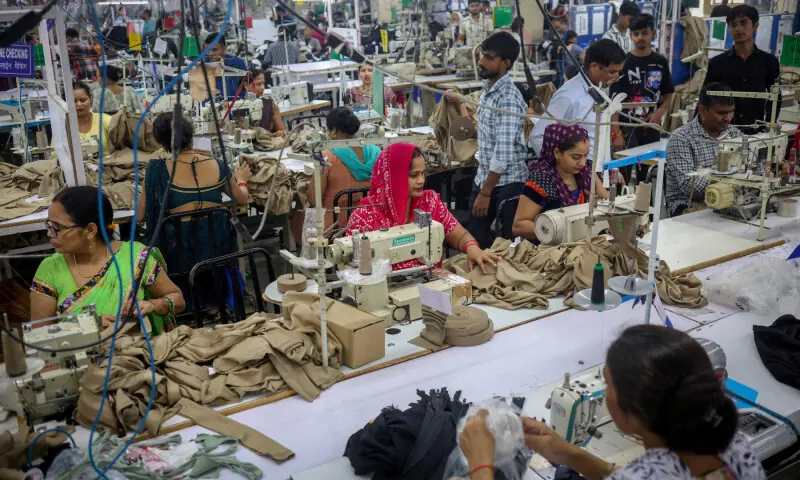
Businesses have [long criticised](http://www.dawn.com/news/1125805) India’s work rules as a drag on manufacturing, which contributes less than a fifth to the country’s nearly $4 trillion economy. Strengthening the manufacturing sector is key to creating jobs in the world’s most populous country.
But the Association of Indian Entrepreneurs expressed concern that the new rules would significantly increase operating costs for small and midsize enterprises and disrupt business continuity across key sectors. It asked the government for transitional support and flexible implementation mechanisms.
“The labour codes have been implemented despite strong opposition from the trade unions and it will snatch the workers’ rights including fixed-term jobs and rights available under the earlier labour laws,” said Amarjeet Kaur, national general secretary of the All India Trade Union Congress.
Not all unions oppose the overhaul. The right-wing Bharatiya Majdoor Sangh, aligned with Modi’s party, called on states to implement them after consultations on some of the codes.
The labour ministry said the codes — covering wages, industrial relations, social security and occupational safety — would “ensure better wages, safety, social security and welfare for the country’s workforce”.
The codes will replace 29 existing laws. Indian states are expected to craft rules aligning with the new federal codes covering wages, industrial relations and occupational safety.
Despite parliamentary approval in 2020, the BJP had until now not been able to implement the laws uniformly across the country due to political resistance and opposition from some unions.
Modi yesterday defended the overhaul, saying on X that the codes would serve as “a strong foundation for universal social security, minimum and timely payment of wages, safe workplaces and remunerative opportunities”, adding that the reforms would boost job creation and productivity.