
ISLAMABAD: An International Monetary Fund (IMF) mission led by Iva Petrova on Tuesday began technical-level discussions with the State Bank of Pakistan (SBP) in Karachi for the third review of the $7bn Extended Financing Facility (EFF) and the second review of the $1.1bn Resilience and Sustainability Facility (RSF).
The mission will remain in Karachi this week and begin policy discussions with the federal and provincial governments on Monday, with the customary opening roundup with Finance Minister Muhammad Aurangzeb.
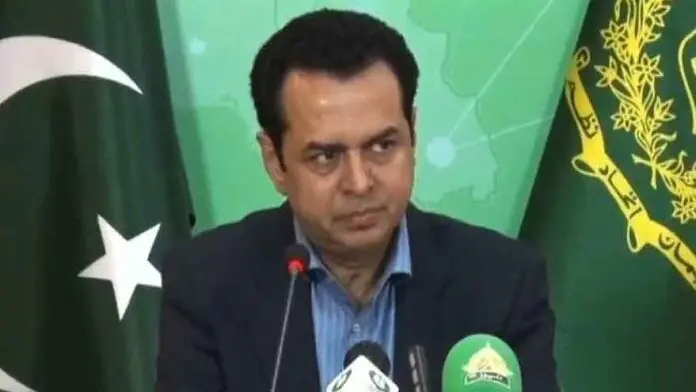
The minister on Thursday said the government was well-positioned for a successful review of its loan programmes.
Talking briefly to journalists after a parliamentary committee meeting, the minister said the government was also in a good position on collections by the Federal Board of Revenue (FBR).

Responding to a question, he said there was “absolutely no issue” with the rollover of the United Arab Emirates’ (UAE) safe deposits with the central bank and the sides were in constant contact. The UAE’s $2bn deposit, usually rolled over on an annual basis, had expired more than two months ago and has since been on short-term rollovers.

Pakistan has been dependent on continuous annual rollovers of safe deposits from China, Saudi Arabia and the UAE, as $12.5bn from these countries form part of the foreign financing needs under the EFF.
During the almost two-week review ending March 11, the engagements will be of greater significance as both sides will also discuss programme performance for the half-year ending December 31, 2025.
Further, forward-looking preparations, including budget proposals based on the performance for this year and the setting up of broad contours of the upcoming budget will also come under discussion.
This would involve provincial reviews for now and the future, particularly those relating to provincial finances, including agriculture income tax and governance-related challenges, as well as an action plan to address those weaknesses causing trillions of rupees worth of economic losses.
In this regard, procurement and accountability agencies would be under added scrutiny, including their independence, institutional capacities, processes and performances.
The programme’s performance as of the end of December 2025 — the period under review — has mostly been up to the mark, albeit with a revenue shortfall, which authorities believe can be reduced following a recent decision by the Federal Constitutional Court regarding the super tax, which was in the government’s favour.
The two sides will also review all macroeconomic indicators for the third quarter still in progress.
The power sector will also remain under added scrutiny given volatile policymaking in the recent months, including those relating to the industrial sector, residential fixed charges and so on, although circular debt numbers are within the target range.
On the positive side, Pakistan has met almost all quantitative performance criteria for the period under review. However, it is lagging behind in indicative targets and structural benchmarks, which could affect future programme implementation.
Given the biannual reviews of the $7bn EFF and the $1.1bn RSF, the two sides will have to agree on past performance and forward-looking implementation plans.
Upon the successful completion of the review, Pakistan will be eligible for the disbursement of about $1bn under the EFF and another $200m under the RSF by the end of April.
On the technical side, Pakistan will likely meet almost all seven quantitative performance indicators.
Net international reserves are likely to remain slightly lower than the $7 bn benchmark for September 2025 and below $6bn for December 2025 against the $6.5 bn benchmark.
The central bank’s net domestic assets are estimated at around Rs12.5-13.5 trillion, versus the ceiling target of Rs14.9-15.1tr for September and December 2025.
It should be mentioned that the lending agency’s spokesperson said last week that policy efforts undertaken by Pakistan under the EFF “helped stabilise the economy and rebuild confidence”.