
EU leaders convened at Alden Biesen castle in Bilzen-Hoeselt, Belgium for a pivotal informal summit, marking a significant move to reversal the bloc’s economic slump and defend it against aggressive trade policies from the US and China.
The prime motivation for the debate is a proposed “Buy European” mandate intended as an answer to Europe’s waning economic fortunes. The EU’s 27 leaders are gathering on Thursday for an initial brainstorming session on how Europe can regain its economic competitiveness between the US and China.
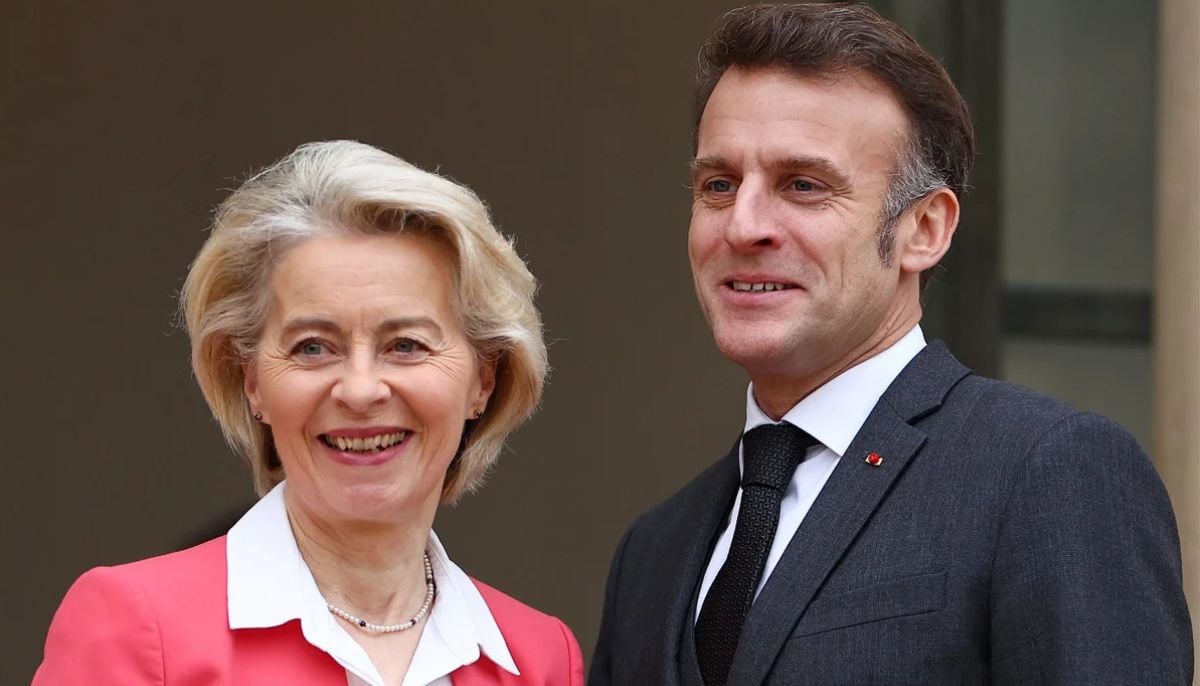
The French president, Emmanuel Macron told European newspapers this week that Europe’s utmost priority is to focus on certain strategic sectors such as chemicals, steel, automotive and defence. He was of the view that European preference marks a “defensive measure” that is essential in the face of unfair competition from those who no longer respect the rules of the World Trade Organization.”
The European Commission president, Ursula von der Leyen voiced concerns about Buy European. On Wednesday, speaking in the European parliament she was of the view that European preference is a “necessary instrument” for strategic sectors, it is also a “fine line to walk”. She emphasized that any such proposal must be “underpinned by robust economic analysis and be in line with our international obligations.”

The “Buy European” question marks only one part of a sprawling strategy being discussed at Alden Biesen in Limburg, an estate founded in the 13th century by Teutonic knights. Meanwhile, leaders will be able to discuss key concepts such as deregulation and the fragmented markets that constrain green and digital investment as reported by The Guardian.

Conversely, it will contribute to removing barriers in the European single market that results in impeding trade. Former Italian prime ministers, Mario Draghi and Enrico Letta, are also providing agenda-setting support for the economy. Draghi issued a warning last week the current economic world order was “dead” and cautioning that Europe is on the brink of becoming “subordinated, divided and deindustrialized all at once.”
Furthermore, he recommended that Europe needed to move from “confederation to federation” as veto power for individual member states in central policies made countries “vulnerable to being picked off one by one.”
Acknowledging the EU’s difficulties in decision making, European Commission President von der Leyen said that she is committed to moving ahead with laws to integrate the EU’s capital markets through a smaller formation. “We have to make progress and tear down the barriers that prevent us from being a true global giant.” She said it was in line with future plans for unification of the European financial system.