


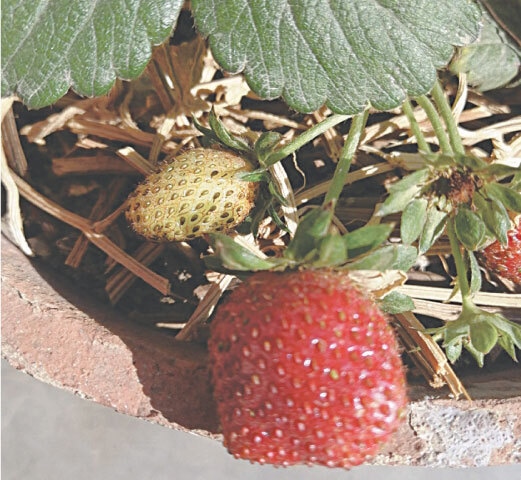
They are the jewels of romance: plump, heart-shaped strawberries, dipped in chocolate or shared by hand, their scarlet hue evoking passion and their sweetness a classic gesture of affection. For centuries, they have served as an edible symbol of love.
But the strawberry is not just a token of love. It is also one of the most forgiving and rewarding plants that you can cultivate at home. And a ripe strawberry is more than just a sugary treat, offering a slew of health benefits. It is an excellent source of vitamin C and contains manganese, potassium, folate and fibre. These antioxidants strengthen the immune system and improve heart health.
For those growing at home, strawberry cultivation begins with planting seedlings or runners in well-draining, nutrient-rich soil. As the plants mature, they enter the flowering phase, where white or pink blossoms appear, each containing both male (stamens with pollen-bearing anthers) and female (pistils) reproductive parts.

During this period, maintaining adequate moisture, ensuring six to eight hours of sunlight daily, and encouraging pollinator visits become essential. Once the strawberry flower is pollinated, the receptacle (the stem part) starts to swell. It will continue to enlarge for the next three weeks or so. It will also change colours from the initial green to yellowish and then red.

Rich in vitamin C and antioxidants, strawberries are as nutritious as they are romantic…
Pollination is usually done by bees, butterflies and insects. In the absence of pollinators, hand-pollination can be applied. Gently tapping the base of the flower is enough to dislodge the pollen from the anthers that fall on the pistil of the flower.

A regular watering schedule should be followed during the fruiting phase, while the soil should be kept moist. Ideally, watering should be done in the morning. In warmer areas, daily watering may be required. During this phase, the soil should also be boosted with potassium and phosphorus fertilisers every fortnight.
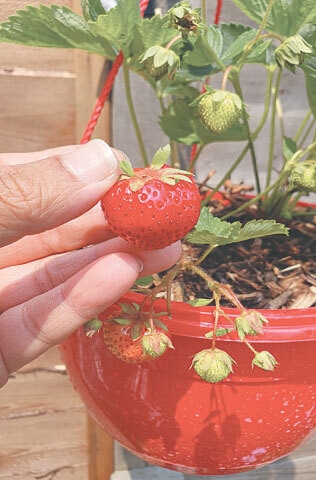
The process from pollination to harvesting ranges between one month to six weeks though, sometimes, the timeline can vary.
Occasionally, we may have come across strawberries in the market that lack their signature fragrant smell. One common belief among growers is that the first harvest from the strawberry plants is the most fragrant and tastier. The sweetness, flavour and smell gradually diminish over the next few harvests in subsequent seasons.
If the strawberries being grown lack taste and essence, growers should opt for the hit-and-miss technique. This entails growing two to three varieties every season to see which plant provides the best flavoured, aromatic strawberry. Growers can use those plants to prepare runners for the subsequent season.

One other reason for strawberries to lack taste is the excessive production of runners. During the fruiting phase, it is important to prune off any runners from the parent plant. The runners, however, can be grown to prepare new strawberry plants, sold to new growers and even gifted to friends and family, who would love to grow strawberries in their backyard.
In perfect conditions, including temperature, sunlight exposure and strawberry variety, the plant is likely to produce one to two dozen strawberries for a home gardener. By weight, it is between 250 to 500 grammes. In commercial settings, the produce is likely to be double or triple of a home gardener’s harvest.
There is no specific technique to harvest a strawberry and even a child can easily pluck it from its relatively small plant. However, it is important to ensure that the stem or branches of the plant are not dragged along while harvesting the fruit.
Please send your queries and emails to doctree101@hotmail.com. The writer is a physician and a host for the YouTube channel ‘DocTree Gardening’ promoting organic kitchen gardening
Published in Dawn, EOS, January 4th, 2026